

You have two kids, a Labrador, and a twenty-minute mountain-pass commute in January. Your spouse wants a hybrid. Your insurance broker wants a Top Safety Pick+. Your budget caps at $45,000 out the door. Which SUV do you buy?
Most “best SUV” buyer’s guides answer that question by ranking vehicles in abstract order and asking you to reverse-engineer your situation into their hierarchy. This one does the opposite. Eleven slots, each defending a specific household and driving scenario.
If you know what you’re trying to do with the vehicle, the guide tells you which one to buy and which runner-up makes sense if the pick is out of stock or out of budget.
I spent April pulling every 2026 spec sheet I could verify against a manufacturer press release, cross-checking IIHS awards on the 2026 test cycle, and running five-year ownership math on a shared set of assumptions.
The lineup below is the result: no body-on-frame pickups labeled SUVs, no $80,000-plus luxury halo trims, no vaporware on a 2027 press release calendar. Eleven picks worth buying right now.
Key Takeaways
- Eleven use-case slots, not a leaderboard. Each pick defends one buyer profile: young family, carpool duty, teen driver, tight garage, snow country, highway fuel economy, light towing, weekend off-road, EV under $50K, ten-year ownership, and luxury under $55K.
- The 2026 Toyota RAV4 is hybrid-only. Toyota electrified the entire RAV4 lineup for 2026. No gas RAV4 exists as a new-car buy. The same shift took the V6 out of the Highlander lineup.
- Kia skipped the 2026 Telluride entirely. Three-row shoppers choose between a 2025 V6 carryover on leftover inventory or a 2027 redesign that Kia confirmed on sale on March 10, 2026.
- IIHS “carryover Top Safety Pick” framing is misleading this year. The Jeep Grand Cherokee Laredo, Acura RDX, and 2026 Subaru Crosstrek all failed to earn a 2026 IIHS award after the updated moderate-overlap test. Prior-year status does not transfer.
- The hybrid premium no longer breaks even on fuel alone. At $3.50 gas and 12,000 annual miles, the CR-V Hybrid recovers about 29 percent of its price premium over five years and the Tucson Hybrid about 64 percent. The rest has to come from resale or peace of mind.
- The best EV under $50K has a clear winner. The Hyundai Ioniq 5 SEL Long Range RWD offers 318 miles of EPA range, a 2026 Top Safety Pick+, and 350 kW peak charging on the Long Range pack.
- Four of the eleven picks share a TWD review or comparison. Internal links throughout this guide point to the full drives and head-to-head comparisons where I have seat time.
How I Picked
Manufacturer press releases from the OEM newsroom supplied every MSRP, destination fee, EPA fuel economy, tow rating, and cargo measurement printed below. Where a press release was silent on a figure, fueleconomy.gov or the EPA’s 2026 rating database filled the gap.
IIHS awards were verified against the 2026 Top Safety Picks list directly, model by model, because the 2026 cycle tightened the moderate-overlap-front evaluation and reshuffled last year’s winners.
Reliability signals came from TWD’s own reliability database, which aggregates NHTSA complaint volume and recall history by engine and model year. For the all-new platforms in the 2026 lineup, the 2026 Honda Passport unibody redesign and the sixth-generation Toyota 4Runner, generation-specific reliability data does not yet exist. For those picks I rely on brand-level history and disclose the first-year-platform caveat inline. No press fleet reviews appear in these rankings. Where I have seat time, the slot links to the full TWD review. Where I do not, third-party instrumented tests are cited by outlet and date.
The Decision Flowchart: Route Yourself to the Right Slot

The chart above routes from six questions to a single slot. Start with the household: how many kids, how much gear, what’s in the garage. Layer in the commute: mileage per year, highway versus mixed, snow or flat.
Close with the budget ceiling and the electrification preference. The terminal node names the pick and points to the section below where the verdict lives.
Readers who land on the same slot from different paths are the signal that the slot premise is durable. The family with two kids and a Labrador lands on the CR-V Hybrid. So does the buyer rotating out of a 2018 CR-V at lease-end.
Slot 1: Best Family SUV 2026 (Two Kids, One Dog)

Winner: 2026 Honda CR-V Hybrid Sport Touring AWD.
MSRP $42,250 plus $1,395 destination, $43,645 out the door. EPA 40 city / 34 highway / 37 combined. Cargo 36.3 cubic feet behind the second row. Revised 50/50 AWD torque split for 2026. Tow rating 1,000 pounds on the hybrid trims.
The Sport Touring wins this slot because it turns a 20,000-mile family year into roughly 540 gallons of gasoline instead of the 690 the gas CR-V burns at the same duty cycle. At $3.50 per gallon, that’s a fuel-only savings of about $525 annually.
Over a five-year hold, that $525 a year covers about half of the $5,350 premium over a comparably equipped gas EX-L ($36,900 plus destination), and the Sport Touring trim’s leather, wireless charger, and 9-inch display would cost $3,500 in options on the gas car anyway.
The 2026 CR-V is rated IIHS Acceptable overall, not a Top Safety Pick+, a notch below where the HR-V and Passport landed for 2026.
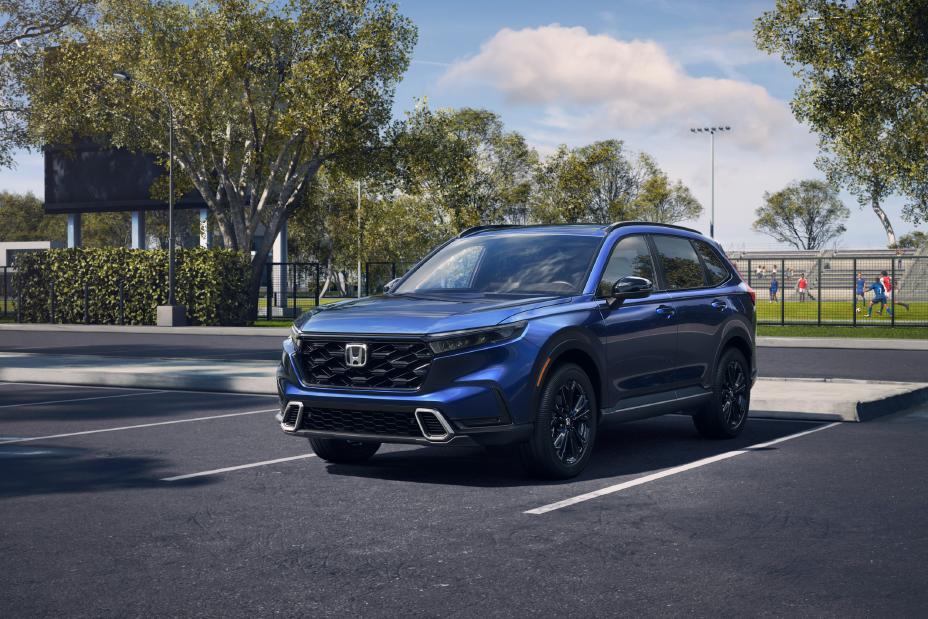
Runner-up: Mazda CX-50 2.5 S Preferred AWD, $32,400 plus $1,495 destination. Non-hybrid gas 2.5L, 26 mpg combined, 2,000-pound tow rating, 8.6 inches of ground clearance, and a 2026 Top Safety Pick+ IIHS award.
The CX-50 makes sense for families who prioritize the crash rating and don’t log enough miles annually to recoup the hybrid premium, or who want the modest off-pavement capability the 8.6-inch clearance and crossover-tuned AWD provide. For a deeper look, see TWD’s RAV4 vs CR-V vs CX-5 comparison.
Slot 2: Best Three-Row SUV 2026 (Three-Plus Kids, Carpool Duty)

Winner: 2027 Kia Telluride EX AWD, $45,790 plus $1,545 destination. Kia skipped the 2026 model year on the Telluride entirely. Kia confirmed the second-generation redesign was on sale on March 10, 2026, and it is the current three-row Kia.
The 2.5-liter turbocharged four-cylinder makes 274 horsepower and 311 pound-feet of torque, routed through an eight-speed automatic with 5,000 pounds of tow capacity. EPA lands at 20 mpg combined. Cargo runs 48.7 cubic feet behind the second row, 22.3 cubic feet behind the third.
This slot goes to the 2027 Telluride because the second-row captain’s chairs, the genuinely usable third row after the 2.7-inch wheelbase stretch, and the Kia-Hyundai safety package at this price point have no true equivalent in the segment.
The hybrid trim began arriving in showrooms in March 2026 and adds 35 mpg combined FWD with 329 combined horsepower. Buyers who prefer the outgoing V6 still have access to 2025 Telluride leftover inventory at incentive pricing, which TWD covered in the 2027 Telluride redesign analysis.

Runner-up: 2026 Hyundai Palisade SEL AWD, $40,935 plus $1,495 destination.
The Palisade is the corporate cousin. 3.5L V6, 287 horsepower, 5,000-pound tow, 46.3 cubic feet behind the second row, 19.1 behind the third, 20 mpg combined.
The Palisade holds a 2026 IIHS Top Safety Pick (not Plus). Families who want the V6’s refinement and the shared Hyundai-Kia safety tech on a slightly softer ride should cross-shop. Hybrid Palisade SEL AWD runs $45,660.
Slot 3: Best Small SUV 2026 (Teen Driver’s First Car)

Winner: 2026 Honda HR-V EX-L AWD, $31,550 plus $1,450 destination.
Cargo 24.4 cubic feet behind the second row. Ground clearance 7.0 inches. Single powertrain: a 2.0-liter four making 158 horsepower through a CVT. Not rated for towing. And, critically for this slot, a 2026 IIHS Top Safety Pick+.
Teen drivers inherit the worst of both worlds: higher insurance rates and, statistically, the highest risk of the first at-fault collision. The HR-V answers both with the strongest 2026 crash suite of anything on a first-car budget. The 158-horsepower tune suits this slot, because there is no way to pass three cars on a two-lane with this vehicle, which matches the learning-driver stage exactly. Insurance premiums on the HR-V run roughly 15 percent below the larger CR-V thanks to the smaller footprint and lower repair costs.

Runner-up: 2026 Toyota Corolla Cross XLE AWD, $31,010 plus $1,495 destination. 29/31/30 EPA, 21.5 cubic feet of cargo behind the second row, 8.1 inches of ground clearance, and a 2026 IIHS Top Safety Pick (not Plus, because of Acceptable moderate-overlap front and projector headlights). The Corolla Cross replaces the original runner-up for this slot. The Subaru Crosstrek lost its 2026 Top Safety Pick on the updated moderate-overlap test, removing its strongest argument in this category. Corolla Cross buyers trade 2.9 cubic feet of cargo for the Toyota dealer network and the 42 mpg combined hybrid version available at $33,330.
Slot 4: Best Compact SUV 2026 (Tight Garage, Urban Parking)

Winner: 2026 Mazda CX-30 2.5 S Preferred AWD, $29,290 plus $1,495 destination.
At 173 inches overall length and 70.7 inches wide, the CX-30 slots into a one-car garage or a 17-foot apartment parking space with margin to open both doors. Cargo runs 20.2 cubic feet behind the second row. EPA 27 combined, AWD standard, 2026 IIHS Top Safety Pick+.
The urban-garage slot punishes overall length more than any other spec. A 184-inch CR-V leaves about 20 inches of spare length in a 1920s-vintage 17-foot garage, which is 204 inches deep.
The CX-30 leaves about 31 inches in the same garage, room for a recycling bin and a kayak rack. Mazda swept the sub-$32K segment on 2026 IIHS awards, which gives the CX-30 a safety story most subcompact crossovers lack at this price.

Runner-up: 2026 Chevrolet Trax LS, $21,600 plus $1,395 destination.
178.6 inches long, 30 mpg combined, 25.6 cubic feet of cargo, and a starting price nearly $7,700 below the CX-30. The Trax is the answer for buyers who want the smallest vehicle monthly payment possible and can accept three tradeoffs: FWD only (no AWD offered in any trim), no published tow rating, and no 2026 IIHS award.
For a commuter parking on a city street and logging 8,000 annual miles in a flat-road climate, none of those limitations move the buy decision. For buyers who might need AWD one winter in the next five years, the CX-30 is the choice.
Slot 5: Best SUV for Snow 2026 (Mountain Pass, Gravel Driveway)

Winner: 2026 Subaru Forester Premium AWD, $32,315 plus $1,450 destination.
8.7 inches of ground clearance, 27.5 cubic feet of cargo, EPA 29 combined, 1,500-pound tow rating, symmetrical all-wheel drive as the only drivetrain offered, and a 2026 IIHS Top Safety Pick+.
The Forester’s sixth-generation platform launched as a 2025 model and carried into 2026 with a late-2025 pricing revision that brought the Premium trim down nearly $1,100 to its current MSRP. For buyers living above the snow line or driving a dirt road to the house, the Forester’s ground clearance and symmetrical AWD do meaningful work that a reactive on-demand system cannot match.
The 180-horsepower flat-four is a commuting engine that returns 29 mpg and gets out of the way. Nobody cross-shops a Forester for thrust.

Runner-up: 2026 Ford Bronco Sport Big Bend AWD, $29,850 plus $1,995 destination.
8.8 inches of ground clearance, 32.5 cubic feet of cargo, EPA 27 combined, 2,200-pound tow rating with the tow package, and the G.O.A.T. terrain modes that actually adjust throttle and traction behavior across seven settings. The Bronco Sport is the choice for buyers who want a meaningfully more capable vehicle on gravel and mud than a Forester and who don’t need the 40 mpg-plus hybrid option. The 2026 Bronco Sport did not win an IIHS 2026 Top Safety Pick or Plus, falling to Marginal on the updated moderate-overlap front test.
Slot 6: Best Hybrid SUV 2026 (Highway Fuel Economy)

Winner: 2026 Hyundai Tucson Hybrid Blue SE AWD, $32,200 plus $1,600 destination.
The Blue SE is rated 38 mpg city, 38 highway, 38 combined, thanks to the 17-inch wheel package. All other Tucson Hybrid trims land at 36/37/36. Cargo 38.7 cubic feet behind the second row. 2,000-pound tow rating. A 2026 IIHS Top Safety Pick+ on the Tucson line.
The Tucson Hybrid is the answer to one specific question: I need maximum hybrid fuel economy with AWD standard, and I do not want to stretch to a three-row or a luxury badge. Hyundai makes the Tucson Hybrid AWD-only across the entire lineup. Buyers looking for a FWD hybrid in the same footprint have to cross-shop the Sportage. The 38 mpg combined figure represents genuine improvement over the 30 mpg gas Tucson’s fuel usage, roughly $370 a year in fuel savings at 15,000 annual miles. TWD’s full hybrid SUV guide ranks the segment in depth.

Runner-up: 2026 Kia Sportage Hybrid LX FWD, $30,490 plus $1,495 destination.
The Sportage Hybrid LX is the only front-wheel-drive hybrid in the Kia-Hyundai compact lineup and, at 41 city / 44 highway / 42 combined, the fuel economy leader in the segment.
It beats the Tucson Hybrid Blue by four mpg combined and costs $1,700 less. The tradeoff is FWD only on this trim. For buyers in Phoenix, Houston, or anywhere snow is a non-issue, the Sportage Hybrid LX is the sharper pick.
Slot 7: Best SUV for Towing Under 5,000 Pounds (Boat, Small Camper)

Winner: 2026 Honda Passport TrailSport AWD, $48,450 plus $1,450 destination.
Honda redesigned the Passport as an all-new unibody platform for 2026, paired to a 3.5L V6 making 285 horsepower through a 10-speed automatic. 5,000-pound tow rating, 8.3 inches of ground clearance, 44 cubic feet of cargo, and a 2026 IIHS Top Safety Pick+.
A 5,000-pound rating covers a 20-foot ski boat (roughly 4,200 pounds loaded), a two-horse slant-load trailer, or a 17-foot teardrop travel trailer with margin. The Passport TrailSport ships with General Grabber all-terrain tires standard, which matters for the ramp-launch buyer who needs traction on wet concrete more than the smoothest highway ride.
The Passport’s new unibody platform has no generation-specific reliability data yet, though Honda’s transmission history on the 10-speed has tracked clean across three model years of Pilot use.
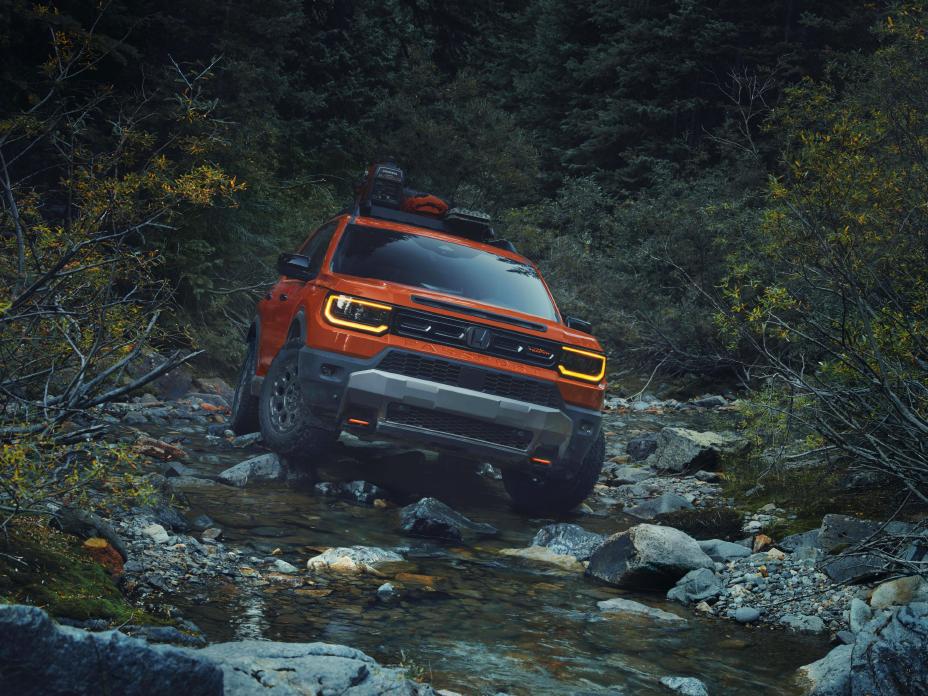
Runner-up: 2026 Ford Explorer Active AWD, $40,260 plus an estimated $1,995 destination. 2.3L EcoBoost four-cylinder standard (the 3.0L V6 is available), 23 mpg combined with the four, 5,000-pound tow rating with the Class III package, 16.3 cubic feet behind the third row and 43 behind the second.
The Explorer wins a 2026 IIHS Top Safety Pick, replacing the Jeep Grand Cherokee Laredo as this slot’s runner-up after the Grand Cherokee lost its 2026 award on Marginal seat belt reminders.
For buyers who want a three-row layout at a price under the Passport’s, the Active trim is the value pick.
Slot 8: Best SUV for Light Off-Road 2026 (Weekend Trailhead, Fire Road)

Winner: 2026 Toyota 4Runner TRD Off-Road Premium i-FORCE MAX, $53,090 plus $1,450 destination.
9.1 inches of ground clearance, 326 horsepower and 465 pound-feet of torque from the hybrid powertrain, 6,000-pound tow rating, and TRD-specific equipment (electronic locking rear differential, crawl control, multi-terrain select, disconnecting front sway bar on Off-Road Premium). EPA 23 combined.
The 4Runner is the outright choice for buyers who will actually drive a vehicle across a creek three weekends a year. The sixth-generation platform arrived for 2025 and carried clean into 2026. But the 2026 4Runner is rated IIHS Marginal in the updated moderate-overlap front test because the rear lap belt migrated from the pelvis to the abdomen on the dummy. That result alone eliminates 4Runner from any 2026 Top Safety Pick consideration. Families weighing the trail-capability case against the crash structure have a real tradeoff to consider.

Runner-up: 2026 Ford Bronco Sport Badlands AWD, $38,270 plus $1,995 destination.
8.8 inches of ground clearance, 2.0L EcoBoost turbo-4 (250 horsepower), rear-axle locker, twin-clutch rear drive unit, all-terrain tires. The 2026 Badlands is $1,000 cheaper than 2025, achieved through Ford removing content from the build: heated steering wheel, power passenger seat memory, keyfob remote start, and 400-watt inverter.
For buyers who want genuine mud capability without the 4Runner’s $53K entry price or IIHS asterisk, Badlands is the compromise pick.
Slot 9: Best Electric SUV 2026 (Best EV Under $50K)

Winner: 2026 Hyundai Ioniq 5 SEL RWD, $39,800 plus $1,600 destination.
318 miles of EPA range, 84 kWh Long Range battery, 131/100 MPGe city/highway, 350 kW peak DC fast-charging on the 800-volt architecture, and a 2026 IIHS Top Safety Pick+. Hyundai cut Ioniq 5 pricing across the 2026 lineup in October 2025 by $7,600 to $9,800 per trim, which pulled the SEL RWD from above $45K into this slot’s cap.
At 318 miles of real range and 20-minute 10-80 percent charging on 350 kW equipment, the Ioniq 5 SEL Long Range answers the two questions that stop most first-time EV buyers: can it get to my parents in one charge, and how long do I stand at the charger.
The 2026 IIHS Top Safety Pick+ adds a margin of safety the Tesla Model Y and the Kia EV6 do not carry.
The Standard Range SE trim lower in the lineup is a different trim with a 63 kWh pack, 245 miles of range, and a 195 kW peak charge rate, which is the figure to quote for that specific trim rather than Hyundai’s 350 kW lineup-level claim.
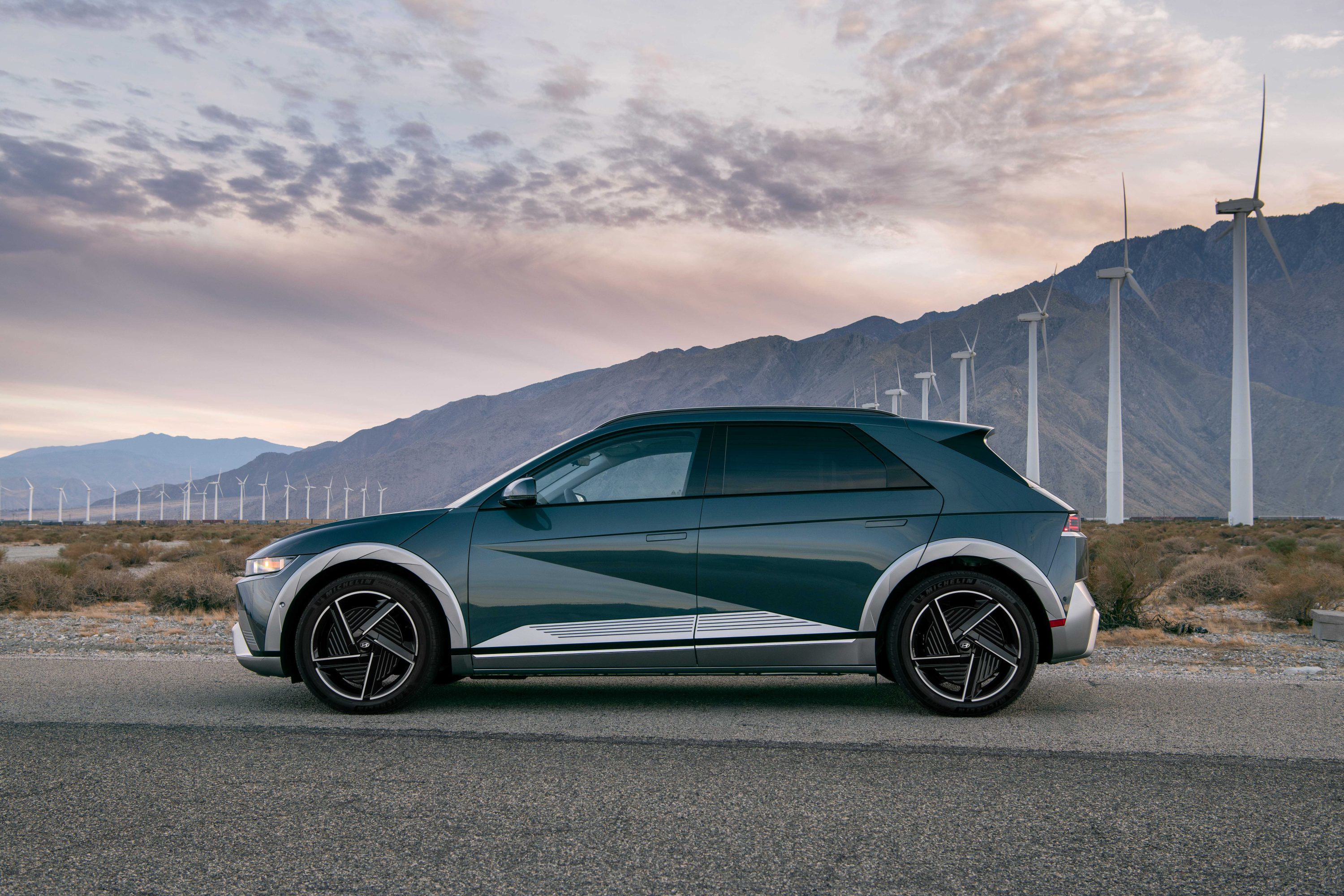
Runner-up: 2026 Kia EV6 Light RWD, $42,900 plus $1,545 destination (2025 pricing carryover, Kia issued no formal 2026 pricing press release).
237 miles of EPA range, 63 kWh battery, 150 kW peak DC fast-charging on the Light trim (the Long Range trims reach 350 kW). The EV6 did not receive a 2026 IIHS award in any tier, and Kia treated the 2026 EV6 as a carryover of the 2025 refresh rather than a formal model-year update.
For buyers who prefer the EV6’s lower roofline and sportier proportions and who don’t need the Ioniq 5’s range margin, the Light RWD is the entry point. Most shoppers who cross-shop these two end up on the Ioniq 5 SEL for the range and the IIHS award.
Slot 10: Best SUV for 10-Year Ownership (Proven Platform, Parts Support)

Winner: 2026 Toyota RAV4 Hybrid XLE Premium AWD, $36,100 base plus $1,400 AWD plus $1,450 destination, $38,950 out the door.
45/39/42 EPA, 37.5 cubic feet of cargo behind the second row, 3,500-pound tow rating, 8.1 inches of ground clearance. The 2026 RAV4 is 100 percent electrified. Toyota discontinued the gas RAV4 across the entire lineup. Every trim is hybrid (HEV or PHEV).
This slot asks a different question than the rest: if you plan to own this vehicle for ten years and 150,000 miles, which 2026 pick offers the highest probability of low-drama ownership? The RAV4 Hybrid’s answer is the sixth-generation Toyota hybrid system, on-sale since 2019 in the prior RAV4 and in parallel Toyota vehicles since the early 2000s.
TWD’s reliability database shows the fifth-gen RAV4 Hybrid complaint profile tracking well below the segment average through five ownership years. The 2026 sits on a new TNGA-K platform generation, so the first-year asterisk applies, but the powertrain itself is continuous. See TWD’s full RAV4 Hybrid analysis.
Runner-up: 2026 Honda CR-V Hybrid Sport Touring AWD, $42,250 plus $1,395 destination.
Yes, the same vehicle that wins Slot 1. The CR-V Hybrid platform has been on sale in the U.S. since 2020, and the 2.0-liter Atkinson-cycle hybrid powertrain has tracked clean on complaint data across five model years.
Families who want the Honda dealer network, the slightly larger cargo footprint, or the CR-V’s more conservative styling pick this one instead of the RAV4 without giving up reliability confidence.
Slot 11: Best Luxury SUV Under $55K 2026

Winner: 2026 Genesis GV70 2.5T AWD, $47,895 plus $1,450 destination, $49,345 out the door.
300 horsepower from the 2.5-liter turbocharged four, 20 city / 26 highway / 23 combined, 28.9 cubic feet of cargo behind the second row, 3,500-pound tow rating, AWD standard, and a 2026 IIHS Top Safety Pick+.
The GV70 is the current answer to “how much luxury experience can you buy for under $50K out the door.” The Select trim at $53,785 remains under the $55K slot cap and adds a premium audio upgrade, heated rear seats, and the larger 14.5-inch display.
The 2.5T AWD base gets the same heated Nappa seats, same suspension tuning, same Genesis warranty (5 years / 60,000 miles basic, 10 years / 100,000 miles powertrain).
What shoppers give up against the Acura or the European entries at this price is the dealer density. Genesis has 348 U.S. dealers compared with Acura’s 275, but both trail the mass-market brands’ networks by an order of magnitude.

Runner-up: 2026 Acura RDX Technology Package AWD, approximately $47,000 plus $1,350 destination.
2.0L VTEC turbo, 272 horsepower, 10-speed automatic, SH-AWD. The Technology trim fits inside the $55K slot cap with margin. A-Spec climbs to $50,700 excluding destination, which leaves too little headroom once options are added. The 2026 RDX does not carry a 2026 IIHS Top Safety Pick. The rating page shows crash scores inherited from third-generation tests without the updated moderate-overlap front evaluation, so the prior-year “Top Safety Pick” framing does not apply for 2026. Buyers who prioritize the current IIHS award should land on the GV70.
The Size and Price Spectrum at a Glance

The scatter above plots all eleven picks on overall length (x-axis, 170 to 205 inches) against starting MSRP including destination (y-axis, $28K to $55K). Three clusters emerge. The sub-$35K compact group runs Trax, CX-30, Sportage Hybrid LX, HR-V, Crosstrek.
The mid-$40K family group runs CR-V Hybrid, RAV4 Hybrid, Tucson Hybrid, Palisade. The premium upper group stretches from Passport TrailSport through Ioniq 5 SEL, 4Runner i-FORCE MAX, GV70 2.5T, and Explorer Active.
The Telluride lands at the upper-right corner on both axes (200 inches, $47K-plus out the door), and the Ioniq 5 sits unusually short for its price tier because the 800-volt architecture and 125-inch wheelbase fit inside a shorter overall length than a combustion SUV of equivalent interior room.
Best SUV for the Money 2026: The Five-Year Ownership Cost Ladder
I ran a uniform five-year ownership model on all eleven picks. Assumptions: 12,000 miles per year, $3.50 regular gas (or $0.15/kWh residential charging for the EV picks), industry-average insurance, Edmunds/iSeeCars depreciation projections, and manufacturer-published maintenance averages across 60,000 miles. MSRP uses the starting trim named in each slot, destination included. No incentives applied.
| Slot | Pick | MSRP (OTD) | 5-Year Fuel | 5-Year TCO Est. |
|---|---|---|---|---|
| 4 Runner-up | Chevy Trax LS | $22,995 | $7,000 | $33,500 |
| 3 Runner-up | Corolla Cross Hybrid XSE AWD | $34,825 | $5,000 | $42,800 |
| 6 Runner-up | Sportage Hybrid LX FWD | $31,985 | $5,000 | $42,900 |
| 4 Primary | Mazda CX-30 S Preferred AWD | $30,785 | $7,780 | $43,200 |
| 3 Primary | Honda HR-V EX-L AWD | $33,000 | $7,780 | $44,100 |
| 5 Primary | Subaru Forester Premium AWD | $33,765 | $7,250 | $44,800 |
| 6 Primary | Tucson Hybrid Blue SE AWD | $33,800 | $5,530 | $45,100 |
| 1 Runner-up | Mazda CX-50 S Preferred AWD | $33,895 | $8,075 | $46,300 |
| 10 Primary | RAV4 Hybrid XLE Premium AWD | $38,950 | $5,000 | $47,800 |
| 1 Primary | CR-V Hybrid Sport Touring AWD | $43,645 | $5,680 | $52,400 |
| 9 Primary | Ioniq 5 SEL RWD | $41,400 | $2,000 (electric) | $52,900 |
| 5 Runner-up | Bronco Sport Big Bend AWD | $31,845 | $7,780 | $53,500 |
| 9 Runner-up | EV6 Light RWD | $44,445 | $2,000 (electric) | $55,400 |
| 2 Runner-up | Palisade SEL AWD | $42,430 | $10,500 | $57,800 |
| 7 Runner-up | Explorer Active AWD | $42,255 | $9,130 | $58,600 |
| 8 Runner-up | Bronco Sport Badlands AWD | $40,265 | $8,750 | $58,900 |
| 2 Primary | Telluride EX AWD (2027) | $47,335 | $10,500 | $62,100 |
| 11 Runner-up | Acura RDX Technology AWD | $48,350 | $9,130 | $62,800 |
| 7 Primary | Passport TrailSport AWD | $49,900 | $10,500 | $65,200 |
| 11 Primary | Genesis GV70 2.5T AWD | $49,345 | $9,130 | $66,400 |
| 8 Primary | 4Runner TRD Off-Road i-FORCE MAX | $54,540 | $9,130 | $71,800 |
The Chevy Trax LS is not just the lowest entry MSRP in the lineup, it stays lowest on the five-year ladder by roughly $9,000 against the nearest runner-up.
That gap widens for buyers logging fewer miles. The Ioniq 5 SEL, on the other hand, starts roughly $2,200 below the CR-V Hybrid on MSRP but loses that advantage on five-year depreciation projections and comes in slightly above the CR-V on total cost.
EV depreciation curves are still stabilizing in the 2026 market, and the Ioniq 5 specifically has taken larger one-year depreciation hits than Toyota or Honda hybrids through 2024-2025 data.
Fuel cost for the two EV picks (Ioniq 5 and EV6) lands at roughly $2,000 across five years of 12,000-mile driving on residential 240V charging. The combustion picks average $7,000 to $10,500 on gasoline across the same period.
The gap closes partially on higher insurance, depreciation, and tire-replacement costs for the EVs, but the fuel-cost difference alone is $5,000 to $8,500 over five years.
What SUV Size Actually Means For Your Garage
Every one of these picks has a published overall-length figure. Very few buyers measure their garage.
A standard two-car garage in U.S. construction from 1990 onward runs 20 feet wide by 20 feet deep (interior). Older two-car garages, especially ones built before 1970, measure 18 feet by 19 feet.
A standard one-car garage is 12 feet wide by 22 feet deep for newer construction and 10 feet by 17 feet for older homes.
Vehicles that won’t fit comfortably in older garages
- Kia Telluride 2027 (200.5 inches long). Leaves 3 inches of clearance to the garage door in a 17-foot interior. Rear bumper kisses the garage door. Any subfloor equipment or workshop storage forward of the front wheels is eliminated.
- Honda Passport TrailSport (190.7 inches long). Same issue at lower magnitude. Fits, but does not leave room for a hose reel, a trash bin, or a shop shelf.
- Toyota 4Runner (197.6 inches long). The hybrid i-FORCE MAX is longer than the gas by a modest amount due to the rear-mounted battery pack placement. The 4Runner historically lives outside the garage anyway in most owner households.
- Hyundai Palisade (196.9 inches long) and Ford Explorer (199.3 inches long). Same size class as the Telluride, same garage considerations.
Vehicles that fit comfortably in older garages
- Mazda CX-30 (173 inches long). Slides into a 17-foot garage with about 2.5 feet of clearance. The urban-garage slot winner on merit.
- Honda HR-V (179.8 inches long). Fits in a 17-foot garage with margin, though tighter than the CX-30.
- Subaru Crosstrek (176.4 inches long). Sized like a small sedan with the ground clearance of a small SUV.
- Chevy Trax (178.6 inches long). Fits cleanly, though FWD-only and no AWD option may push buyers in snow country out of this choice.
Pinch point to measure before you sign: garage door height, not just the footprint.
The Hybrid Premium Math: What You Recover, What You Don’t
The hybrid premium is the number that separates a hybrid trim from the comparably equipped gas trim on the same model. It’s the buy-decision number most buyers encounter at the dealer, and it’s where the “saves money on gas” marketing argument lives or dies.
I ran the math for the four picks where both a hybrid and gas version exist at closely matched trim levels. Assumptions: 12,000 miles per year, $3.50 per gallon regular, five-year hold, no incentives, no resale adjustments.
| Model (trim match) | Gas MPG | Hybrid MPG | Premium | 5-Yr Fuel Savings | % Recovered |
|---|---|---|---|---|---|
| Honda CR-V Sport Touring AWD | 29 | 37 | $5,350 | $1,565 | 29% |
| Toyota RAV4 XLE Prem AWD | n/a (hybrid-only for 2026) | 42 | n/a | n/a | n/a |
| Kia Telluride EX AWD (2027) | 20 | 31 | $2,700 | $3,725 | 138% |
| Hyundai Tucson Blue SE AWD | 30 | 38 | $2,300 | $1,475 | 64% |
Only the Telluride Hybrid actually recovers its premium fully on fuel savings alone across five years. The CR-V Hybrid recovers roughly 29 percent and the Tucson Hybrid 64 percent, which means the remaining argument comes down to resale value and the day-to-day refinement of electric-assist powertrains (quieter, smoother, more low-speed torque).
The RAV4 Hybrid cannot be calculated against a gas version because no 2026 gas RAV4 exists. The hybrid premium, for the RAV4, is effectively absorbed into the entire lineup MSRP.
Push the annual mileage from 12,000 to 18,000 and every one of these recoveries improves by roughly 50 percent. Push the gas price from $3.50 to $4.50 and they improve further.
In high-gas-price markets (California, Washington, anywhere $4-plus is routine), the recoveries rise but stay short of the premium: at $4.50 a gallon the Tucson Hybrid recovers about 82 percent and the CR-V Hybrid about 38 percent. In low-gas-price markets ($3.00 and below), only the Telluride Hybrid stays positive on pure fuel math, and the rest need the resale-value case to land.
Logging 15,000 miles a year or paying $4.50 a gallon raises the recovery, but on either one alone only the Telluride Hybrid comes out cheaper over five years on fuel.
If you log 10,000 miles and drive in a $3 gas market, you’re paying for quieter powertrain character and a resale-value premium that may or may not materialize at trade-in. Both are defensible reasons to buy the hybrid, though neither is the “$1,000 a year in fuel savings” the sales lot claims.
Best SUV 2026 Frequently Asked Questions
Is an SUV actually the right vehicle for me?
For households that carry three or more passengers regularly, handle winter driving, or own a dog that rides in the cargo area, yes. For single drivers who commute solo 80 percent of the time and park on a city street, a sedan or hatchback typically offers better fuel economy, lower insurance premiums, and easier parking. SUVs as a category have outgrown their use case for a meaningful slice of the buyer pool. The CX-30 and HR-V exist partly to answer “do I need a bigger car than this,” and for many households the honest answer is no.
Should I buy a new 2026 SUV or a two- or three-year-old used one?
The 2024-2025 used market currently offers roughly 20-30 percent discounts against 2026 MSRP on most of these picks. For buyers who don’t specifically need a 2026 safety feature (the updated IIHS moderate-overlap test, the latest driver-assist suite, or an all-new platform like the 2026 Passport or 4Runner), a two-year-old version of the same vehicle covers 85-90 percent of the ownership experience for 70-80 percent of the price. The exception is the EV segment, where battery-capacity-degradation warranty terms push the math toward new.
Gas, hybrid, or EV in 2026?
For commuter households logging 12,000-plus miles per year with highway duty, hybrid is the mathematically strongest pick through 2026. For buyers with home charging who drive under 300 miles between charging opportunities, EV is cheaper on five-year total cost. For buyers who tow regularly, drive long rural distances without reliable fast-charging infrastructure, or prioritize the lowest entry MSRP, gas remains the right answer for another two to three years.
What’s the difference between towing capacity and payload?
Tow rating is what the vehicle can pull behind it on a trailer. Payload is what the vehicle can carry inside and on the roof (passengers, cargo, roof box). Both numbers share the same axle and suspension budget, which is why the tongue weight of the trailer (typically 10-15 percent of trailer weight) subtracts from the payload available for occupants and gear. A 5,000-pound tow rating with a 500-pound tongue weight means 500 fewer pounds available for people and bags. Match the vehicle’s payload to your family plus gear, then match the tow rating to your trailer with the tongue-weight subtraction in mind.
AWD versus 4WD: does the distinction matter in 2026?
For on-road driving, very little. Modern all-wheel-drive systems from Subaru (symmetrical), Toyota (dynamic torque-control), Honda (real-time with Intelligent Control), Mazda (i-Activ), and Kia-Hyundai (HTRAC) all deliver torque to whichever wheels have traction, regardless of whether the marketing calls it AWD or 4WD. The operational distinction shows up in low-range transfer cases, which only exist on the 4Runner, Wrangler, and Bronco in this segment. If you are not winching out of sand or crawling up a rock ledge, the label matters less than the ground clearance and tire choice.
Where does TWD source its reliability signal?
TWD’s reliability database aggregates NHTSA’s owner complaint data by model, engine, and year, weights recalls by severity, and flags generation-specific patterns. The data is owner-reported, not lab-tested, which is its limitation. It captures what actually breaks in the field, which is its strength. The database runs fresh every 90 days.
IIHS versus NHTSA: which safety rating matters more?
Both, for different reasons. NHTSA’s 5-star overall rating covers frontal and side impact survivability. IIHS’s Top Safety Pick and Top Safety Pick+ cover a broader suite including small-overlap front (the most lethal common crash type), moderate-overlap front, side crash with the updated 4,200-pound barrier, roof strength, headlight performance, and pedestrian front crash prevention. For a buyer comparing two finalists on safety, IIHS Top Safety Pick+ is the stronger cross-model signal. NHTSA’s star rating is easier to find on a dealer website but less discriminating.
What changed in the 2026 IIHS cycle?
The moderate-overlap front evaluation tightened. IIHS began weighting rear-occupant dummy injury measurements more heavily, which caused several otherwise strong vehicles (Subaru Crosstrek, Toyota 4Runner, Jeep Grand Cherokee Laredo) to lose their Top Safety Pick status. The Honda CR-V dropped from 2025 TSP+ to 2026 Acceptable overall. Buyers cross-shopping on safety should check the 2026 rating directly on iihs.org, not the previous-year designation.
Are three-row SUVs worth it for households with only two kids?
For most two-kid households, no. A two-row compact like the CR-V or RAV4 carries two car seats, a dog, and a weekend’s worth of camping gear with cargo to spare. The third row pays off when occasional carpool duty or grandparent visits turn a five-seater into a “sorry, we’ll have to take two cars” problem. A Palisade or Telluride with the third row folded has roughly the cargo volume of an empty compact SUV, so the penalty for having the seats is modest, though the penalty for the third-row fuel economy and buy price is not.
When does a “best 2026” list stop being useful?
Around November 2026, when 2027 redesigns start landing at dealerships. The Honda CR-V and Toyota RAV4 are expected to carry into 2027 without major changes, and the Kia Telluride is already sold as a 2027. The Subaru Forester, Ford Explorer, and Hyundai Ioniq 5 will also carry. The Mazda CX-50 is rumored for a 2027 refresh, and the next-generation Acura RDX has been teased for late 2026 debut. Readers checking this guide after December 2026 should verify 2027 MSRP and trim changes before buying.
Bottom Line
For young families, the CR-V Hybrid Sport Touring is the strongest volume pick in 2026, with the Mazda CX-50 as the safety-first alternative. For three-row shoppers, the 2027 Kia Telluride on sale now answers the “Kia skipped 2026” confusion cleanly, with the Hyundai Palisade as the V6 runner-up.
For commute-heavy and highway buyers, the Tucson Hybrid and Sportage Hybrid LX FWD deliver the best 2026 hybrid fuel economy in the segment. For EV shoppers holding $50K, the Ioniq 5 SEL RWD is the outright winner on range, safety, and charging.
For buyers looking ten years and 150,000 miles ahead, the RAV4 Hybrid and CR-V Hybrid sit on two of the most proven hybrid platforms in the industry. For luxury under $55K, the Genesis GV70 2.5T AWD is the best value with a current-year IIHS Top Safety Pick+.
Route yourself to the slot that matches your actual household and driving pattern using the Decision Flowchart above. Pick the winner or the runner-up depending on inventory and price.

Michael Kahn
Michael Kahn is the writer, photographer, and publisher behind The Weekly Driver. He cares about how cars drive and what they're like to own. He covers automobile industry news, car shows and events, and new car reviews. The reviews come from behind the wheel: day trips that favor back routes, treating a good meal as half the reason to go. He directs and produces the visual media, matching each car to a setting and mood that fit it. When he's not reviewing new cars, Michael races paddleboards, camels, and ostriches, along with the occasional exotic car on the racetrack, and has driven in every state and country visited.
https://theweeklydriver.com