

The plug stays in the wall most nights. That’s the variable nobody puts on the spec sheet, and it’s the variable that decides whether a 2026 plug-in hybrid SUV makes financial sense or quietly costs you thousands more than the gas version of the same vehicle.
I ran the same five-year ownership math I used on the conventional hybrid SUV lineup, this time comparing each 2026 PHEV against the matched-trim gas version of the same model. Methodology stays consistent: 12,000 miles a year, $3.50 a gallon for regular, a five-year hold, recovery percentage as the headline metric. Premium fuel applies on both sides for luxury PHEVs that require it.
The federal clean-vehicle tax credit that used to subsidize plug-in buyers ended for vehicles acquired after September 30, 2025. For any 2026 buyer the federal credit is zero, regardless of where the vehicle was assembled or what its battery is made of. State-level credits still exist in pockets and I note them where relevant, but they don’t enter the headline number.
Without the $7,500 to lean on, very few PHEVs recover their premium on fuel savings alone within five years. The Lexus NX 450h+ comes closest. Most of the field lands between 30 and 60 percent recovery, which means the rest of the case has to come from somewhere else: the daily-electric commute, the HOV-lane sticker, the smoother throttle response, or the buyer’s preference for plugging in.
Key Takeaways
- The Lexus NX 450h+ leads the field at 96 percent recovery, against 59.6 percent for the runner-up, the Hyundai Tucson PHEV. Twelve of seventeen models recover under 50 percent of their gas-comparator premium across five years on fuel savings alone.
- Home charging is the precondition, not the bonus. The five-year fuel savings collapse without it. A PHEV driven without ever plugging in becomes a heavy, slow hybrid that you also paid extra for.
- The federal credit is gone for 2026 buyers. The clean-vehicle credit ended September 30, 2025. Every 2026 PHEV buyer faces the full premium with no federal offset. State programs in Colorado, New Jersey, New York, Illinois, and Oregon may apply.
- The Jeep 4xe pair and the Audi Q5 TFSI e were dropped for 2026. Wrangler 4xe, Grand Cherokee 4xe, and Q5 TFSI e are last-inventory plays at this point. Dealers still have 2025 stock; the math here uses those final-MY numbers.
- Luxury PHEVs swing the heaviest losses. Range Rover Sport P550e charges a $27,900 premium over the matched gas trim. Recovery is 12 percent across five years. Buyers there are paying for refinement and electric-on-demand smoothness, not for fuel cost.
- The SAE J2841 utility factor decides everything. A 50-mile-AER PHEV like the Mercedes GLE 450e runs about 62 percent of its miles on grid electricity for a typical home-charging owner. A 22-mile-AER Wrangler 4xe runs 38 percent.
How the Math Works
Three numbers drive the answer for every PHEV below: the matched-trim premium, the five-year fuel savings, and the recovery percentage that comes from dividing one into the other.
The premium. The same-trim, same-equipment, same-drivetrain MSRP gap between the gas version and the plug-in version of the same model. Where no matched gas trim exists, I used the closest available comparator and flagged the substitution with a footnote.
Toyota dropped the gas-AWD RAV4 for 2026, so the Prime is matched against the RAV4 Hybrid XSE AWD. Volvo dropped the pure-gas XC60 and XC90 trims years ago, so the Recharge models are matched against the B5 mild-hybrid.
The fuel savings. A conventional hybrid runs on gas all the time and saves fuel by being more efficient. A PHEV splits its miles between grid electricity and gas, and the split is the variable that drives everything.
I used the SAE J2841 utility factor curve to translate each model’s EPA all-electric range into a realistic share of miles on electricity, assuming a home-charging owner who plugs in daily. A 30-mile-AER PHEV runs about 46 percent on electricity. A 50-mile-AER PHEV runs about 62 percent. The remaining miles run on gas in charge-sustaining mode at the EPA-published combined MPG.
Home electricity costs $0.165 per kilowatt-hour, which is the U.S. residential average for April 2026 according to the Energy Information Administration. Gas costs $3.50 a gallon for regular and $4.40 a gallon for premium where the manufacturer specifies it. The EPA conversion constant is 33.7 kWh per gallon-of-gasoline-equivalent.
The recovery percentage. Five-year fuel savings divided by matched-trim premium. Anything above 100 percent means the PHEV pays for itself on fuel alone within five years. Anything below means the rest of the case has to come from somewhere else. Without a federal credit to lean on, the recovery percentages in 2026 are visibly lower than the same calculation would have shown in 2024.
I deliberately excluded several variables from the headline number: state-level credits and rebates, dealer markup or markdown, manufacturer incentives, charging-equipment installation cost, and resale-value differences. Adding them as the headline distorts what the dealer-floor decision looks like, where most buyers walk in with a budget and a charging situation rather than a tax-incentive spreadsheet.
State-level programs are worth checking before you sign anything. Colorado, New Jersey, New York, Illinois, and Oregon all run 2026 incentive programs that may apply to PHEVs depending on your income, the vehicle MSRP, and where you live. California’s CVRP wound down in late 2023 and has not been replaced at the state level. Rules change frequently enough that I would rather you check your state’s current list than trust a number I write today.
The J2841 Utility Factor Reference
I used this reference table for the utility factor, with linear interpolation between anchor points, capped at 80 miles of AER.
| EPA All-Electric Range | SAE J2841 Utility Factor | Annual Miles on Electricity |
|---|---|---|
| 20 miles | 0.36 | 4,320 |
| 25 miles | 0.41 | 4,920 |
| 30 miles | 0.46 | 5,520 |
| 35 miles | 0.51 | 6,120 |
| 40 miles | 0.55 | 6,600 |
| 45 miles | 0.59 | 7,080 |
| 50 miles | 0.62 | 7,440 |
This table assumes a typical home-charging owner with daily plug-in habits. A driver who never plugs in runs zero percent of miles on electricity and gets none of the fuel savings.

The Master Table: Premium and Recovery Across the 2026 PHEV SUV Lineup
The table below shows the matched-trim premium, the EPA combined MPG for the gas comparator, the EPA combined MPGe and charge-sustaining MPG for the PHEV, the all-electric range, the SAE J2841 utility factor at that AER, the five-year fuel savings, and the recovery percentage. Sorted by recovery descending. Discontinued models are flagged but kept for buyers shopping leftover inventory.
| Model (matched trim) | Premium | Cmp MPG | PHEV MPGe / CS MPG | AER | 5-Yr Fuel Savings | Recovery |
|---|---|---|---|---|---|---|
| Lexus NX 450h+ Premium AWD | $5,630 | 24 | 84 / 36 | 37 | $5,425 | 96.4% |
| Hyundai Tucson PHEV SEL AWD | $4,825 | 26 | 77 / 35 | 32 | $2,874 | 59.6% |
| Mercedes-Benz GLE 450e | $7,500 | 22 | 60 / 23 | 50 | $4,191 | 55.9% |
| Kia Sorento PHEV X-Line SX-Prestige | $6,700 | 23 | 74 / 33 | 30 | $3,620 | 54.0% |
| Lexus RX 450h+ Premium AWD | $10,435 | 24 | 83 / 35 | 37 | $5,300 | 50.8% |
| Ford Escape PHEV | $5,700 | 30 | 101 / 40 | 37 | $2,768 | 48.6% |
| Mitsubishi Outlander PHEV SEL AWD | $4,360 | 27 | 73 / 27 | 44 | $1,854 | 42.5% |
| Kia Sportage PHEV X-Line AWD | $7,400 | 26 | 83 / 36 | 33 | $3,127 | 42.3% |
| BMW X5 xDrive50e | $5,400 | 25 | 60 / 22 | 40 | $2,102 | 38.9% |
| Volvo XC60 Recharge T8 Plus‡ | $11,300 | 26 | 63 / 28 | 36 | $2,850 | 25.2% |
| Jeep Wrangler 4xe Sahara† | $8,425 | 19 | 49 / 20 | 22 | $1,955 | 23.2% |
| Volvo XC90 Recharge T8 Plus‡ | $13,800 | 24 | 58 / 27 | 33 | $3,183 | 23.1% |
| Audi Q5 TFSI e† | $11,500 | 25 | 58 / 26 | 23 | $2,123 | 18.5% |
| Toyota RAV4 Prime XSE AWD‡ | $5,900 | 41 | 96 / 40 | 50 | $972 | 16.5% |
| Mazda CX-90 PHEV Premium Sport | $8,445 | 25 | 56 / 26 | 27 | $1,234 | 14.6% |
| Range Rover Sport P550e Autobiography | $27,900 | 22 | 53 / 21 | 51 | $3,364 | 12.1% |
| Jeep Grand Cherokee 4xe Limited† | $15,790 | 22 | 56 / 23 | 26 | $1,748 | 11.1% |
‡ Comparator is the matched-trim hybrid (RAV4 Prime) or mild-hybrid (Volvo Recharge models) where no pure-gas trim exists in the lineup. † Discontinued for 2026. Numbers reflect 2025 final-model-year pricing and EPA data. Buyers shopping leftover inventory should expect aggressive dealer markdowns below the listed MSRP.

How California Changes the Math
The national $3.50-per-gallon baseline used here understates the math for high-gas-price states and overstates it for low-priced ones.
April 2026 average pump prices in California are roughly $5.00 a gallon for regular and $5.50 for premium. That extra $1.50 to $1.10 per gallon over the national baseline reshuffles the recovery rankings.

Where California Pump Prices Flip PHEVs Into Recovery
Two PHEVs cross the 100 percent recovery line at California pump prices instead of waiting for them at the national baseline:
- Lexus NX 450h+ Premium AWD: 96.4 percent national recovery becomes 129.7 percent at California prices. Breakeven gas price: $4.52 per gallon premium.
- Hyundai Tucson PHEV SEL AWD: 59.6 percent national recovery becomes 103.5 percent at California prices. Breakeven gas price: $4.88 per gallon regular.
Five more PHEVs land within striking distance of California’s price band. The Kia Sorento PHEV reaches breakeven at $5.39 per gallon, the Mitsubishi Outlander PHEV at $5.45, the Ford Escape PHEV at $5.78, the Mercedes-Benz GLE 450e at $6.31 premium, and the Kia Sportage PHEV at $6.44. Bay Area, Los Angeles County, and the northern coast routinely see prices in this band, especially during summer demand spikes.
Models with breakevens above $7 per gallon are not paying back on fuel alone in any U.S. market. Their case rests on the daily-electric commute, the carpool-lane sticker, or the buyer’s preference for plugging in.
Strong Recovery: The Lexus NX 450h+ Stands Alone
The Lexus NX 450h+ Premium AWD is the only model in the 2026 PHEV SUV field that crosses the 60 percent recovery threshold. The matched-trim premium against the NX 350 gas Premium AWD is $5,630, which is small for a PHEV with 37 miles of EPA all-electric range. The five-year fuel savings reach $5,425, putting recovery at 96.4 percent.
The savings are large partly because the gas NX 350 wants premium fuel just like the 450h+ does, so the $4.40-per-gallon assumption applies on both sides and the gas-side fuel cost is high enough that a PHEV with 37 miles of AER saves real money.
And Toyota’s PHEV system in the NX 450h+ is one of the more efficient implementations on the market: 84 MPGe combined, 36 MPG in charge-sustaining mode. A buyer who plugs in nightly and drives the typical commute will run more than half the annual mileage on grid electricity at $0.165 per kilowatt-hour.
A buyer without a wall outlet next to their parking spot recovers a much smaller fraction of the premium because the J2841 utility factor falls toward zero. The Lexus is the best case for a Lexus-curious buyer with a garage and a daily commute under 40 miles round-trip.

Marginal Recovery: The Middle Tier
Eight PHEVs land between roughly 35 and 60 percent recovery: the Hyundai Tucson PHEV, Mercedes-Benz GLE 450e, Lexus RX 450h+, Ford Escape PHEV, Kia Sorento PHEV, Kia Sportage PHEV, Mitsubishi Outlander PHEV, and BMW X5 xDrive50e.
None of these pencils out on fuel alone.
The Hyundai Tucson PHEV at 59.6 percent comes the closest to the strong-tier line. Hyundai keeps the matched-trim premium narrow ($4,825 against the gas Tucson SEL AWD) and the PHEV’s 32 miles of AER feeds a 0.48 utility factor. The Tucson PHEV is also one of the better-equipped PHEVs at its price point, with the SEL AWD trim including driver-assistance features that the gas SEL doesn’t bundle as standard.

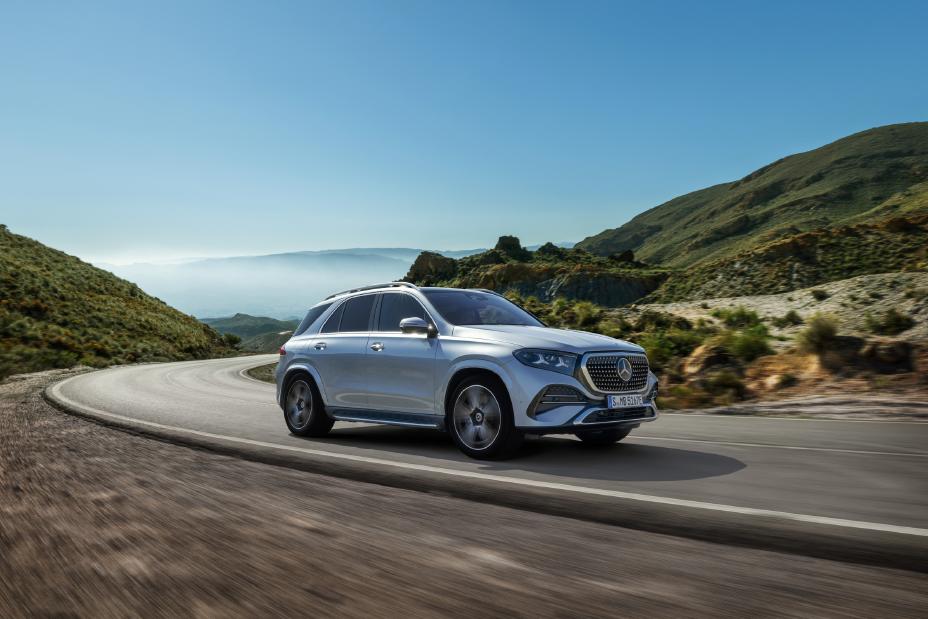
The Mercedes-Benz GLE 450e at 55.9 percent is the surprise of the marginal tier. Mercedes has built the GLE 450e around a 50-mile EPA all-electric range, among the longest in the segment, which produces a 0.62 utility factor. More than three of every five miles run on grid electricity for a daily-charging owner.
The premium is $7,500 against the GLE 350 4MATIC, reasonable for a luxury PHEV. Premium fuel applies on both sides, which keeps the gas-side cost high enough that the PHEV’s electric miles do meaningful work.
The Lexus RX 450h+ at 50.8 percent uses the same drivetrain as the smaller NX 450h+ but carries a higher matched-trim premium of $10,435 against the RX 350 Premium AWD.
The battery and the 37-mile AER are the same, and the RX’s 83 MPGe is one point below the NX’s. The RX commands a thicker price gap because Lexus positions the 450h+ as a flagship trim with equipment the gas Premium doesn’t include.
The Ford Escape PHEV at 48.6 percent is the segment’s last-call entry. Ford has confirmed 2026 will be the final model year for the Escape, which means PHEV inventory should compress on dealer lots through the year. Five-year fuel savings of $2,768 against a $5,700 premium is normal-shaped math, but the PHEV’s FWD-only configuration limits the buyer pool in snow markets. AWD shoppers cross-shop the Tucson PHEV or Sportage PHEV and find similar numbers in a less restricted package.
The Kia Sorento PHEV at 54 percent is the three-row option in the marginal tier. The X-Line SX-Prestige AWD trim carries a $6,700 premium against the equivalent gas Sorento. Five-year savings of $3,620 leaves the buyer with about half the premium to recover from somewhere else. For a family that needs three rows and wants to plug in for the daily commute, the Sorento PHEV is the most affordable seven-passenger PHEV on the market by a meaningful margin.
The Kia Sportage PHEV at 42.3 percent runs the same playbook as the Tucson PHEV underneath. Same battery, same drivetrain, same approximate AER. Kia prices the Sportage PHEV slightly higher than the Tucson PHEV at matched trim, which is why the recovery is a hair lower. The cabin and interior are different enough that brand preference will probably decide rather than the math.
The Mitsubishi Outlander PHEV at 42.5 percent is the value play. The 2026 mid-cycle refresh added a 22.7 kWh battery that pushes EPA all-electric range to 44 miles, the best utility factor in the mainstream tier at 0.58. The matched-trim premium is the smallest in the segment: $4,360 against the new Outlander SEL AWD with the 1.5T mild-hybrid drivetrain.
Mitsubishi has not fully released 2026 PHEV trim pricing yet, so the SEL number here is estimated from the historical SE-to-SEL gap. Verify at the dealer and adjust accordingly.
The BMW X5 xDrive50e at 38.9 percent is unusual in the luxury tier because the matched-trim premium is small, $5,400 against the X5 xDrive40i.
The 50e’s charge-sustaining MPG is actually lower than the 40i’s combined gas figure (22 against 25).
The 40-mile AER and 0.55 utility factor keep the recovery positive. The X5 50e is unusual in needing home-charging discipline more than most PHEVs to stay ahead.
Negative Recovery: When the Premium Buys Something Other Than Fuel Savings
The remaining eight PHEVs land below the marginal tier, with recovery percentages between 11 and 25 percent across five years.
The Volvo XC60 Recharge T8 Plus and Volvo XC90 Recharge T8 Plus carry the heaviest premiums in the mainstream PHEV space, $11,300 and $13,800 respectively. The matched comparator is the B5 mild-hybrid trim because Volvo discontinued pure-gas variants.
Volvo positions the Recharge as the performance trim with 455 horsepower. The buyer is largely paying for that performance plus the all-electric commute, not for fuel cost recovery. Five-year savings of $2,800 to $3,200 against premiums north of $11,000 produces 23 to 25 percent recovery. Consistent with how Volvo has priced the Recharge for years.
The Jeep Wrangler 4xe Sahara at 23.2 percent is the off-road buyer’s PHEV. The 22-mile EPA all-electric range is the shortest in the field. UF lands at 0.38.
The 4xe’s case has never been about fuel savings. It has been about silent low-speed crawling on trails and the federal credit that used to apply. With the credit gone and Stellantis ending the 4xe program after 2025, the remaining buyers are off-road enthusiasts who want the electric torque and don’t care about the math.
Dealers will discount remaining 2025 inventory, which can shift the recovery percentage materially. A 10 percent dealer discount on a $59,690 4xe Sahara, with no discount on the gas Sahara, would cut the effective premium to about $2,450 and lift the effective recovery to about 80 percent.
The Audi Q5 TFSI e at 18.5 percent is also a discontinued model. Audi did not bring the redesigned third-generation Q5 e-hybrid to North America for 2026, so the data here reflects the 2025 final-MY trim. The 23-mile AER produces a 0.39 utility factor, which is on the low end of the field. A reader shopping a leftover 2025 should expect significant dealer markdowns and should recompute the recovery percentage against the negotiated price rather than the listed MSRP.

The Toyota RAV4 Prime XSE AWD at 16.5 percent is the most counterintuitive result. The Prime has a 50-mile AER, the second-highest utility factor in the field at 0.62, and Toyota’s PHEV system is efficient.
With Toyota dropping gas-AWD RAV4 trims for 2026, the matched comparator is the RAV4 Hybrid XSE AWD. The Hybrid is already a 41 MPG vehicle. The PHEV doesn’t save much fuel against a baseline that’s already very efficient.
A reader cross-shopping the Prime against a 28 MPG gas compact crossover from a different brand would see different math, but the same-model comparison is what the methodology demands. The Prime’s case rests on the daily-electric commute and the lower charge-sustaining MPG of 40 being acceptable when the buyer rarely runs in that mode anyway.

The Range Rover Sport P550e Autobiography at 12.1 percent is the headline luxury loss. The matched-trim premium against the Range Rover Sport P400 gas mild-hybrid is $27,900. Five-year fuel savings of $3,364 covers 12 percent of that.
The P550e is paying for 542 horsepower against the P400’s 395, an extra 51 miles of all-electric range, and the Autobiography interior.
The Mazda CX-90 PHEV Premium Sport at 14.6 percent is a frustrating result.
Mazda priced the PHEV at $56,345, which is $8,445 above the inline-6 gas Premium Sport at the same equipment level. The PHEV’s 27-mile AER produces a 0.43 utility factor, and the charge-sustaining MPG of 26 is one better than the gas inline-6’s 25. Gas-mode miles save about $185 across five years. The rest of the savings come from the electric miles, and 27 miles of AER doesn’t generate enough of them.
The Jeep Grand Cherokee 4xe Limited at 11.1 percent is the discontinued companion to the Wrangler 4xe. The matched-trim premium of $15,790 against the gas Limited V6 is the largest in the mainstream segment, and the 26-mile AER produces only modest electric miles. Same caveat applies: the 4xe program is over, dealers will discount, and a heavy markdown can push the effective recovery into the marginal tier.
Home Charging and Daily Mileage Decide the Result
Every recovery number here assumes a buyer who plugs in. The J2841 utility factor anchors to a daily-charging owner. A PHEV that never plugs in runs zero percent of its miles on electricity, the gas-side fuel cost dominates, and the buyer is left with a heavy hybrid they paid extra for.
The matrix below maps the realistic outcomes against two variables: charging access at home and average daily round-trip mileage.

| Charging Access | <30 mi/day | 30-50 mi/day | >50 mi/day |
|---|---|---|---|
| Level 2 home charger | PHEV strong | PHEV marginal | Hybrid likely better |
| Level 1 (120V) only | PHEV marginal | Hybrid likely better | Hybrid likely better |
| No home charging | Hybrid | Hybrid | Hybrid |
Top-left cell (PHEV strong). A daily commute under 30 miles round-trip combined with Level 2 charging at home means the PHEV runs almost exclusively on electricity for routine driving. The gas engine becomes a road-trip backup.
Models with AER above 30 miles cover the typical weekday completely. The Mercedes-Benz GLE 450e at 50 miles, Lexus NX 450h+ at 37 miles, and Mitsubishi Outlander PHEV at 44 miles line up cleanly. So does the Range Rover Sport P550e at 51 miles of AER, if the buyer can absorb the headline math.
Top-middle and middle-left cells (PHEV marginal). Either the commute is longer than the AER allows for full electric coverage, or the home charger is too slow to refill the battery overnight.
A 30-amp Level 2 charger refills a typical 18-kWh PHEV battery in three to four hours. A 12-amp Level 1 outlet takes 12 to 18 hours, which means a buyer driving 40 miles a day on a Level 1 outlet may not start each morning with a full battery.
Cross-shop carefully against the corresponding hybrid model.
Top-right and middle-right cells (Hybrid likely better). Once the daily mileage exceeds the AER significantly, the PHEV is running gas miles at the charge-sustaining MPG, which is generally lower than the corresponding hybrid’s combined MPG. A driver doing 60 miles a day in a Mazda CX-90 PHEV (27 mi AER, 26 MPG charge-sustaining) gets worse fuel economy than a CX-90 hybrid would deliver, and pays $8,445 extra for the privilege.
Bottom row (Hybrid in every column). No home charging means no electric miles, period. Public charging is impractical for daily PHEV operation because the battery is too small for fast charging to make sense and the time investment is disproportionate. A buyer without home charging should walk past every PHEV on the lot and look at the conventional hybrid lineup instead. The hybrid math is friendlier and the use case is identical for someone who never plugs in.
What About Hybrids?
If the charging matrix landed you in any “Hybrid likely better” cell, the next article to read is the five-year math on 2026 conventional hybrid SUVs.
That article runs the same methodology against 14 hybrid SUVs. The recovery percentages are dramatically friendlier because the premiums are smaller and the federal credit was never part of the hybrid math anyway.
The Hyundai Santa Fe Hybrid recovers 219 percent across five years.
2026 PHEV SUV Frequently Asked Questions
Which 2026 PHEV SUV recovers its premium fastest on fuel savings?
The Lexus NX 450h+ Premium AWD leads the field at 96.4 percent recovery across five years. The matched-trim premium against the gas NX 350 Premium AWD is $5,630, which is small for a PHEV with 37 miles of EPA all-electric range and 84 MPGe combined. The Hyundai Tucson PHEV SEL AWD comes second at 59.6 percent, and the Mercedes-Benz GLE 450e third at 55.9 percent.
Do I need home charging to make a PHEV pencil out?
Yes. These five-year fuel savings all assume a daily-charging owner with home access (the SAE J2841 utility factor anchors to that pattern). A PHEV without home charging runs almost entirely on gas in charge-sustaining mode, which is worse fuel economy than the corresponding hybrid would deliver. If you cannot charge at home or at work, a conventional hybrid is the better answer in almost every case.
What happened to the federal tax credit for plug-in hybrids?
The federal Clean Vehicle Tax Credit was terminated for vehicles acquired after September 30, 2025, by the One Big Beautiful Bill Act signed July 4, 2025. For any 2026 PHEV buyer, the federal credit is zero regardless of assembly location, battery composition, or buyer income structure.
State-level programs in Colorado, New Jersey, New York, Illinois, and Oregon may still apply with their own rules. California’s CVRP wound down in late 2023. Check your state’s current list before assuming any credit applies.
What is the SAE J2841 utility factor and why does it matter?
SAE J2841 is the industry-standard formula that maps a PHEV’s all-electric range to a realistic estimate of what share of total miles a typical owner runs on grid electricity.
A 30-mile-AER PHEV runs about 46 percent of miles on electricity. A 50-mile-AER PHEV runs about 62 percent.
The share of electric miles is what produces the fuel savings, and that share scales nonlinearly with AER. Doubling AER does not double savings. Diminishing returns set in once AER covers most daily commutes.
Should I buy a PHEV or the conventional hybrid version of the same SUV?
If you have home Level 2 charging and a daily round-trip commute under the PHEV’s all-electric range, the PHEV likely beats the hybrid on five-year cost.
If you have only Level 1 charging or a commute that exceeds the AER significantly, the hybrid usually wins on math. If you have no home charging at all, the hybrid wins by a large margin.
The decision is less about brand or vehicle and more about your specific charging access and daily mileage pattern.
Why are luxury PHEVs in the negative-recovery tier?
Luxury PHEVs charge premiums of $7,500 to $27,900 above the matched gas trim, and their charge-sustaining MPG is often equal to or lower than the gas comparator’s combined MPG because the PHEV is heavier.
The fuel savings come almost entirely from the electric miles, and even with longer AERs the savings cannot recover the premium across five years on a luxury MSRP.
Buyers in this segment are paying for performance, smoother throttle response, all-electric commuting capability, and trim-level equipment, not for fuel cost savings.
How much does charging at home cost per month?
A PHEV rated at 84 MPGe uses about 12 kilowatt-hours per 30 miles of electric driving (33.7 kWh divided by 84 MPGe is 0.40 kWh per mile). At the U.S. residential average of $0.165 per kilowatt-hour, that costs about $2 per 30 miles, or roughly $50 to $66 per month for a daily-charging owner driving 750 to 1,000 electric miles.
Higher electricity rates in California and the Northeast raise that monthly cost in proportion. At the national average rate, an electric mile costs about 6.6 cents, against about 12 cents for a gas mile at 36 MPG on $4.40 premium.
Will a PHEV battery last past the warranty?
The reliability data on PHEV batteries through the first generation (Toyota, Ford, Hyundai, Kia models from 2017 onward) shows replacement rates below 5 percent at the 8-year/100,000-mile warranty mark. Federal law requires PHEV batteries to be warranted for 8 years or 100,000 miles (10 years/150,000 miles in California-emissions states). The TWD reliability database tracks owner-reported battery and drivetrain complaints by model and year if you want to validate a specific generation before signing.
What happens if I never plug in my PHEV?
You drive a heavy hybrid that gets worse fuel economy than the corresponding hybrid version of the same model. You paid thousands extra for the larger battery and charging hardware you never use.
Most PHEVs have a charge-sustaining MPG that is 5 to 15 MPG lower than their hybrid sibling because the larger battery adds 300 to 500 pounds. The Mazda CX-90 PHEV at 26 MPG charge-sustaining is barely better than the inline-6 gas model at 25 MPG. The Toyota RAV4 Prime at 40 MPG charge-sustaining is 1 MPG worse than the RAV4 Hybrid.
If you never plug in, buy the hybrid.
Is highway driving worse for PHEV fuel economy than city driving?
Mostly yes. Once the battery depletes and the PHEV is running in charge-sustaining mode, highway driving is the worst case for electrified powertrains in general. The electric motor cannot regenerate efficiently at sustained speeds, and the engine runs near peak load rather than cycling on and off.
A PHEV that gets 35 MPG charge-sustaining combined may only achieve 30 to 32 MPG at sustained highway speeds. For long highway trips that exceed the AER, the gas-only fuel economy is the relevant number, and the hybrid version of the same model often beats it.
Should I buy a 2026 new PHEV or a 2023-2024 used one?
The math swings hard on used PHEV pricing. A 2023 PHEV with 30,000 miles often sells for 50 to 60 percent of its original MSRP, which dramatically improves the recovery percentage if the battery health checks out.
The risk is the battery. A degraded high-voltage pack on an out-of-warranty PHEV can cost $4,000 to $8,000 to replace. Battery state-of-health testing at a dealer or independent shop before signing is essential.
The TWD reliability database can help identify which model years have the cleanest owner reports.
What’s the difference between MPGe and MPG on a PHEV’s window sticker?
MPGe (miles per gallon equivalent) measures how far the vehicle goes on the energy content of one gallon of gasoline, expressed as electricity (33.7 kilowatt-hours equals one gallon-of-gasoline-equivalent under EPA conversion). MPGe applies in charge-depleting mode, when the PHEV runs on grid electricity. MPG applies in charge-sustaining mode, when the battery is depleted and the vehicle operates as a regular hybrid. The combined window-sticker number is MPGe; the smaller secondary number is the charge-sustaining MPG. For five-year fuel-cost math, both numbers matter.
Verdict
If you have home charging and a commute under 35 miles round-trip, the PHEV math works on most models in the field. The Lexus NX 450h+ leads. The Tucson PHEV, Mercedes GLE 450e, Sorento PHEV, and Sportage PHEV all land in the workable zone.
If your commute exceeds the AER or you can only charge on a 120-volt outlet, the conventional hybrid version of the same model usually wins on five-year cost.
If you have no home charging at all, walk past every PHEV on the lot.
I pulled the data from manufacturer specification pages and EPA fueleconomy.gov. Full specifications and trim availability for any model are best confirmed at the manufacturer’s media site for the brand you are cross-shopping.
Toyota’s pressroom publishes 2026 RAV4 Prime spec sheets. Mazda’s news site publishes CX-90 PHEV pricing. Kia Media covers the Sorento and Sportage PHEVs. The 2025 final-MY data for the Wrangler 4xe, Grand Cherokee 4xe, and Audi Q5 TFSI e is on the respective brand consumer sites. Dealers with leftover inventory will be the most accurate source on actual transaction pricing for those three.

Michael Kahn
Michael Kahn is the writer, photographer, and publisher behind The Weekly Driver. He cares about how cars drive and what they're like to own. He covers automobile industry news, car shows and events, and new car reviews. The reviews come from behind the wheel: day trips that favor back routes, treating a good meal as half the reason to go. He directs and produces the visual media, matching each car to a setting and mood that fit it. When he's not reviewing new cars, Michael races paddleboards, camels, and ostriches, along with the occasional exotic car on the racetrack, and has driven in every state and country visited.
https://theweeklydriver.com