

Ken Gross put it plainly before the cars ever reached the grass. “Although we have had the occasional Toyota 2000GT or more recent concepts, the Pebble Beach Concours d’Elegance has not presented Japanese racing cars in the past.”
Seventy-five years of shows, and the country that won Le Mans outright, took Daytona overall, and built a hybrid prototype that beat everything at La Sarthe had never had a class of its own.
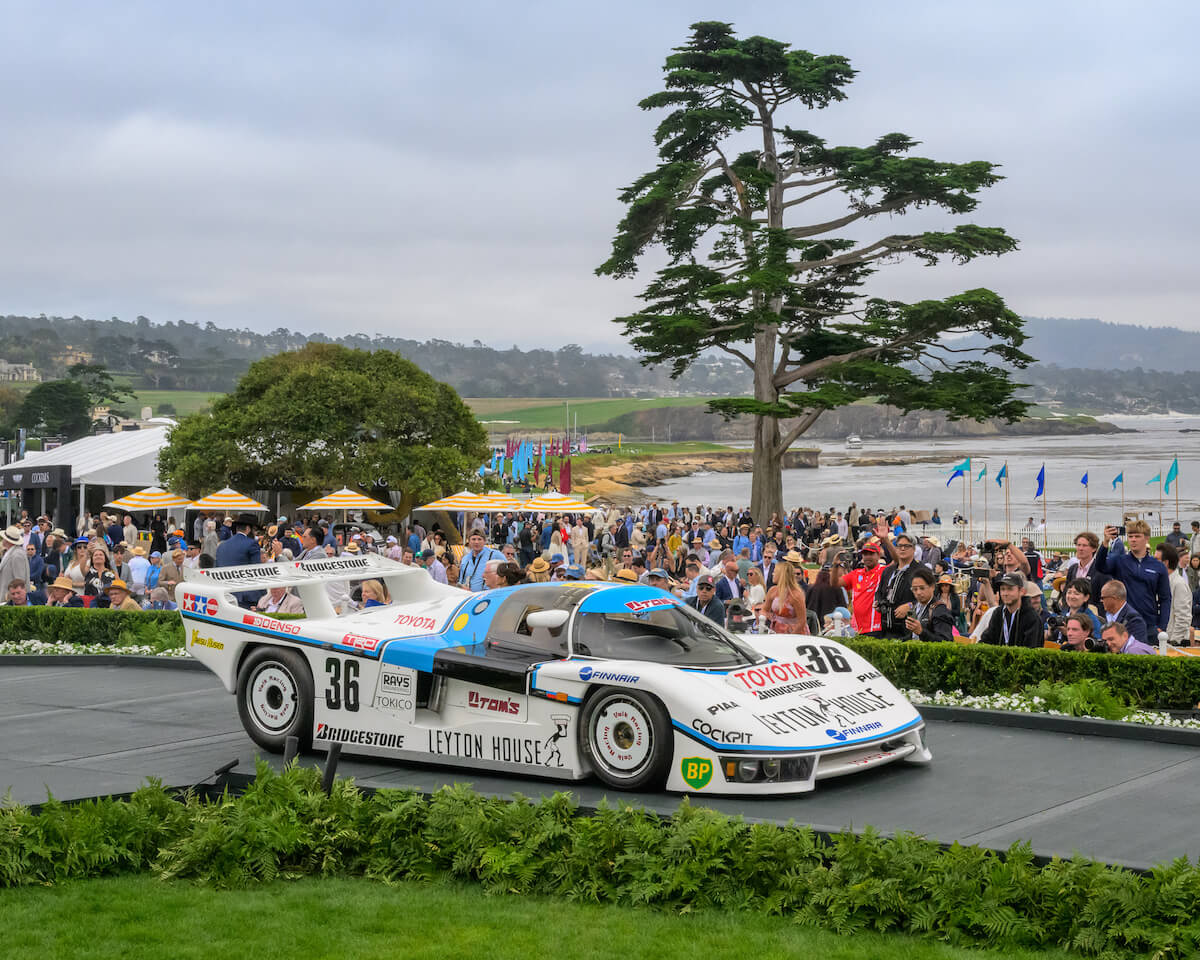
That ended on August 16. The Pebble Beach Concours d’Elegance ran a Japanese Motorsport class covering three decades of endurance racing, and a 1985 Toyota 85C L Longtail Le Mans Coupe won it.
Key Takeaways
- The 75th Concours staged its first Japanese Motorsport class, on Sunday, August 16, 2026.
- A 1985 Toyota 85C L Longtail Le Mans Coupe took first, shown by Hisashi Kunie of Gifu-City, Japan.
- The class spanned 1985 to 2018, from Toyota’s first serious Le Mans car to the TS050 Hybrid that finally won the race.
- Mazda’s 787B and 787 both appeared. The 787B is the only rotary-engined car ever to win Le Mans outright.
- Nissan’s Group C car on the field won the 1992 24 Hours of Daytona outright, the first Japanese car and all-Japanese team to do so.
- Honda brought two cars, reflecting a company that reached motorsport through engines before chassis.
- Chief Class Judge Ken Gross said the class demonstrates Japanese engineering “on a world-beating level.”
What Won
| Place | Car | Shown by |
|---|---|---|
| 1st | 1985 Toyota 85C L Longtail Le Mans Coupe | Hisashi Kunie, Gifu-City, Japan |
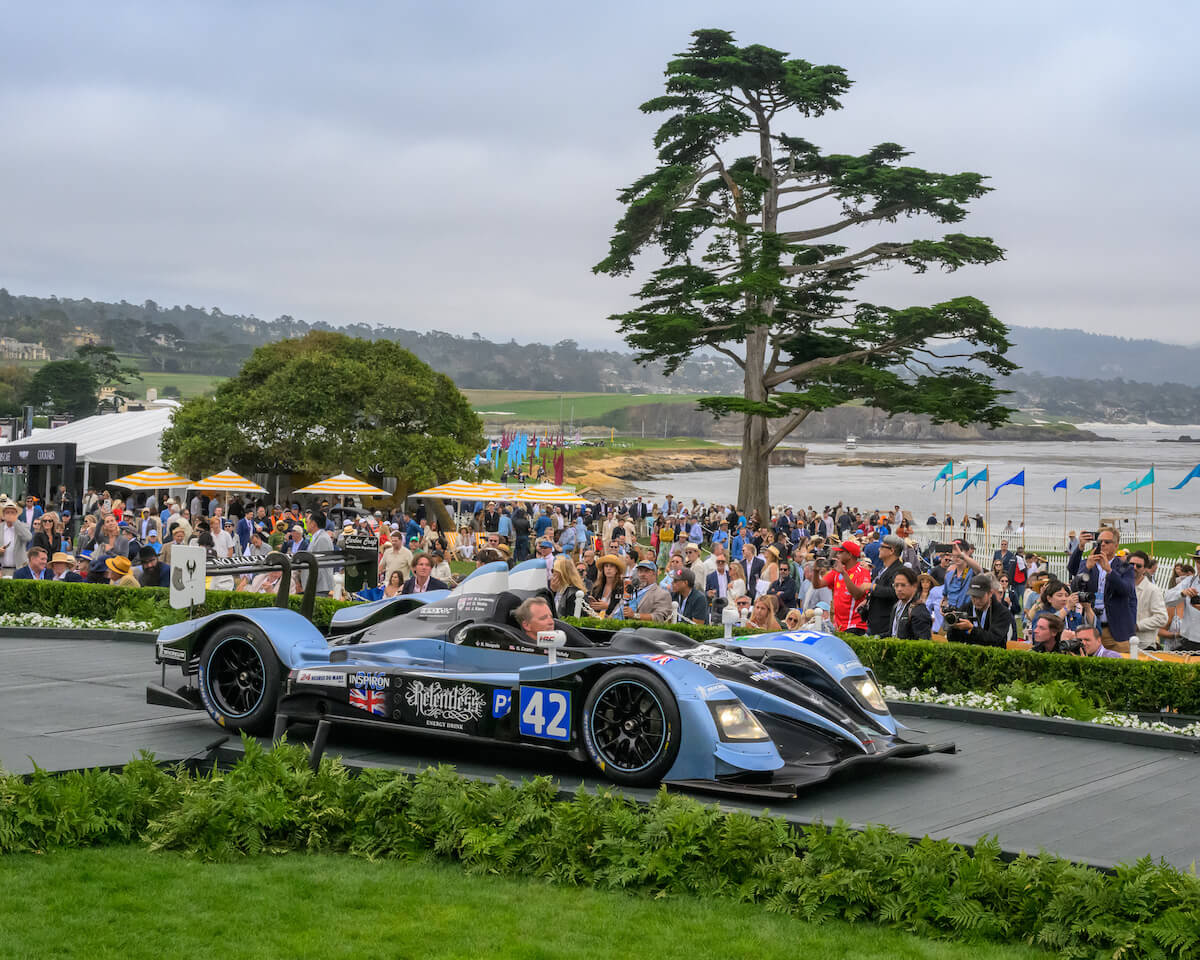
| 2nd | 2010 Honda HPD ARX-01c Le Mans Prototype | Robert Neapole, Santa Clarita, California |
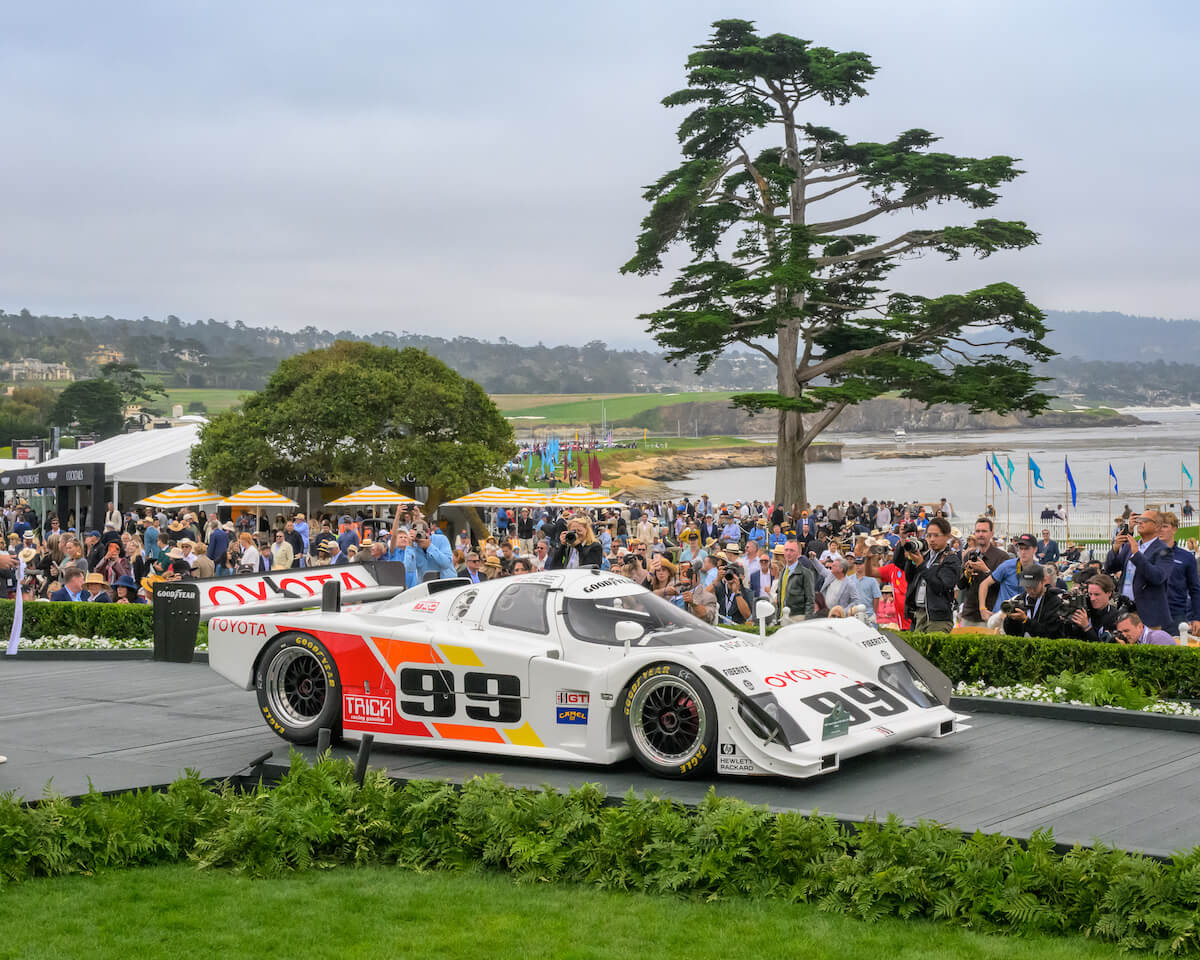
| 3rd | 1990 Toyota Eagle HF89 IMSA GTP Coupe | Anthony McIntosh |
Why 1985 Is the Starting Line
Japanese manufacturers spent decades building dependable cars for ordinary buyers, and almost nothing that could run at Le Mans.
That changed in 1985, when Toyota built the 85C. It was the marque’s first committed attempt at the fastest end of endurance racing, and its debut at the 24 Hours started a pursuit that ran for 33 years.
It ended in 2018, when the TS050 Hybrid gave Toyota its first overall win at Le Mans. Both ends of that arc stood on the same fairway.

“For nearly 70 years, Toyota has pursued ‘ever-better’ motorsports through relentless competition, from our first overall win at Le Mans, to championship milestone victories across IndyCar, IMSA, NASCAR, and WRC,” said Jeff Bal, director of operations at GAZOO Racing. “The TS050 Hybrid stands as a defining chapter in that history.”
Mazda Got There First
Toyota spent 33 years chasing an outright Le Mans win.
Mazda, a smaller company running an engine layout nobody else would touch, took it in 1991 with the 787B and its four-rotor Wankel.
Groundwork came a year earlier, when the 767B won the GTP class. Both the 1990 787 and the 1991 787B came to Pebble Beach.
“Showcasing the 1990 Mazda 787 and the historic 1991 787B at the Pebble Beach Concours d’Elegance is a profound validation of the innovation and challenger spirit that defines our brand,” said Brad Audet, chief marketing officer of Mazda North American Operations.
Honda Arrived Through the Engine Bay
Before Honda built prototypes, it built engines that won world championships in someone else’s chassis, powering Williams and McLaren through their dominant run in the 1980s.

Two cars carried that evolution onto the lawn: a 1996 NSX-GT2 Le Mans Coupe and an HPD ARX-01 prototype, which took second in class.
“Our founder, Soichiro Honda, believed in competition as a means to improve our company, our engineers and our products, so racing is deeply engrained in the corporate culture of Honda,” said David Salters, president of Honda Racing Corporation USA.
Nissan Won Daytona With an All-Japanese Team
Nissan’s 1990 R91CP won the 1992 24 Hours of Daytona overall, the first Japanese car to take the race and the first all-Japanese team to do it.

Group C ended, the cars scattered into private hands, and a race result that mattered enormously in Japan stayed a footnote in most American coverage.
Seventy-Five Years Is a Long Time to Wait
Concours judging has historically rewarded coachwork, and the great prewar bodies came out of France, Italy, Britain and the United States. Japan built cars for people to drive to work.
That framing kept an entire racing tradition off the lawn until this year.
The cars that finally turned up hold overall wins at Le Mans and Daytona between them.
“The highly developed and race-winning competition cars on the lawn on Sunday dramatically demonstrate the knowledge, sophistication, experience and skill of Japanese automakers on a world-beating level,” Gross said.
The rest of the day: Best of Show went to a 1935 Duesenberg SSJ Special Speedster once owned by Clark Gable. The 75th Concours drew 218 cars from 14 countries and pushed its lifetime charitable total past $50 million.
Frequently Asked Questions
What won the Japanese Motorsport class at Pebble Beach 2026?
A 1985 Toyota 85C L Longtail Le Mans Coupe, shown by Hisashi Kunie of Gifu-City, Japan.
Had Pebble Beach ever run a Japanese class before?
Not for Japanese racing cars. Chief Class Judge Ken Gross said individual cars such as the Toyota 2000GT and more recent concepts had appeared, but the Concours had never presented Japanese competition machinery as a class in its 75 years.
What years did the class cover?
1985 through 2018, from the Toyota 85C that began the marque’s Le Mans campaign to the TS050 Hybrid that completed it.
Which Mazdas were on the field?
The 1990 Mazda 787 and the 1991 Mazda 787B. The 787B won the 24 Hours of Le Mans outright in 1991, the first Japanese car to do so.
What is significant about the Nissan R91CP?
It won the 1992 24 Hours of Daytona outright. That was the first victory in the race for a Japanese car, achieved by an all-Japanese team.
What did Honda bring?
A 1996 Honda NSX-GT2 Le Mans Coupe and an HPD ARX-01 Le Mans Prototype. The ARX-01c took second in class.
When did Toyota first win Le Mans overall?
2018, with the TS050 Hybrid. The pursuit started with the 85C’s debut at the race in 1985.
Why did it take 75 years for this class to happen?
Concours judging grew up around prewar coachbuilt bodies from Europe and the United States, a tradition Japanese manufacturers were not part of. Japan’s contribution to the automobile came through mass production and later through motorsport engineering, neither of which fit the format the show was built on.
Who is Ken Gross?
The Chief Class Judge for the Pebble Beach Concours d’Elegance and a member of its Selection Committee, which decides which cars are invited.
Will the class return in 2027?
The Concours has announced four classes for August 15, 2027, covering Delage, Prewar Open-Front Town Cars, Delahayes, and 40 years of the Ferrari F40. The Concours said additional classes would be announced in fall 2026.
Japan’s Le Mans and Daytona Winners Predate the Class
A Mazda with a rotary engine won Le Mans outright in 1991. A Nissan took Daytona overall in 1992 with an all-Japanese team. A Toyota hybrid won Le Mans in 2018 after 33 years of trying. All of that happened before the Pebble Beach Concours d’Elegance gave Japanese racing cars a class.
A 1985 Toyota shown by an owner from Gifu-City, Japan, won on a lawn that had not asked for it in seventy-five years.

Michael Kahn
Michael Kahn is the writer, photographer, and publisher behind The Weekly Driver. He cares about how cars drive and what they're like to own. He covers automobile industry news, car shows and events, and new car reviews. The reviews come from behind the wheel: day trips that favor back routes, treating a good meal as half the reason to go. He directs and produces the visual media, matching each car to a setting and mood that fit it. When he's not reviewing new cars, Michael races paddleboards, camels, and ostriches, along with the occasional exotic car on the racetrack, and has driven in every state and country visited.
https://theweeklydriver.com