
Moving coast to coast, buying a car from a dealer three time zones away or sending a vehicle to a college student? Shipping it is usually simpler than spending four or five days behind the wheel. The catch is that cross-country quotes can vary by hundreds of dollars for the same trip, and the cheapest number on the screen is not always the price you end up paying.
This guide walks you through what cross-country car shipping really costs, what drives the price up or down, how long you will be without your car and how to book with confidence.
Quick answer: Published research puts most car shipments between USD 500 and USD 1,700, with cross-country moves landing at the top of that range or above it. For a coast-to-coast example, Move.org’s quote research found an average of USD 1,403 on an open trailer and USD 1,992 enclosed for a San Diego to Boston shipment of 3,038 miles.
How Much Does It Cost to Ship a Car Across the Country?
ConsumerAffairs estimates that it typically costs at least USD 500 to ship a car a short distance, and likely more than USD 1,700 for cross-country shipping. On a per-mile basis, its guide puts car shipping at roughly 53 cents to USD 2.30 a mile. The low end of that range applies to long hauls, because the per-mile rate drops as the distance grows.
Move.org’s October quote research gives a useful baseline across distances: an average of about USD 914 for open transport and about USD 1,342 for enclosed transport. Its averages are based on shipping a running 2025 Toyota Camry with a one-week lead time.
Cross-Country Car Shipping Cost Examples
The table below shows what published sources report for one of the longest routes in the continental U.S. Each source uses its own method, so treat these as reference points rather than live quotes.
| Route | Distance | Transport Type | Published Price | Source |
|---|---|---|---|---|
| San Diego, CA to Boston, MA | 3,038 miles | Open | USD 1,403 average | Move.org quote research |
| San Diego, CA to Boston, MA | 3,038 miles | Enclosed | USD 1,992 average | Move.org quote research |
| San Diego, CA to Boston, MA | 2,998 miles | Not specified | USD 1,881 to USD 3,045 typical range | FreightWaves route guide |
| All distances (average) | Varies | Open | About USD 914 | Move.org quote research |
| All distances (average) | Varies | Enclosed | About USD 1,342 | Move.org quote research |
Why the numbers differ: Sources gather quotes on different dates, for different vehicles and with different lead times. That is exactly why your own quote can land above or below any published average. Use these figures to judge whether a quote is realistic, not to predict it to the dollar.
Car Shipping Cost by Vehicle Size and Condition
Bigger vehicles take up more space and weight on the trailer, and cars that do not run need extra loading equipment, so both cost more to move. Move.org compared open-transport quotes for three vehicle sizes on a 500-mile route from Baltimore, Maryland, to Myrtle Beach, South Carolina, with a one-week lead time:
| Vehicle | Type | Running | Inoperable |
|---|---|---|---|
| 2023 Dodge Challenger | Car | USD 696 | USD 978 |
| 2023 Honda CR-V | SUV | USD 743 | USD 1,001 |
| 2023 Ford F-150 | Truck | USD 959 | USD 1,055 |
Expect a similar pattern on a cross-country route, with higher totals because of the extra distance.
What Affects Cross-Country Car Shipping Cost?
Several factors decide where your quote lands:
- Distance: Total cost rises with mileage, but the cost per mile falls. A 3,000-mile trip will not cost six times as much as a 500-mile trip.
- Trailer type: Enclosed transport costs more because a covered trailer carries fewer vehicles. In Move.org’s data, enclosed service ran about 47% higher than open transport on average and about 42% higher on its San Diego to Boston example.
- Vehicle size and weight: SUVs and pickups generally cost more than smaller cars, as the table above shows.
- Vehicle condition: A car that does not run needs a winch or other loading equipment. A-1 Auto Transport estimates that shipping a non-running vehicle costs USD 150 to USD 500 more than shipping an operable one.
- Season and demand: Prices shift with the season, the route’s popularity and how many trucks are running your lane that week.
- Pickup and delivery locations: Major-city routes on busy interstate corridors are generally easier to fill than remote rural addresses.
- Timing: A narrow pickup window or an expedited request usually costs more than a flexible schedule.

How to Ship a Car Across the Country
Follow these steps to get from first quote to delivery without surprises.
- Gather your details. Have your pickup and delivery ZIP codes, the vehicle’s year, make and model, any modifications, whether the car runs, and the first date it is available.
- Request several quotes with the same information. Matching inputs is the only way to compare prices fairly. Many companies let you do this online. Cross Auto Transport, for example, has a quote form that asks for your route, vehicle details, trailer preference and whether the car is inoperable.
- Compare more than the price. Check the estimated pickup window, transit time, deposit or broker fee, balance due to the carrier, cancellation terms and insurance details.
- Verify the company. Look up its USDOT and MC numbers in FMCSA’s public records before you pay anything.
- Book and get the terms in writing. Confirm when you will receive the assigned carrier’s name and contact details.
- Prepare your car. Clean it, photograph it, remove personal items and follow the carrier’s instructions on fuel level and alarms.
- Inspect at pickup. Walk around the car with the driver and make sure every existing scratch or dent is marked on the bill of lading.
- Inspect at delivery. Compare the car with your pickup photos before you sign, and note any new damage on the bill of lading.
Cross-Country Car Shipping Options
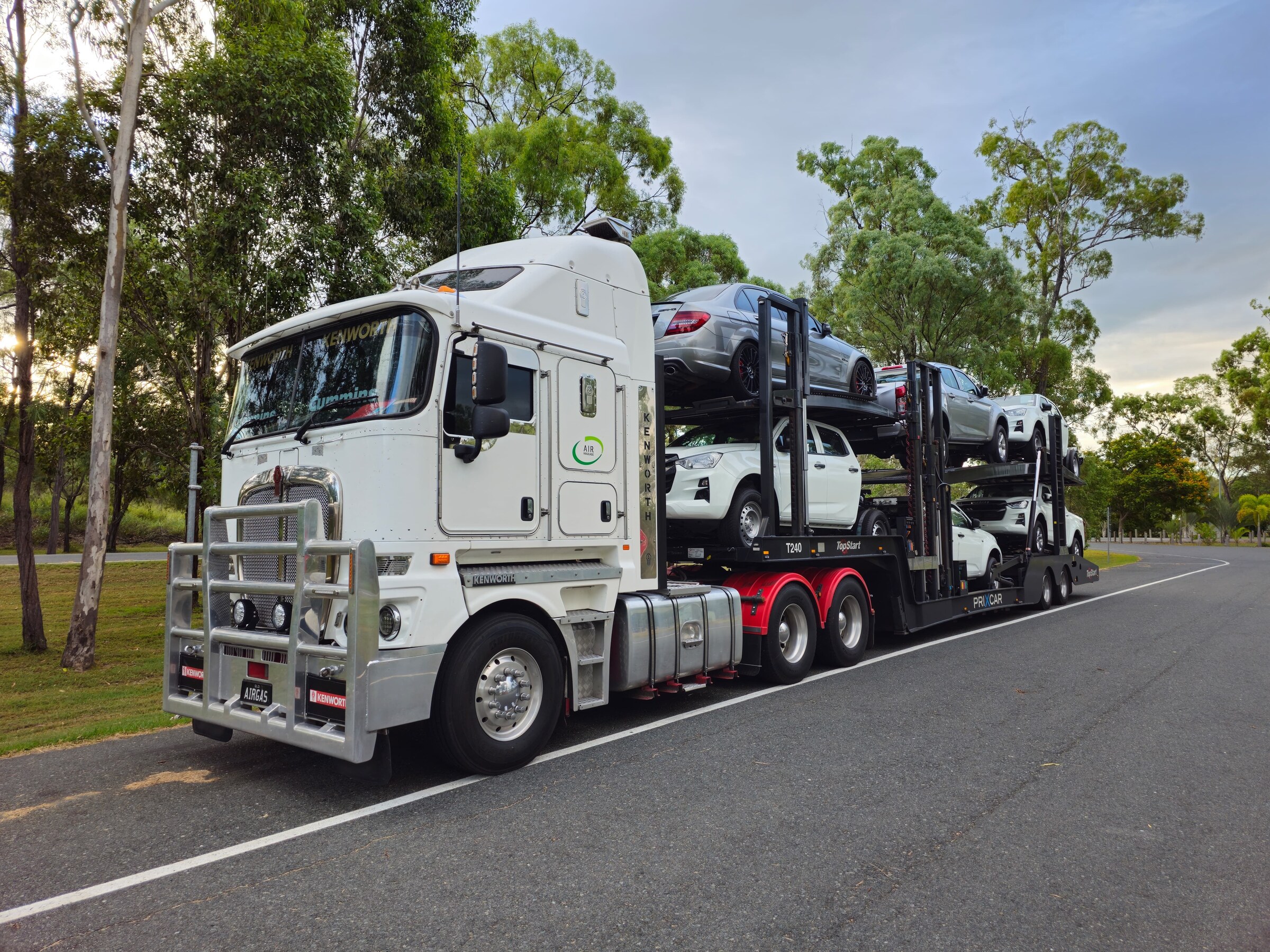
Open transport is the standard choice. Your car rides on a multi-car trailer exposed to weather and road debris, much like new cars heading to dealerships. It is the most affordable and widely available option, and it works well for daily drivers.
Enclosed transport places your car inside a covered trailer, protecting it from the elements. It costs more, but it is worth considering for classic, luxury, exotic, freshly restored or low-clearance cars. If your car sits low, ask whether the carrier uses a liftgate or ramps, because a covered trailer alone does not solve loading-clearance problems.
Door-to-door service brings the truck as close to your address as it can safely and legally get. On narrow residential streets, you may need to meet the driver at a nearby parking lot or other truck-accessible spot.
Terminal-to-terminal service, where offered, means dropping off and collecting your car at a storage facility. Factor in the cost and time of getting to each terminal before assuming it is the better deal.
Expedited shipping means paying a premium so your load is more attractive to carriers and gets picked up faster. It speeds up pickup, but most companies still describe delivery dates as estimates.
How Long Does It Take to Ship a Car Across the Country?
Plan for two separate waiting periods:
- The pickup window: Montway says this is not part of the transit time and generally takes 1 to 5 days from your desired pickup date.
- Transit time: Once loaded, Montway estimates 7 to 9 calendar days for distances of 2,400 miles and up.
Car haulers typically cover about 400 to 500 miles a day, but a truck carrying seven to nine vehicles makes several pickups and drop-offs along the way. Weather, traffic, hours-of-service rules and other vehicles on the load can all add time. When you compare quotes, ask each company for both the pickup window and the transit estimate, and add them together to see how long you will really be without your car.
How to Find the Best Car Shipping Company
A low quote means little if the company cannot deliver on it. Before you book, check these points:
- Licensing: Every interstate broker and carrier should have a USDOT number, and companies with operating authority also have an MC number. You can look these up in FMCSA’s records.
- Broker or carrier: Brokers arrange the shipment and assign a carrier, while carriers own the trucks. Both are common and legitimate, but you should know which one you are dealing with and verify the carrier once it is assigned. FMCSA requires property brokers to file a USD 75,000 surety bond or trust fund.
- Cargo insurance: Do not assume registration means your car is covered. FMCSA’s insurance table lists public liability and cargo requirements separately, and for non-hazardous for-hire property carriers, the federal cargo requirement is USD 0. Ask for the carrier’s cargo coverage limit, exclusions and deductible in writing.
- Reviews and complaints: Read recent reviews on more than one platform and look for patterns, such as repeated complaints about late pickups or surprise fees.
- Written terms: A trustworthy company will explain its deposit, balance, cancellation policy and claims process before you pay.
Red flags: a quote far below every other offer, pressure to pay a large deposit immediately, a refusal to give USDOT or MC numbers, or a driver and truck that do not match your dispatch details. FMCSA also launched its new Motus registration system in May, built to strengthen identity checks and fight fraud, but you should still verify every company handling your car.
How to Prepare Your Car for Shipping
A little preparation protects you if anything goes wrong:
- Wash the car so existing scratches and dents are easy to see.
- Take dated photos of every panel, wheel and window, plus close-ups of existing damage.
- Remove personal belongings. Items left inside are generally not covered by cargo insurance.
- Remove or deactivate toll tags so you are not charged for tolls along the route.
- Leave about a quarter tank of fuel, which is a common industry recommendation. For an EV, ask the carrier about the required charge level and check for a transport mode in your owner’s manual.
- Turn off the alarm and give the driver any instructions needed to start, shift or secure the car.
- Secure or remove loose parts such as roof racks, bike racks and loose trim.
- Disclose mechanical problems. Tell the company whether the car starts, rolls, steers and brakes so the carrier brings the right equipment.
Cheapest Way to Ship a Car Across the Country
If keeping costs down is your priority, these moves make the biggest difference:
- Choose open transport unless your car’s value or condition calls for enclosed service.
- Be flexible on dates. A wider pickup window gives the broker more trucks to choose from.
- Book ahead rather than requesting a last-minute or expedited pickup.
- Use a truck-accessible meeting point near a major highway if your street is hard to reach.
- Compare written quotes and ask what could change the final price.
Is shipping cheaper than driving? Not always, but the comparison is closer than it looks. Driving cross-country means fuel, several nights of lodging, meals and days off work, plus thousands of extra miles of wear on your car. If you do decide to drive, a few basic road trip preparations, starting with a thorough inspection before you leave, can help you avoid breakdowns along the way. AAA’s latest Your Driving Costs study found that depreciation, not fuel, is the largest ownership expense, averaging USD 4,422 a year for a new vehicle. That is an annual figure rather than a per-trip cost, but it is a reminder that every added mile has a price.
Other alternatives: You can tow your car behind a rental truck if you have the right equipment and are comfortable driving even more cautiously than usual. On the East Coast, Amtrak’s Auto Train carries passengers and their vehicles between Lorton, Virginia, and Sanford, Florida, but it only serves that one corridor.
Shipping a Car Across the Country: Conclusion
Cross-country car shipping sits at the high end of published price ranges. Move.org’s coast-to-coast example averaged about USD 1,400 on an open trailer and around USD 2,000 enclosed, while ConsumerAffairs says cross-country moves are likely to cost more than USD 1,700. Your final price depends on the distance, trailer type, vehicle size, condition, season and how flexible your dates are.
The smartest approach is to request several quotes with identical details, verify each company’s FMCSA records, ask for cargo insurance details in writing and document your car’s condition at both pickup and delivery. Plan for the pickup window and the transit time separately, and you will have a realistic picture of both the cost and the timeline.
Shipping a Car Across the Country: FAQ
How much does it cost to ship a car across the country?
ConsumerAffairs says cross-country shipping is likely to cost more than USD 1,700. Move.org’s San Diego to Boston example averaged USD 1,403 on an open trailer and USD 1,992 enclosed. Your quote will depend on the route, vehicle and timing.
What is the cheapest way to ship a car cross-country?
Open transport with a flexible pickup window is usually the cheapest carrier option. Booking ahead, meeting the truck at an accessible location and comparing several written quotes can also lower your cost.
How long does it take to ship a car across the country?
Montway estimates 7 to 9 calendar days of transit for distances of 2,400 miles and up. Add the pickup window, which generally takes 1 to 5 days, to estimate the total time.
Is open or enclosed transport better for a cross-country move?
Open transport suits most daily drivers and costs less. Enclosed transport is worth the extra cost for classic, luxury, restored or low-clearance cars that need protection from weather and road debris.
Does my car need special insurance to be shipped?
The carrier’s cargo insurance is what covers your car during transport, but coverage limits and exclusions vary. Ask for the details in writing, and check whether your own auto policy offers any additional protection.
Can I ship a car that does not run?
Yes. Carriers move non-running vehicles with a winch or other loading equipment, usually for an extra fee. Tell the company whether the car rolls, steers and brakes when you request a quote.
Can I leave personal items in the car?
It is safest to remove them. Personal belongings are generally not covered by cargo insurance and can shift or be damaged in transit.

Matthew Wilde
Matthew Wilde is an automotive journalist with experience contributing to leading publications. He focuses on delivering clear, well-researched analysis of automotive industry news and vehicles. Growing up surrounded by a variety of cars, Matthew developed a strong foundation in automotive technology and design. His work emphasizes accuracy and depth, aimed at informing both enthusiasts and industry professionals with straightforward, precise reporting.
https://theweeklydriver.com/