
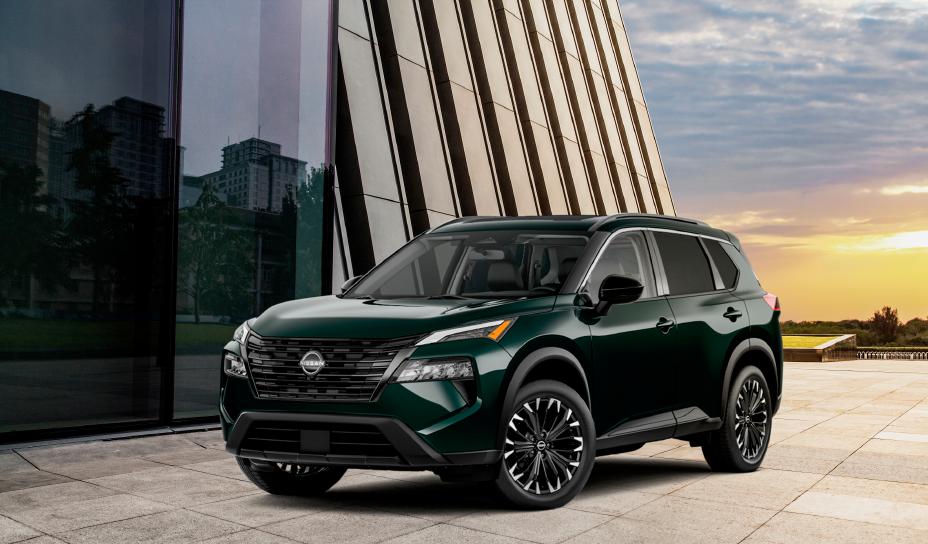
A dealer listing that says the recalls are done tells you almost nothing about a used Nissan Rogue. Under the largest of the three federal campaigns covering its three-cylinder engine, a completed repair means one of two things. Either a technician looked in the oil pan, found nothing, and changed the oil.
Or the technician found metal, called Nissan, and spent up to fifteen hours putting a new engine in the car.
Both cars get the same green checkmark. They are not the same used car, and the paperwork does not distinguish them.
Nissan has filed three separate recalls on the 1.5-liter VC-Turbo, the variable-compression three-cylinder that has powered the Rogue since 2022. Two cover engine bearings. One covers a throttle body that Nissan initially told regulators was not an unreasonable safety risk. Between them they reach most of the Rogues built from late 2022 onward, and the populations overlap enough that Nissan says so in writing.
Key Takeaways
- The engine arrived for 2022. Every US-market 2021 Rogue used a 2.5-liter naturally aspirated four. The 1.5-liter VC-Turbo became the Rogue’s engine for 2022 and remains standard on every 2026 trim.
- “Recall completed” hides a fork. Under 25V437 an inspection with no debris means new oil and a gasket, under an hour of labor. Debris confirmed by Nissan’s Powertrain Call Center means a replacement engine, up to fifteen hours.
- The three campaigns overlap. Nissan’s own filing states that certain Rogues in the earlier recall are remedied of the later defect by the earlier repair. Totals of 640,000 or 737,000 Rogues are sums of overlapping populations.
- Defect rates are not comparable. Nissan estimated 1.2 percent of 25V437 vehicles carry the bearing defect and 0.6 percent for 26V080. For the throttle body campaign it estimated 100 percent.
- Nissan first planned a service campaign, not a recall. On October 13, 2025 it judged the throttle defect did not create an unreasonable safety risk. It filed a voluntary recall on February 4, 2026, after four months of discussion with regulators.
- Warning signs come early. Nissan’s filings state bearing failures are not typically instantaneous and give advance notice through engine-bay noise, rough running, a check-engine light, and cluster messages.
- A long-block warranty extension exists. Reporting on Nissan’s March 2026 bulletin describes coverage stretched to 120 months or 120,000 miles, with reimbursement for owners who already paid.
Which Rogues Have the VC-Turbo
This is the first thing to settle, and listings get it wrong constantly. The current-generation Rogue launched for 2021 with a 2.5-liter naturally aspirated four rated at 181 horsepower.
That engine appears in none of the three recalls.
The variable-compression three-cylinder replaced it for 2022, rated at 201 horsepower and 225 lb-ft, and it is the only engine offered on the 2026 car.
| Model year | Engine | Output | Covered by the three campaigns |
|---|---|---|---|
| 2021 | 2.5-liter naturally aspirated four | 181 hp / 181 lb-ft | Check the VIN, see below |
| 2022 | 1.5-liter VC-Turbo three-cylinder | 201 hp / 225 lb-ft | 25V437 |
| 2023 | 1.5-liter VC-Turbo three-cylinder | 201 hp / 225 lb-ft | 25V437, 26V080 |
| 2024 | 1.5-liter VC-Turbo three-cylinder | 201 hp / 225 lb-ft | 25V437, 26V080, 26V081 |
| 2025 | 1.5-liter VC-Turbo three-cylinder | 201 hp / 225 lb-ft | 26V080, 26V081 |
The 2021 question has no clean answer. Campaign 25V437 lists “2021-2024 Rogue” and opens its production window on March 12, 2021. Yet no 2021 Rogue sold here came with a VC-Turbo. Nissan’s filing resolves this by defining the affected cars through engine serial number traceability rather than model year, which means the label is wider than the defect. If you are looking at a 2021, the VIN lookup is the only answer that counts.
The Three Campaigns
Two of these are bearing recalls that grew out of a federal investigation. Regulators opened PE23023 in December 2023 after owner reports of engine failure, knocking, and metal shavings in the oil pan. That inquiry closed into 25V437 in June 2025.
| Campaign | Filed | Vehicles | Estimated defect rate | Problem |
|---|---|---|---|---|
| 25V437 | June 27, 2025 | 443,899 total, of which 348,554 Rogues | 1.2% | Manufacturing defect in the main, A-, C- and L-link bearings |
| 26V080 | February 11, 2026 | 323,917 Rogues | 0.6% | Oil temperature degrades lubrication, bearings seize |
| 26V081 | February 11, 2026 | 318,781 Rogues | 100% | Throttle body gear fractures |
The 443,899 figure gets quoted as a Rogue number and is not one. That campaign also swept in 84,536 Infiniti QX50s, 5,685 Altimas and 5,124 Infiniti QX55s, all carrying the related 2.0-liter four-cylinder VC-Turbo. The four sub-counts reconcile to the total exactly.

What you cannot do is add the three campaigns together. Nissan’s February filing states plainly that certain 2021-2024 Rogues already covered by 25V437 will be remedied of the newer defect if they receive the earlier repair. The same document notes that some 2024-2025 cars sit in both February campaigns at once.
The Repair Has Two Outcomes
Here is where a used listing stops being useful. Under 25V437, Nissan classified the remedy as inspect and repair, and it branches.
A technician drops the oil pan and looks for specific metal debris, budgeted at under an hour.
If nothing turns up on a 1.5-liter car, the fix is a new oil pan gasket, fresh oil, and an engine control module reflash, another half hour. If debris does turn up and Nissan’s Powertrain Call Center confirms it, the instruction is to replace the engine, and the filing allows up to fifteen hours for that work.
Neither outcome carries a do-not-drive or park-outside advisory. Both close the recall.
So a Rogue with a clean service record and a Rogue that quietly received a new long block last spring can present identically on a vehicle history report.
The second car is arguably the better buy.
You will not learn which one you are looking at without asking a Nissan dealer to read the repair order behind the campaign closure.
The Throttle Recall Nissan Nearly Did Not File
Campaign 26V081 is the strangest of the three, and its chronology is worth reading because Nissan wrote the cause down.
On February 27, 2025, a dealer technician reported a no-start on a 2024 Rogue in a fleet. The throttle plate had stuck closed. Over the following two months Nissan traced it to a fractured gear inside the electronic throttle chamber. By early summer the company had found the reason in its own records: at the start of 2024 production it had changed the engine control module software, and the new routine held the plastic gear against its mechanical stopper longer during each start-up diagnostic. Repeated loading stressed the teeth until one broke. A loose fragment can then jam the gear interface.
In other words, a software change Nissan shipped is what breaks the part.
Regulators sent a preliminary information request that summer. On October 13, 2025, Nissan concluded the condition did not create an unreasonable risk to safety, reasoning that drivers get reduced engine power and a warning message rather than a sudden stall, and that a car can only be immobilized from a standstill. It proposed a service campaign. Discussions continued into January. On February 4, 2026, Nissan decided instead to conduct a voluntary recall.
By then the company had logged 3,111 warranty claims on the condition. It reported no accidents or injuries.
The Warranty Extension Is the Real Backstop
The quietest development may be the most valuable to a second owner. In March 2026, following the February recalls, Nissan extended warranty coverage on the VC-Turbo long block.
According to CarComplaints.com, which reported the March 11, 2026 bulletin, the long block assembly is covered for 120 months or 120,000 miles, whichever comes first, against the standard five-year, 60,000-mile powertrain term. Repairs carry an added 12-month, 12,000-mile parts warranty, and Nissan told owners to ask about reimbursement if they had already paid for engine work. The Weekly Driver has not read Nissan’s bulletin directly. Confirm the terms and whether they follow the car to you at 800-867-7669 before treating them as a reason to buy.
That last point matters more than the numbers. A warranty that transfers turns a risky engine into a manageable one. A warranty that does not is worth nothing to you on a private-party sale.
What to Check Before You Buy
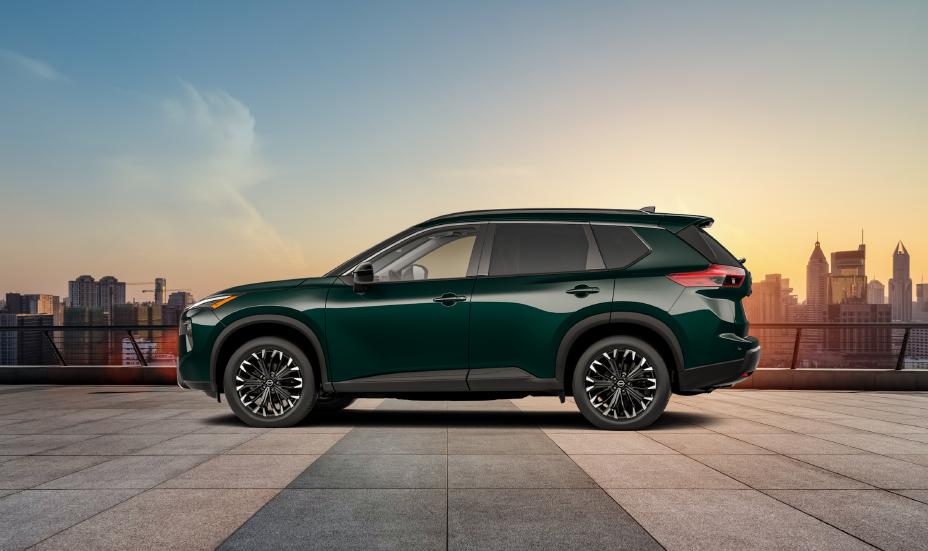
Nissan’s filings are unusually specific about how these failures announce themselves, and that language works as an inspection list.
Both bearing recalls state that failures are not typically instantaneous, that they progress over time, and that drivers receive audible and visible advance warnings: abnormal noise from the engine compartment, rough running, an illuminated malfunction indicator, and warning messages in the instrument cluster.
Work through this in order.
- Run the VIN at NHTSA before anything else. It settles which campaigns apply and whether each is closed, including the 2021 ambiguity above.
- Ask which branch of 25V437 the car took. A dealer can pull the repair order. Oil change or engine replacement is the single most useful fact about a used VC-Turbo Rogue.
- Drive it under load. Uphill at highway speed with the engine working, listening for knock, rattle or ticking from the engine bay. Bearing noise shows up under load before it shows up at idle.
- Pull the dipstick in daylight. Metallic glitter or a gritty feel between your fingers is a walk-away.
- Confirm a warm start. The throttle defect surfaces during the start-up diagnostic, so start the car cold and again after the drive.
- Scan for stored codes. A fractured throttle gear triggers diagnostic trouble codes, and a cleared-code history on a 2024 or 2025 car is worth a question.
- Get the warranty position in writing. Ask Nissan directly whether the extended long-block coverage applies to the specific VIN under a new owner.
How Much Should This Worry You
The estimated defect rates deserve weight.
Nissan put the bearing problem at 1.2 percent of the vehicles in the first campaign and 0.6 percent in the second, which is a small share of a population this size. The throttle campaign is the inverted case: Nissan estimated 100 percent of those cars carry the affected software, though only 3,111 warranty claims had been filed.
Against that, the Weekly Driver reliability file on the 2021-2025 Rogue holds 1,304 complaints across 19 recall campaigns, with engine issues accounting for 552 of them, plus 151 in cooling and 175 in the fuel system. Federal records tied to the generation include 45 crash reports, six fires and 29 injuries, with no deaths. That volume runs well above the compact SUV norm.
The honest read is that most VC-Turbo Rogues will not lose an engine, and that the ones that do tend to warn their owners first. This is a car to buy carefully rather than a car to avoid, and the discount the recall history has put into used prices is real money against a risk you can inspect for.
Bottom Line
Buy a 2022 or newer Rogue only after you know which repair it received. The recall status field on a listing collapses an oil change and a fifteen-hour engine replacement into the same checkmark, and those are different cars at the same price. Run the VIN, ask the dealer to read the repair order, drive it uphill with the windows down, and get Nissan to confirm in writing whether the extended long-block coverage follows the car. Do that and the VC-Turbo becomes an ordinary used-car decision. Skip it and you are buying on a checkmark that was never designed to tell you what happened.
Frequently Asked Questions
Which Nissan Rogue model years have the VC-Turbo engine?
The 1.5-liter variable-compression three-cylinder became the Rogue’s engine for the 2022 model year and remains standard on every 2026 trim. The 2021 Rogue used a 2.5-liter naturally aspirated four rated at 181 horsepower, which none of the three recalls covers.
How many Nissan Rogues are recalled for engine problems?
Three campaigns apply: 25V437 covers 348,554 Rogues, 26V080 covers 323,917 and 26V081 covers 318,781. You cannot add these together. Nissan states in its February 2026 filing that the populations overlap, so widely quoted totals of 640,000 or 737,000 Rogues double-count the same cars.
What is wrong with the Nissan VC-Turbo engine bearings?
Two different things. Recall 25V437 describes a manufacturing defect in the main, A-, C- and L-link bearings. Recall 26V080 describes increased engine oil temperature degrading lubrication until bearings seize. Both can end in engine failure and a loss of drive power.
Can the Nissan Rogue engine catch fire?
The 26V080 filing states that in certain rare cases a bearing failure may breach the engine block and discharge hot oil, raising the risk of an engine fire. Neither bearing recall carries a park-outside advisory, which regulators do apply when a fire risk is considered immediate.
What does the recall repair do?
Under 25V437 a technician inspects the oil pan for metal debris. With no debris found, a 1.5-liter car gets a new oil pan gasket, fresh oil and a control module reflash. With debris confirmed by Nissan’s Powertrain Call Center, the engine is replaced, and the filing budgets up to fifteen hours for it.
Does a completed recall mean the Rogue got a new engine?
Not necessarily, and this is the trap. Both outcomes close the campaign and appear identically on a history report. Ask a Nissan dealer to read the repair order behind the closure.
Why did Nissan file the throttle body recall so late?
Nissan identified the fractured gear in spring 2025 and traced it to an engine control module software change made at the start of 2024 production. On October 13, 2025 it judged the condition was not an unreasonable safety risk and planned a service campaign instead. It filed a voluntary recall on February 4, 2026, after further discussion with regulators.
What warning signs come before a VC-Turbo bearing failure?
Nissan’s own filings say these failures progress rather than strike instantly, and that drivers get advance warning through abnormal engine-bay noise, rough running, an illuminated malfunction indicator lamp and messages in the instrument cluster. Noise under load is the earliest reliable sign.
Did Nissan extend the warranty on the VC-Turbo engine?
Reporting on a March 11, 2026 bulletin describes the long block assembly covered for 120 months or 120,000 miles, well beyond the standard five-year, 60,000-mile powertrain warranty, with reimbursement available to owners who already paid for engine repairs. Confirm the terms and their transferability with Nissan at 800-867-7669.
Is the used Nissan Rogue worth buying?
For most shoppers, yes, with homework. The estimated defect rates on the bearing recalls are 1.2 and 0.6 percent, the failures announce themselves before they strand you, and the recall history has pushed used prices down. The risk is one you can inspect for, which is more than can be said for most engine problems.
How do I check whether a specific Rogue is affected?
Enter the VIN at the NHTSA recall lookup. Because Nissan defines the affected cars by engine serial number rather than model year, the VIN is the only reliable answer, and it is the only way to resolve whether a 2021 car is included.

Michael Kahn
Michael Kahn is the writer, photographer, and publisher behind The Weekly Driver. He cares about how cars drive and what they're like to own. He covers automobile industry news, car shows and events, and new car reviews. The reviews come from behind the wheel: day trips that favor back routes, treating a good meal as half the reason to go. He directs and produces the visual media, matching each car to a setting and mood that fit it. When he's not reviewing new cars, Michael races paddleboards, camels, and ostriches, along with the occasional exotic car on the racetrack, and has driven in every state and country visited.
https://theweeklydriver.com