
Federal regulators have declined to open an investigation into a failure that turns certain Acura Super Handling All-Wheel Drive vehicles into front-drive cars for good. NHTSA published its denial of defect petition DP26-001 in the Federal Register on August 6, covering an estimated 137,329 vehicles: 2021 through 2023 TLX sedans and 2022 through 2023 MDX crossovers.
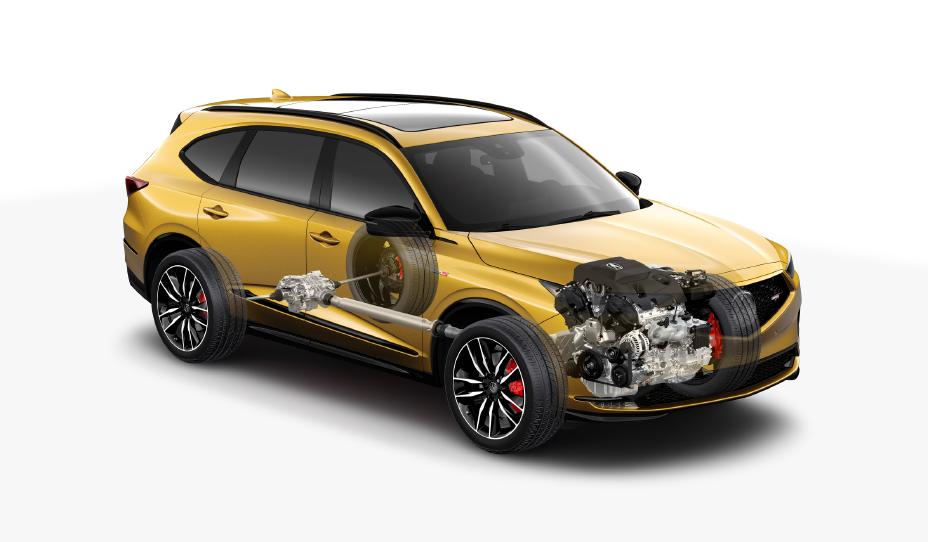
The agency never disputed that the breakage happens. Its Office of Defects Investigation read 62 owner questionnaires and several manufacturer field reports, then described the mechanism precisely. The splined shafts joining the front transaxle to the power take-off unit strip or shear flat, and torque to the rear axle stops permanently.
ODI confirmed something else on its way to saying no. The car keeps telling the driver it is sending power rearward after it has stopped doing so.
The agency’s word for that was misinformation.
Key Takeaways
- Petition DP26-001 was denied August 6, 2026, roughly seven months after Christopher Mammarella filed it on January 9.
- An estimated 137,329 vehicles are covered: 2021-2023 Acura TLX and 2022-2023 Acura MDX with SH-AWD.
- NHTSA verified the failure mode. Splines between the transaxle output shaft and the power take-off unit shear flat, ending rear torque permanently.
- The dashboard does not report it. ODI found the system “will continue to display information indicating power is being supplied to the rear wheels” when it is not.
- The reasoning was architectural. These are front-drive platforms, so ODI treated SH-AWD as a performance feature rather than a stability system.
- No crashes were identified by ODI as resulting from the failure, and no reports of lost motive power or vehicle control.
- Repairs run $13,000 to $19,000 according to the petition, because the damaged shafts are not sold separately and both units get replaced.
- 85 of 274 complaints filed for these five model years mention the AWD hardware, by our reading of NHTSA’s complaint database on August 9.
The Splines Shear Flat
SH-AWD sends engine torque rearward through a power take-off unit bolted to the transaxle. The two components meet at a splined interface, a set of machined teeth that lets one shaft drive another while allowing for assembly tolerance. That joint carries every bit of torque the rear axle ever sees.
On the vehicles in the petition, those teeth round off and then strip away. The petition describes the splines stripping “completely flat,” which is the point at which one shaft spins inside the other and transmits nothing at all.
Owners and technicians describe the aftermath consistently: discolored fluid and metal shavings inside the power take-off housing. That debris is the splines themselves, ground into the oil.
Nothing about this repairs cheaply. The shafts are not sold as individual parts, so a shop replaces the complete transaxle and the power take-off unit together.
The petition puts that job between $13,000 and $19,000.
What the Petition Asked For
Mammarella wanted three specific things. He asked NHTSA to open a Preliminary Evaluation into the metallurgy and design of the splined connection, to pull American Honda warranty claim data for the relevant part numbers across the 2021-2023 model years, and to direct Acura to recall the vehicles and fit a revised, higher-strength component rated for the torque of the 2.0-liter, 3.0-liter, and 3.5-liter engines.
He supported the request with 48 complaints already on file at NHTSA, plus discussion threads from owner forums. ODI opened the petition for evaluation on March 6 and, by the time it finished, had reviewed 62 questionnaires.
Why NHTSA Said No
The denial turns on how the car is built rather than on how often the part breaks.
Both models start life as front-drive designs. ODI wrote that the platform “was designed primarily as Front Wheel Drive” and concluded that SH-AWD “functions more as a performance enhancement feature rather than a stability feature.” Lose the rear axle and the vehicle still has full motive power through the front wheels. Vehicle Stability Assist keeps working, so traction and directional control remain under electronic management through the brakes and throttle.
The agency drew a contrast with conventional all-wheel-drive layouts, where a broken driveshaft can strand a vehicle or leave it unable to keep pace with traffic. That, ODI noted, raises collision risk. A dead power take-off on a front-drive Acura does not.
The conclusion was narrow and carefully worded. The condition “may degrade the vehicle’s performance characteristics,” but there is “insufficient information to indicate a potential unreasonable safety risk.”
Associate Administrator for Enforcement Eileen Sullivan signed the denial, which also cites “NHTSA’s enforcement priorities” among the reasons for closing the file.
The Dashboard Keeps Saying All-Wheel Drive
Buried in the analysis is the finding with the longest reach for owners.
SH-AWD has no sensor watching real-time torque delivery to the rear wheels. ODI put it plainly: the system “lacks any form of direct feedback for monitoring real time torque transfer to the rear wheels. Therefore, the system will continue to display information indicating power is being supplied to the rear wheels even when power is actually only supplied to the front wheels.”
The torque-distribution graphic on the instrument cluster, in other words, is an animation of what the software intends rather than a readout of what the hardware is doing. After the splines let go, it keeps animating.
ODI noted that several owners had no idea anything was wrong until they hit a slick surface or a technician spotted the leak during routine service. The agency then wrote that its review “did not identify sufficient evidence to indicate that the misinformation has presented a safety issue in the field.”
A federal agency documented that a car reports a drivetrain state it is not in, named the display misinformation, and left it there. No recall follows a denied petition, and nothing in the notice asks Acura to change the graphic or set a warning light.
What Owners Are Filing
We screened every NHTSA complaint on file for the five affected model years on August 9, searching the narratives for references to the AWD hardware: splines, transfer case, power take-off, SH-AWD.
| Model | Model year | Total complaints | Mentioning AWD hardware | Share |
|---|---|---|---|---|
| Acura TLX | 2021 | 65 | 21 | 32% |
| Acura TLX | 2022 | 25 | 8 | 32% |
| Acura TLX | 2023 | 10 | 1 | 10% |
| Acura MDX | 2022 | 138 | 47 | 34% |
| Acura MDX | 2023 | 36 | 8 | 22% |
| Total | 2021-2023 | 274 | 85 | 31% |
Of those 85, some 73 sit under NHTSA’s POWER TRAIN component heading. This is a keyword screen of complaint narratives rather than an official classification, and it runs higher than the 62 questionnaires ODI worked from because complaints kept arriving while the petition was pending.
The 2022 MDX carries the heaviest concentration, with roughly a third of everything owners reported about that model year touching the drivetrain. Individual filings track the pattern ODI described: rear wheels not turning on a service lift, sheared splines found during an oil change, fluid weeping at the transmission and transfer case junction.
One 2022 TLX owner reported the loss, was told by a technician that it was “normal,” and discovered the true condition after the warranty ran out. Our reliability data for these vehicles shows transmission complaints leading both model ranges: 46 for the 2022-2025 MDX and 44 for the 2021-2025 TLX.
Who Pays
Acura covers the powertrain for six years or 70,000 miles, whichever arrives first, and that coverage explicitly includes the transaxle along with the front and rear drive systems. The protection transfers to a second owner at no charge.
Mileage is the variable that decides it, not the calendar. Crossing 70,000 miles inside six years takes an average of about 11,700 miles a year, which is ordinary commuting rather than heavy use. Most owners will run out of odometer long before they run out of time.
Past that line, the repair bill in the petition lands on the owner. A $13,000 transaxle and power take-off job on a used sedan worth roughly that much is the kind of estimate that ends with the car being traded rather than fixed.
If you own one: the instrument display cannot tell you whether SH-AWD is working. Ask for an inspection of the power take-off fluid, which shows discoloration and metal particles when the splines are failing, and get the finding written onto the repair order while the powertrain warranty is still current. A dated record of the complaint is worth more than a verbal assurance that the behavior is normal.
Where the Case Stands
A denied petition is not a finding that the hardware is sound. It is a decision that the consequences do not rise to an unreasonable safety risk, which is a different and much narrower question than whether a $13,000 drivetrain should shear at 40,000 miles.
Nothing stops another petition, and nothing stops ODI from opening its own investigation if the reports keep accumulating or if the failures start showing up in situations the agency would score differently. Warranty data that Mammarella asked NHTSA to obtain was never collected, because the technical review stopped at the complaint files.
What This Means for Acura Owners
NHTSA looked at 137,329 Acuras, agreed the all-wheel-drive hardware can shear itself apart, agreed the dashboard will not tell you when it does, and closed the file because the car still drives. That reasoning holds up on its own terms. Federal defect authority is about crash risk, not repair bills, and no crashes surfaced.
What it leaves behind is an owner problem the federal system has no mechanism to address. The failure is permanent, the display is unreliable, the parts are not sold separately, and the invoice starts at $13,000. Anyone driving a 2021-2023 TLX or a 2022-2023 MDX should treat the powertrain warranty as a clock and get the power take-off inspected before it expires.
Frequently Asked Questions
Which Acura models are affected by the SH-AWD failure?
NHTSA’s petition file covers 2021 through 2023 Acura TLX sedans and 2022 through 2023 Acura MDX crossovers equipped with Super Handling All-Wheel Drive, an estimated 137,329 vehicles. Front-drive versions of these models are not involved.
What is defect petition DP26-001?
It is a request from a member of the public, Christopher Mammarella, asking NHTSA to investigate the SH-AWD failures. He filed it January 9, 2026, ODI opened it for evaluation on March 6, and the agency denied it in the Federal Register on August 6, 2026.
Did NHTSA say the Acura AWD failure is not real?
No. The agency confirmed the failure mechanism in detail and described the splines between the transaxle and the power take-off unit shearing flat. It denied the petition because the vehicles keep full motive power and stability control through the front wheels, so it found insufficient evidence of an unreasonable safety risk.
Will my Acura warn me if SH-AWD stops working?
Not reliably. ODI found the system has no direct feedback monitoring real-time torque to the rear wheels, so the cluster keeps showing power going rearward after the mechanical connection has failed. Several owners learned about it only on a slippery surface or during routine service.
What are the symptoms of a failing Acura power take-off unit?
Reported signs include discolored or orange fluid and metal shavings in the power take-off housing, fluid seeping where the transmission meets the transfer case, and rear wheels that do not rotate when the vehicle is raised. Some owners noticed reduced grip pulling away on wet or snowy ground.
How much does the repair cost?
The petition puts it between $13,000 and $19,000. The expense comes from the damaged shafts not being available as separate parts, which means the complete transaxle and the power take-off unit are replaced together.
Is the repair covered under warranty?
Acura’s powertrain limited warranty runs six years or 70,000 miles, whichever comes first, and covers the transaxle plus the front and rear drive systems. It transfers to later owners at no cost. Once either limit passes, the bill belongs to the owner.
Is there an Acura recall for this problem?
No. A denied petition produces no recall, and NHTSA has not opened its own investigation into the SH-AWD splines. Owners can check for any campaign affecting their vehicle by entering the VIN at NHTSA.gov.
Can I still drive an Acura that has lost SH-AWD?
The vehicle continues to operate as a front-drive car with working stability control, which is the basis for NHTSA’s decision. ODI identified no reports of lost motive power or vehicle control. Traction on snow, ice, and wet pavement is reduced compared with a functioning system.
Why did NHTSA treat SH-AWD as a performance feature?
Both models are built on architecture designed primarily for front-wheel drive, so the rear axle adds capability rather than providing it. ODI contrasted this with layouts where a broken driveshaft can leave a vehicle unable to maintain speed with traffic, which it considers a collision risk.
What should I do if a dealer says the behavior is normal?
Ask for the power take-off fluid condition to be documented on the repair order by date and mileage. At least one owner in the complaint file was told the loss was normal and found out otherwise after the coverage lapsed. A written record protects a later warranty claim.
Could NHTSA reopen this?
Yes. Denying a petition does not bar the agency from acting later, and anyone can file a new petition. ODI never obtained American Honda’s warranty claim data, because the review relied on complaint files already in its possession.

Michael Kahn
Michael Kahn is the writer, photographer, and publisher behind The Weekly Driver. He cares about how cars drive and what they're like to own. He covers automobile industry news, car shows and events, and new car reviews. The reviews come from behind the wheel: day trips that favor back routes, treating a good meal as half the reason to go. He directs and produces the visual media, matching each car to a setting and mood that fit it. When he's not reviewing new cars, Michael races paddleboards, camels, and ostriches, along with the occasional exotic car on the racetrack, and has driven in every state and country visited.
https://theweeklydriver.com