
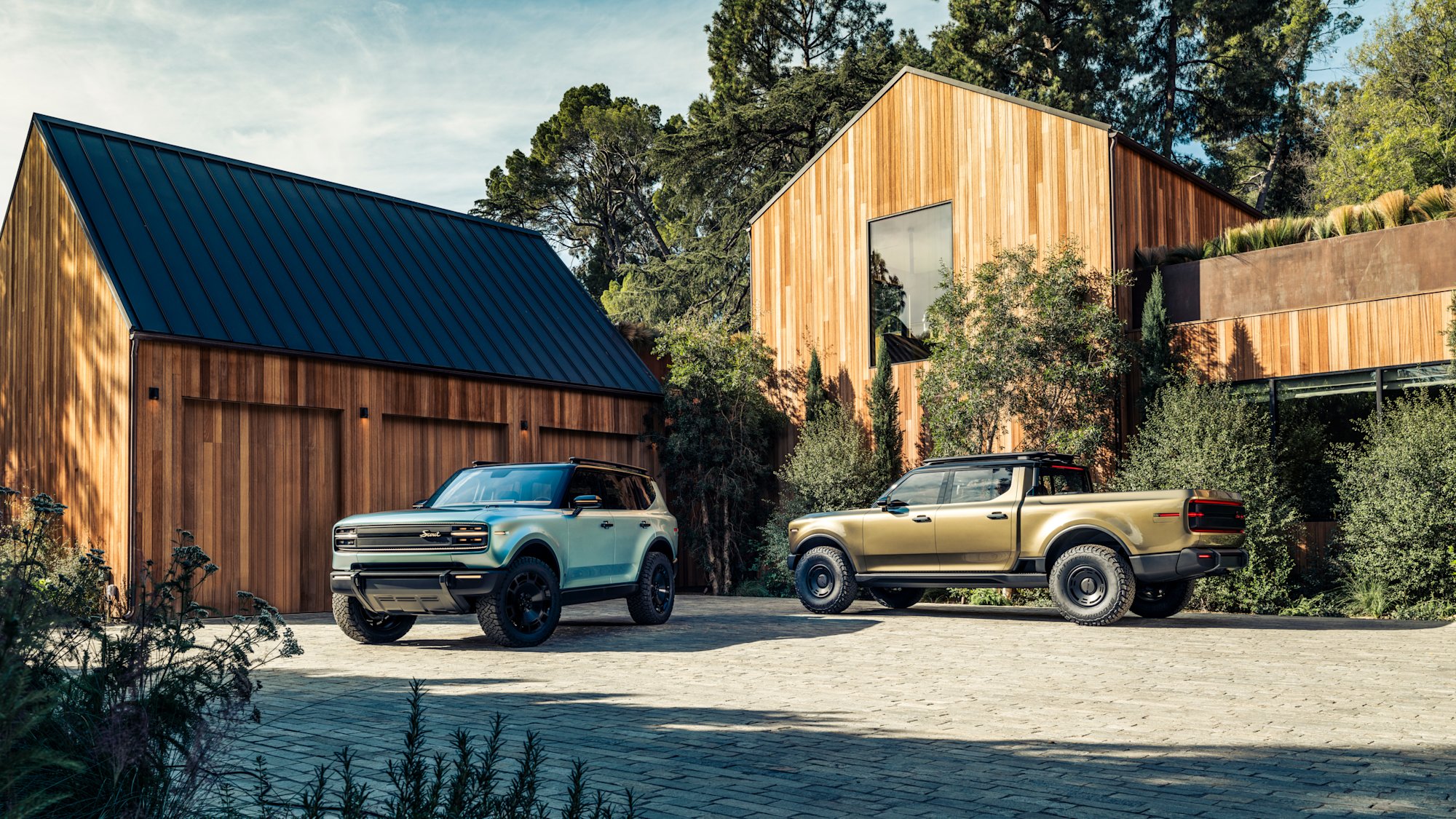
Scout Motors calls itself an independent U.S. company, backed by Volkswagen Group. That is the company’s own wording, direct from a 2023 press release, and it is the most accurate one-line answer to the ownership question.
Scout is a new company, operating independently, with a VW Group executive on its board and VW Group capital funding the new 1,100-acre plant in Blythewood, South Carolina. It is not a subsidiary of Volkswagen or Audi or any of VW’s consumer brands. It is not listed on VW Group’s own brand tree.
Scout has its own CEO, its own headquarters in Charlotte, North Carolina, and its own design center in Novi, Michigan. What it shares with Volkswagen is the checkbook and, through the board, some of the institutional knowledge of how to build a car at scale.
The first Scout Traveler SUV and Scout Terra pickup are targeted for 2027 production.
Between now and then, the ownership story matters because a startup with VW Group’s capital and engineering behind it has a different risk profile than a startup without.
Key Takeaways
- Scout Motors is an independent U.S. company, backed by Volkswagen Group. That language is Scout’s own positioning, not a third-party summary.
- VW Group holds board seats and provides capital; Scout operates separately from VW’s passenger brands (Volkswagen, Audi, Porsche, and the rest).
- The Scout brand was resurrected from International Harvester, which built the original Scout from 1961 to 1980.
- Two vehicles are targeted for 2027 production: the Terra pickup and the Traveler SUV, both body-on-frame 4WD, starting under $60,000.
- Production happens at a $2 billion plant in Blythewood, South Carolina, with 4,000+ jobs at full capacity and a separate $300 million supplier park.
- Scott Keogh runs Scout Motors as President and CEO. He previously led Volkswagen Group of America and, before that, Audi of America.
- Scout is not publicly traded; Volkswagen AG trades in Frankfurt as VOW (ordinary) and VOW3 (preferred).
Who Owns Scout Motors, Exactly
Scout’s own words, from the March 2023 press release announcing the Blythewood production site: “Scout Motors is an independent U.S. company, backed by Volkswagen Group, with an experienced Board of Directors, including Dr. Gernot Doellner, Head of Group Strategy at Volkswagen AG, and Peter Bosch, Member of the Bentley Motors Board for Manufacturing.” Scout is currently evaluating the potential for outside investment, according to the same release.
The framing is “independent… backed by,” not “subsidiary of.” Scout chose those words deliberately.
Backing means capital, board influence, and access to engineering. It does not mean Scout reports to Wolfsburg the way Audi or Porsche does. It does not put a Scout on VW Group’s official brand tree, and in fact Scout does not appear there at all.

At the top of the chain sits Porsche SE, the Piëch and Porsche family holding company that controls majority voting shares in Volkswagen AG. Volkswagen AG is the publicly traded German automaker headquartered in Wolfsburg (Frankfurt Xetra: VOW, VOW3). Volkswagen Group is the broader corporate umbrella that houses VW’s brands and its investments.
Scout Motors Inc. sits outside that passenger-brand tree, operating independently, drawing capital and board strategy from VW Group without being folded into it.
VW’s joint venture with Rivian is not an ownership stake. Volkswagen Group has committed up to $5.8 billion to a technology joint venture called Rivian and VW Group Technology, LLC. That is a software and electrical-architecture partnership, not an acquisition.
Rivian remains a publicly traded American EV maker. Scout is backed by VW; Rivian is a JV partner.
The Heritage: International Scout, 1961 to 1980
International Harvester launched the Scout in 1961 as a compact 4×4 utility vehicle, positioned against the Jeep CJ and aimed at farmers, hunters, and anyone who needed a work truck that could also take a family to a lake. Scout’s own description of its heritage calls the original “the world’s first utility vehicle capable of both off-road adventure and family duty,” the “8-day-a-week truck.”
Production ran through 1980. By the end of that run, International Harvester was exiting the consumer vehicle business entirely to focus on heavy trucks and agricultural equipment.
The Scout nameplate and trademarks then sat dormant for four decades. In May 2022, Volkswagen Group (through a corporate path that ran via its acquisition of International’s successor company, Navistar) announced plans to revive the Scout name for a new generation of American-built electric trucks and SUVs.

A new Scout Terra shares nothing mechanical with a 1977 International Scout II. The badge is the same, and the company, platform, plant and software are new. Treat the name as marketing shorthand for “rugged American utility vehicle,” and treat everything else as a new product from a startup formed in 2022.
The Founding Timeline
Scout Motors Inc. formed in May 2022 as a Volkswagen Group venture. The company announced Blythewood, South Carolina, as its production site in March 2023, with $2 billion committed to a 1,100-acre plant near Columbia. In October 2024 Scout revealed the production-intent Terra pickup and Traveler SUV concepts at an event just outside Nashville, Tennessee, opening reservations the same day. Charlotte, North Carolina, was selected as Scout’s corporate headquarters in November 2025, bringing more than 1,200 additional jobs. Plant construction continues on an accelerated schedule, with initial production targeted for 2027.

Scout Motors Inc. was formed in 2022 and has not yet delivered a vehicle to a customer. CEO Scott Keogh said in March 2026 that he expects the first customer deliveries in 2028.
Production: Blythewood, South Carolina
Scout’s Blythewood Production Center sits on a 1,100-acre site adjacent to Interstate 77, about an hour south of the Charlotte headquarters.
The announced investment is $2 billion in the plant itself, plus an additional $300 million for a co-located Supplier Park that is projected to support another 1,000 supplier-side jobs. At full production capacity, the plant is expected to support more than 4,000 permanent Scout Motors jobs.
South Carolina state and local governments provided incentive packages to land the project.
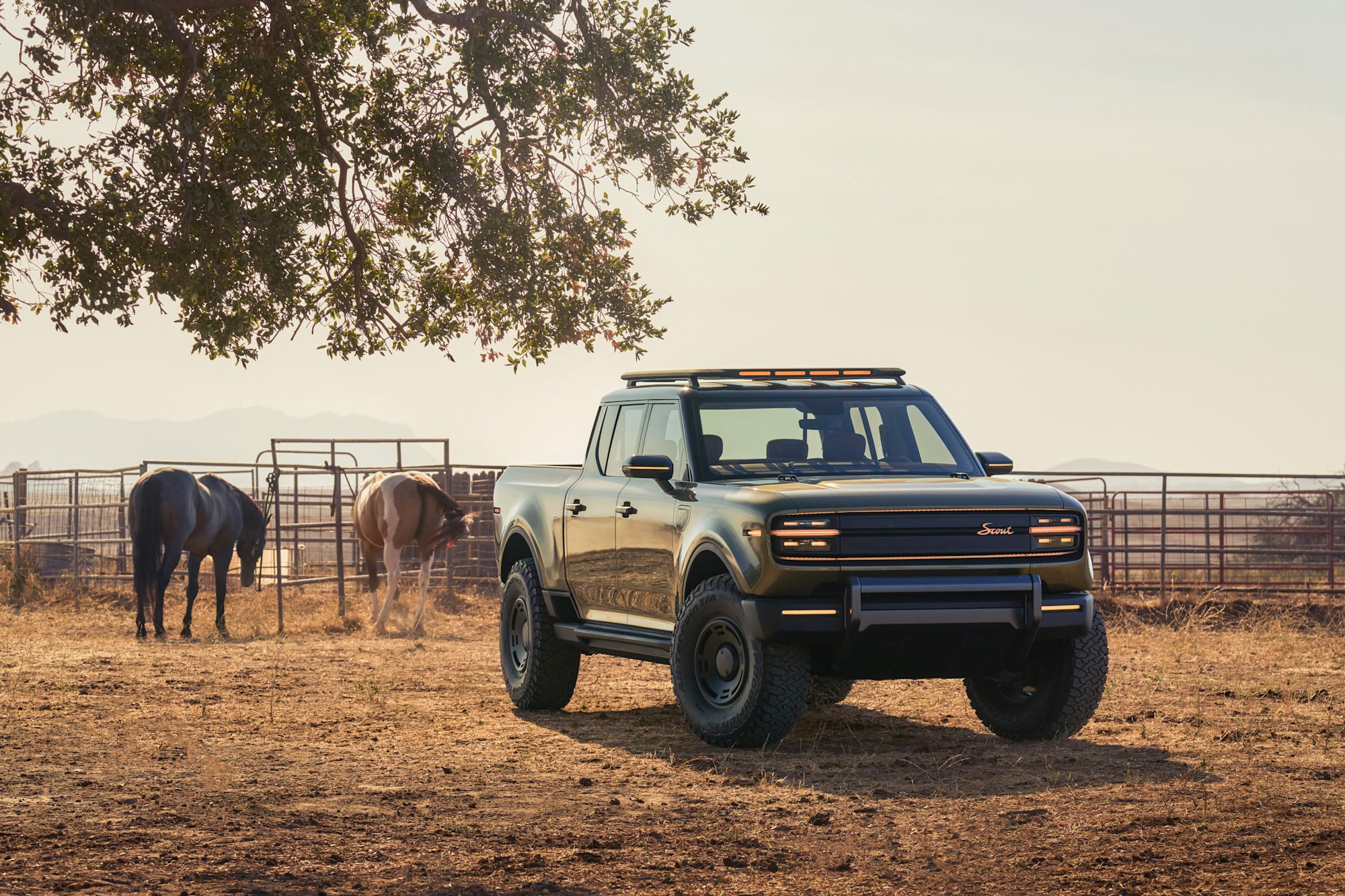
Scout also operates a Connection Center in Columbia’s BullStreet District, a training partnership with the state’s readySC workforce program, and a separate design and engineering hub in Novi, Michigan. That distributed footprint (production in South Carolina, corporate in North Carolina, engineering in Michigan) is by design. Scout wants the manufacturing tax base in South Carolina, the corporate talent pool in the Carolinas, and the automotive engineering depth of greater Detroit.
Leadership: Scott Keogh and the Founding Team
Scott Keogh is Scout Motors’ President and CEO, a role announced in May 2022 at the company’s launch. Keogh ran Volkswagen Group of America from 2018 to 2022, and before that led Audi of America for six years. His background leans commercial and marketing rather than engineering, which matches Scout’s pitch: a brand-forward startup with VW operational muscle behind it rather than a traditional engineering-led OEM.
Scout has also added a Chief Technical Officer, Chief Production Officer, Chief Design Officer, and Chief People Officer across 2022 through 2025. By 2024, Scout reported more than 600 employees across its U.S. offices.
The Board of Directors includes Dr. Gernot Doellner, Volkswagen AG’s Head of Group Strategy, and Peter Bosch, a Bentley Motors manufacturing board member, along with other directors Scout has not publicly named.
Direct-to-Consumer Retail: No VW Dealers
Scout’s own language, from its Our Story page: “selling every vehicle directly to the consumer.” The company is building what it calls a national network of Scout Motors retail locations, essentially company-owned experience centers along the lines of the model Tesla and Rivian use.
A Scout will not be available at a Volkswagen, Audi, or Porsche dealer, because those are franchise operations and Scout is not.
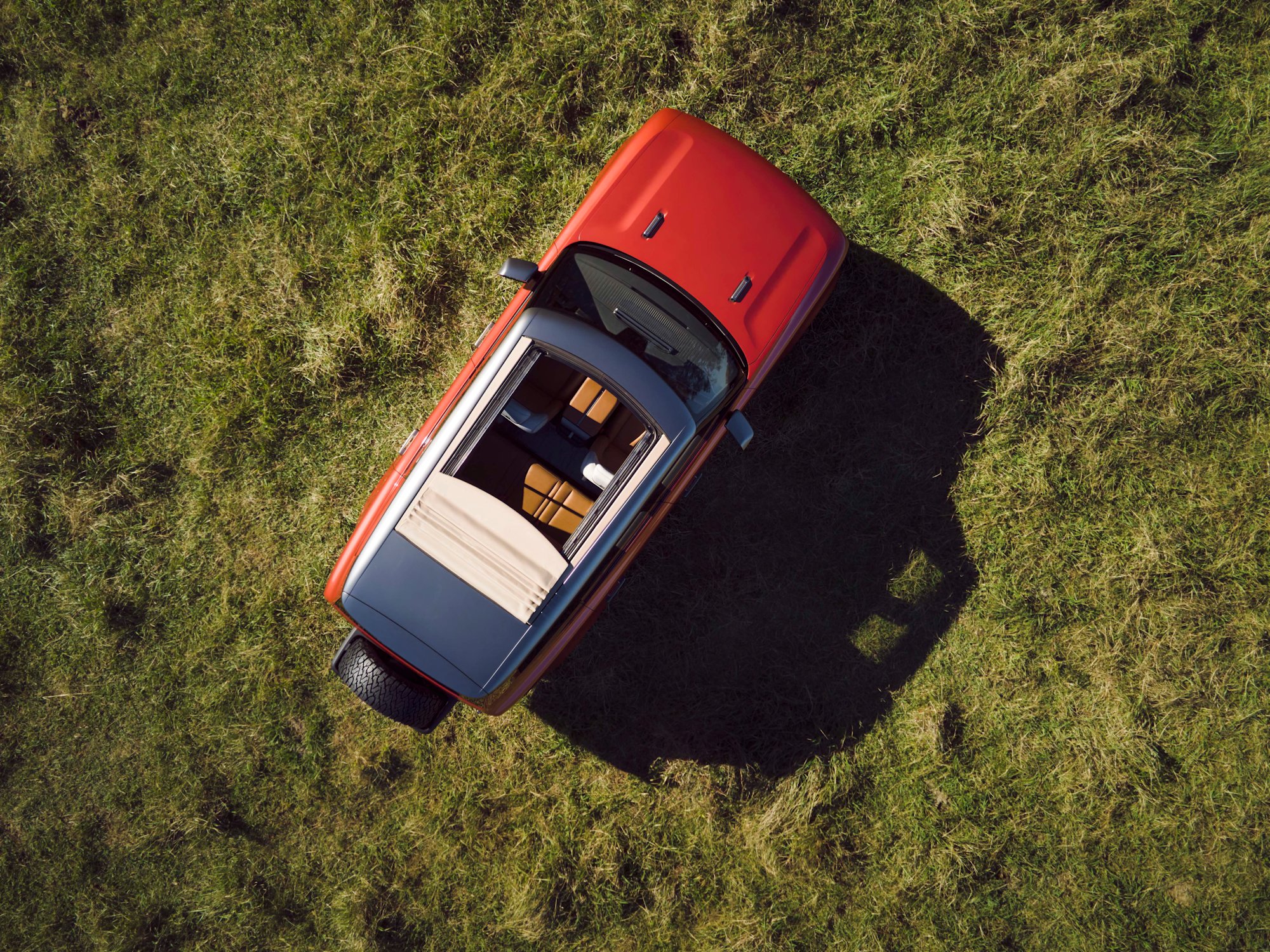
Several U.S. states have franchise laws that either prohibit or limit direct OEM sales, written in an era when “direct” usually meant cutting out an existing dealer. Tesla and Rivian have spent years litigating and lobbying around those laws. Scout will face the same landscape.
For now, reservations are national, and Scout has committed to a direct model. The practical question, which Scout has not fully answered yet, is where the service centers will physically sit, and what happens if your Scout Terra needs warranty work in a state without a Scout service location.
What VW Backing Means for Buyers
The VW backing matters most for the things a new brand typically gets wrong: capital runway, engineering depth, supply-chain relationships, and regulatory experience.
Scout has Volkswagen Group’s balance sheet behind it in a way that pure startups with venture capital do not. That reduces, without eliminating, the risk that Scout becomes a headline in the list of EV startups that ran out of money before getting to sustained production.
It also means that Scout’s engineering choices (NACS charging, the range-extender Harvester option, the Connection Machine software architecture) are being made with reference to VW Group’s broader EV program and not in isolation.
That software layer is where the competition is moving. Modern trucks increasingly behave like connected devices, with over-the-air updates, telematics, and app-based controls shaping the ownership experience as much as horsepower does. Building that kind of stack requires deep engineering expertise, which is why automakers and mobility startups often bring in partners such as Jelvix to develop secure connected-vehicle platforms and the data pipelines behind them.
Scout has not yet published warranty terms. The service network is being built from scratch rather than inherited from an existing dealer base. And the vehicles have no track record, because no Scout has been in customer hands yet.
VW backing is a signal of capital and engineering depth, not a guarantee of reliability, and reliability determines whether a $60,000 truck bought in 2028 is still a good decision in 2032.
For readers evaluating Scout vehicles against established brands, my framework applies. See how I evaluate reliability for new brands, and expect to revisit that question once Scout vehicles accumulate miles with real owners.
Frequently Asked Questions
Who owns Scout Motors?
Scout Motors is an independent U.S. company, backed by Volkswagen Group. Scout is not a VW subsidiary in the traditional sense. It operates separately from VW’s passenger brands, with its own CEO, its own headquarters, and its own production. Volkswagen Group provides capital and holds board seats.
Is Scout Motors a VW brand?
Not in the way Audi or Porsche is. Scout is a distinct company, not part of VW Group’s consumer brand tree. Volkswagen Group is Scout’s financial backer and has board representation, but Scout operates independently.
Is Scout Motors publicly traded?
Scout Motors is a private company with no public stock. Its backer, Volkswagen AG, trades on the Frankfurt Xetra exchange as VOW (ordinary shares) and VOW3 (preferred shares). Scout itself has no ticker.
Where will Scout vehicles be built?
Blythewood, South Carolina, at a new production center on a 1,100-acre site about an hour south of Charlotte. Scout has committed $2 billion to the plant and an additional $300 million to a co-located Supplier Park.
When will Scout vehicles be available?
Initial production is targeted for 2027 at Blythewood, and CEO Scott Keogh said in March 2026 that he expects customer deliveries in 2028. Scout has been taking reservations since the October 2024 Terra and Traveler reveal.
What vehicles is Scout Motors making?
Two models at launch: the Terra pickup and the Traveler SUV, both body-on-frame 4WD. My Traveler vs. Terra comparison walks through which body style fits which use case, and my Scout Truck vs. F-150 Lightning, Cybertruck, R1T, and Silverado EV comparison covers how Terra stacks up against the rest of the US electric-pickup market.
Can I buy a Scout at a VW dealer?
No. Scout is selling direct to consumers through its own retail network. Scout vehicles will not be available at Volkswagen, Audi, or Porsche dealers.
How much is a Scout Terra or Traveler?
Scout’s own language is “starting under $60,000.” Scout has also cited incentive-inclusive starting prices as low as approximately $50,000 for a Traveler and $51,500 for a Terra, depending on available federal, state, and local incentives at the time of sale.
Is Scout Motors electric?
Yes. Both launch models are electric. A gas range-extender option, branded Harvester, is available for buyers who want longer range or more charging flexibility. Every Scout has a battery as the primary power source, and the Harvester generator recharges the battery rather than driving the wheels directly.
Does VW own Rivian?
No. Volkswagen Group has committed up to $5.8 billion to a technology joint venture with Rivian, called Rivian and VW Group Technology, LLC. That is a software and electrical-architecture partnership, not an ownership stake. Rivian remains a publicly traded, independent EV maker. Scout is backed by VW; Rivian is a JV partner.
Who runs Scout Motors?
Scott Keogh, President and CEO. Keogh previously led Volkswagen Group of America (2018 to 2022) and Audi of America before that.
What was the original Scout?
The International Harvester Scout, produced from 1961 to 1980, was an early compact 4×4 utility vehicle that competed with the Jeep CJ. It was aimed at farmers, hunters, and work-use buyers who also wanted family capability.
Is the new Scout using the old International Scout platform?
No. The Scout Terra and Traveler are new vehicles on a new body-on-frame platform designed by Scout Motors. The original International Scout ran from 1961 to 1980 and has no mechanical connection to the new company.
How much is the Scout reservation deposit?
$100 USD, fully refundable, per Scout’s own reservation page at scoutmotors.com/reserve. The deposit holds your place in the production queue and unlocks configurator access; it does not commit you to buy.
What is the stock ticker of Scout Motors’ parent company?
Scout Motors itself is private and has no ticker. Volkswagen AG, the ultimate public parent, trades on the Frankfurt Xetra exchange as VOW (ordinary shares) and VOW3 (preferred shares).
Bottom Line
Scout Motors is the most interesting new American automotive brand of the decade, and Volkswagen Group’s backing is why it has a chance to actually deliver. Scout owns its brand, its plant, its leadership, and its retail model. VW provides the capital and a seat at the board table.
New brands come with reliability questions that only time and owners can answer. Before you put the $100 reservation down, read my framework for evaluating new-brand reliability, and set expectations for what “new” actually costs.

Michael Kahn
Michael Kahn is the writer, photographer, and publisher behind The Weekly Driver. He cares about how cars drive and what they're like to own. He covers automobile industry news, car shows and events, and new car reviews. The reviews come from behind the wheel: day trips that favor back routes, treating a good meal as half the reason to go. He directs and produces the visual media, matching each car to a setting and mood that fit it. When he's not reviewing new cars, Michael races paddleboards, camels, and ostriches, along with the occasional exotic car on the racetrack, and has driven in every state and country visited.
https://theweeklydriver.com