
Mobileye, the Jerusalem-based maker of driver-assistance chips, said on October 29, 2026 that its EyeQ shipments grew 11% over the first nine months of the year while global vehicle output slipped by about 1%. Carmakers are buying more onboard compute even as they build fewer cars, and suppliers such as Qualcomm and NVIDIA are reporting record automotive revenue. Below is a review of what is being installed, why automakers are paying for it and what could still delay their plans.
Platforms on the Road and in Testing
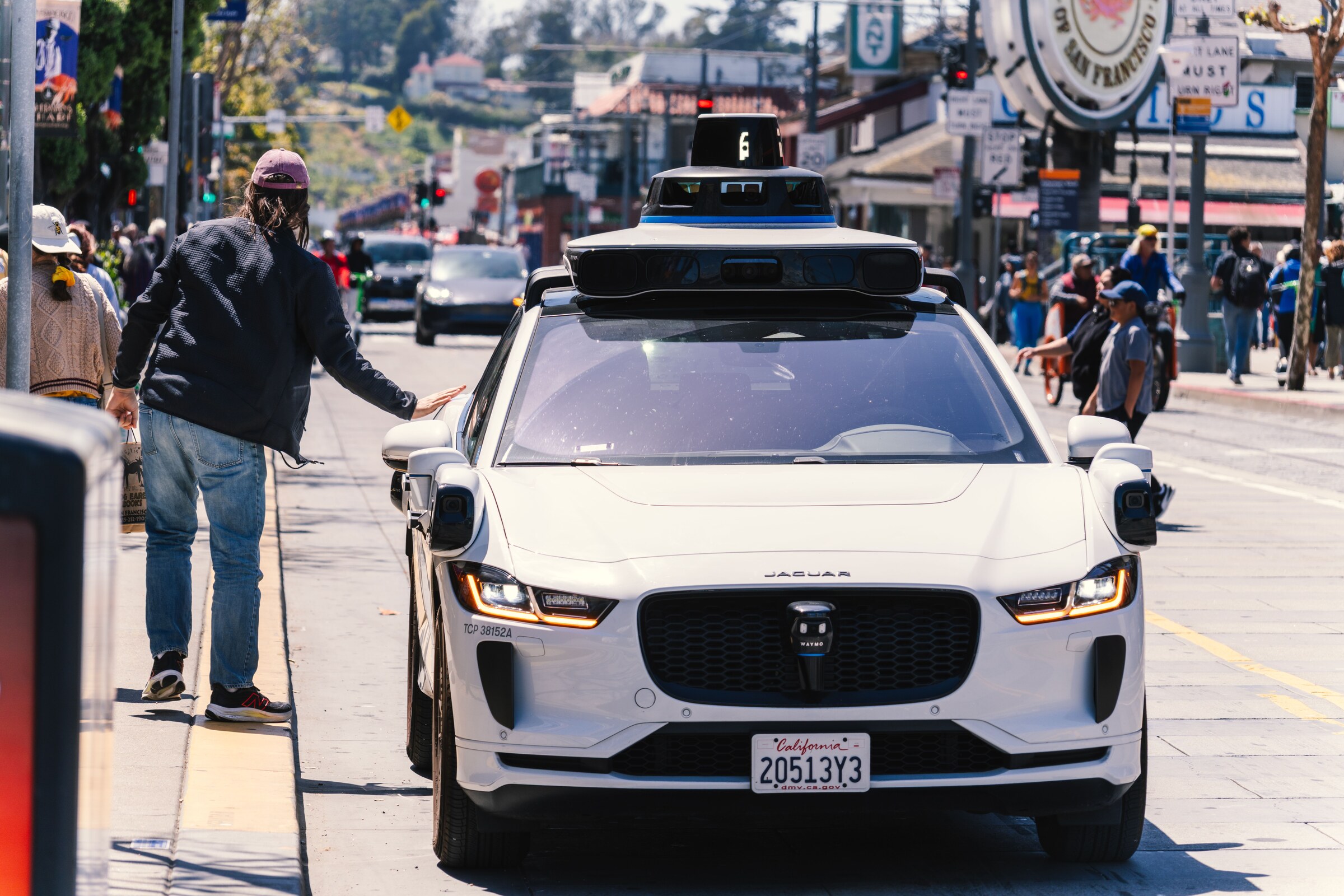
Suppliers that sit between chipmakers and carmakers tend to explain the move in engineering terms. DXC Technology, whose automotive business includes the AMBER software platform for software-defined vehicles and a partnership with Scuderia Ferrari on next-generation driver interfaces, describes AI in self driving cars as handling perception, planning and actuation on board, and writes that latency, reliability and safety constraints have kept that work at the edge even though local compute demands rise as a result. The example DXC uses is the group of Cruise robotaxis that came to a halt after their network connection dropped.
NVIDIA sells the most widely adopted version of that onboard computer. DRIVE AGX Thor, built on the company’s Blackwell architecture, is rated at more than 1,000 INT8 TOPS, and the DRIVE Hyperion reference design places two of them on one board alongside 14 cameras, nine radars, a single lidar and 12 ultrasonic sensors. BYD, Geely, Isuzu and Nissan are developing Level 4 vehicles on Hyperion, while the 2026 Mercedes-Benz CLA went on sale with NVIDIA’s complete driving stack. Automotive revenue at NVIDIA reached a record $2.3 billion in fiscal 2026 (a 39% increase), and from fiscal 2027 the company stopped reporting it as a standalone line, moving it into an Edge Computing segment that also covers PCs, game consoles and robotics and that booked $6.4 billion in the first quarter.
Qualcomm, better known for smartphone processors, has been gaining ground in the same market. Its automotive revenue came to $1.3 billion in the second fiscal quarter of 2026, 38% more than a year earlier, and chief executive Cristiano Amon told analysts that more than 1 million cars were running ADAS and autonomy software on Snapdragon Ride chips. At the company’s 2026 Investor Day, where AI and data centers drew most of the spotlight according to AutoPacific analyst Paul Waatti, Qualcomm lifted its automotive design-win pipeline to $65 billion and its fiscal 2029 automotive revenue goal to $10 billion from $8 billion. Bosch, which has already delivered more than 10 million cockpit computers on Snapdragon hardware, is now taking Snapdragon Ride into ADAS programs, with the first production cars due in 2028.
A smaller group of carmakers designs the silicon in-house. Rivian presented its Rivian Autonomy Processor, or RAP1, in December 2025 at an Autonomy & AI Day held in its Palo Alto offices; the 5nm chip, produced by TSMC, runs a third-generation computer rated at 1,600 sparse INT8 TOPS that can process five billion pixels per second. RJ Scaringe, Rivian’s founder and chief executive, said the chip would “enable us to achieve dramatic progress in self-driving.” Rivian shares closed 6.1% lower that day, at $16.43, and then reached a 52-week high of $22.64 on December 19. Bloomberg reported that RAP1 will replace the NVIDIA processors used in earlier Rivian autonomy systems, and BYD, XPeng and Nio have each introduced chips of their own.
What Is Behind the Budget Decisions
Latency and fault tolerance
Speaking in August at Siemens Realize LIVE APAC 2026, Hitesh Garg of NXP Semiconductors likened the coming vehicle architecture to a nervous system in which a central AI computer does the reasoning and distributed edge processors react the way a spinal cord does, without waiting for the brain. He listed latency, power consumption and trust as the principles that would separate successful edge AI systems from the rest. “The real world has no undo button,” Garg told the audience, and he argued that cars should be designed to recover safely from faults instead of relying on the assumption that faults can be engineered out.
Fewer, larger computers
At its GM Forward event in New York in October 2025, General Motors said it would replace dozens of electronic control units with a single liquid-cooled computer based on NVIDIA Thor, beginning with the Cadillac Escalade IQ in 2028 and later extending to gasoline models as well as EVs. According to GM, the new computer offers up to 35 times more AI performance for autonomy and 1,000 times more bandwidth than current hardware, with sensor fusion and machine learning inference running in one place rather than across separate modules. An eyes-off version of Super Cruise is planned for the same SUV, drawing on technology from Cruise, GM’s former robotaxi division, and on the roughly 600,000 miles of hands-free roads the company has mapped in North America.
Lower expectations for full autonomy
The McKinsey Center for Future Mobility has tracked the change in sentiment through its surveys of industry leaders. In the third edition, respondents placed adoption one to two years later on average than they had in 2023, and 49% of the experts said L2+ would be the mainstream in private cars by 2035. Only 39% expect L3 or above to lead that market, compared with 52% who predicted a move to L3 and higher in the 2023 round. The authors estimate that software development alone for a robotaxi or fully autonomous truck program could cost more than $3 billion, whereas L2+ features run on the kind of chip Mobileye shipped 9.5 million times in the third quarter of 2026.
Why 2027 Is the Pivot Year
Several suppliers and automakers have tied major hardware milestones to 2027, and sourcing teams are committing money to onboard compute ahead of those dates.
- Tesla will not have its AI5 computer in volume until mid-2027, according to Elon Musk, who wrote on X that the company needs “several hundred thousand completed AI5 boards line side” before switching production lines, so the Cybercab starts on AI4 hardware.
- Shipments of Rivian’s ACM3 computer, together with lidar, are scheduled to begin in R2 models at the end of 2026.
- Qualcomm told investors it expects to keep gaining share in fiscal 2027, mostly in ADAS, once its fifth-generation Snapdragon Digital Chassis enters commercial shipment.
- Some of Mobileye’s higher-priced advanced products, originally expected to ship in 2026, have moved into 2027.
Risks and Open Questions
Higher chip volumes have not yet produced higher revenue at Mobileye, whose third-quarter sales fell 2% to $492 million. The company’s full-year guidance of $1.995 billion to $2.02 billion implies growth of 5% to 7%, and in July it announced that Amnon Shashua, who co-founded Mobileye in 1999, will step down as chief executive once a successor is appointed. Other pressure points appear in company filings.
- Average system price at Mobileye dropped to $49.10 from $51.70 in the third quarter, which the company attributed to exports by Chinese automakers that carry less software and to lower SuperVision volumes.
- Musk said in June 2024 that AI5 would be in cars in the second half of 2025, so the current mid-2027 target represents a delay of roughly two years.
- Experts in the McKinsey survey raised their cost estimates for Level 4 and above, contrary to the expectation that better hardware would bring those costs down.
Robotaxi spending has not stopped. Waymo, which began more than a decade ago as Google’s self-driving project, reached 500,000 paid rides a week across 10 U.S. cities in March 2026, and co-CEO Tekedra Mawakana has called the goal of 1 million weekly rides by the end of the year an “inflection point.” Waymo’s fleet was reported at 3,067 vehicles in December 2025, and it is too early to say whether higher utilization or new cars will close the gap. To fund expansion to more than 20 cities, the company raised $16 billion in February 2026.
Outlook
As of November 2026, the clearest spending signals come from suppliers, including Qualcomm’s $65 billion automotive pipeline, NVIDIA’s record automotive sales and Mobileye’s EyeQ volumes. Items to watch in 2027 include the first R2 deliveries with RAP1, the pace of Tesla’s AI5 ramp, shipments of Qualcomm’s fifth-generation platform and the arrival of Mobileye’s delayed advanced products.

Matthew Wilde
Matthew Wilde is an automotive journalist with experience contributing to leading publications. He focuses on delivering clear, well-researched analysis of automotive industry news and vehicles. Growing up surrounded by a variety of cars, Matthew developed a strong foundation in automotive technology and design. His work emphasizes accuracy and depth, aimed at informing both enthusiasts and industry professionals with straightforward, precise reporting.
https://theweeklydriver.com/