
Tesla handed Semi keys to fleets including PepsiCo, DHL and US Foods on the evening of Thursday, September 24, at an invite-only rollout in Sparks, Nevada, beside Gigafactory Nevada. Tesla called the building “our first factory built for Semi.” Dan Priestley, who leads Tesla’s Semi program, put its capacity at 50,000 trucks a year, roughly 1,000 a week.
Two days earlier the Energy Information Administration published its weekly diesel survey. The U.S. average for on-highway No. 2 diesel was $6.529 a gallon for the week of September 21, the highest in the series and $2.78 above a year earlier.
At that price a diesel tractor averaging 6.9 mpg burns about $0.95 of fuel per mile. A Semi drawing Tesla’s rated 1.7 kWh per mile on average commercial electricity burns about $0.25.

Key Takeaways
- Tesla’s first dedicated Semi plant held its rollout on September 24, 2026 in Sparks, Nevada, with a stated capacity of 50,000 trucks a year and more than 3,000 jobs during the ramp.
- Trucks were coming off the volume line by April, and Electrek called the September date ceremonial when Tesla scheduled it in August.
- Diesel set a nominal record of $6.529 a gallon in EIA’s survey for the week of September 21, beating the $5.810 peak of June 2022. Adjusted for inflation, the 2022 and 2008 peaks were both higher.
- At record prices the Semi’s fuel advantage is about $69,900 per 100,000 miles on U.S. average commercial electricity, a TWD calculation. At 2025’s average diesel price and July 2025 power it was about $29,200.
- California’s gap is the smallest of the four areas, $67,600 per 100,000 miles. Diesel there averaged $8.246, but commercial power costs 30.56 cents per kWh, twice the national rate.
- The Long Range Semi is rated for 500 miles at 82,000 lb gross combination weight, and a customer quote obtained by Electrek priced it at $290,000. Tesla has published no official price.
- No federal or California mandate now pushes fleets toward electric tractors. The EPA repealed its Phase 3 truck greenhouse-gas rule in February 2026, and California’s Advanced Clean Fleets rule now covers only state and local government fleets.
What Opened in Nevada on Thursday
The plant sits in Storey County on the Tahoe-Reno Industrial Center land that holds Gigafactory Nevada; Sparks is the mailing address. It is a different site from the building Tesla is permitting at 3010 Airway Drive near Reno-Tahoe International Airport; Tesla told the Reno Gazette-Journal the Semi would be built at the Storey County Gigafactory.
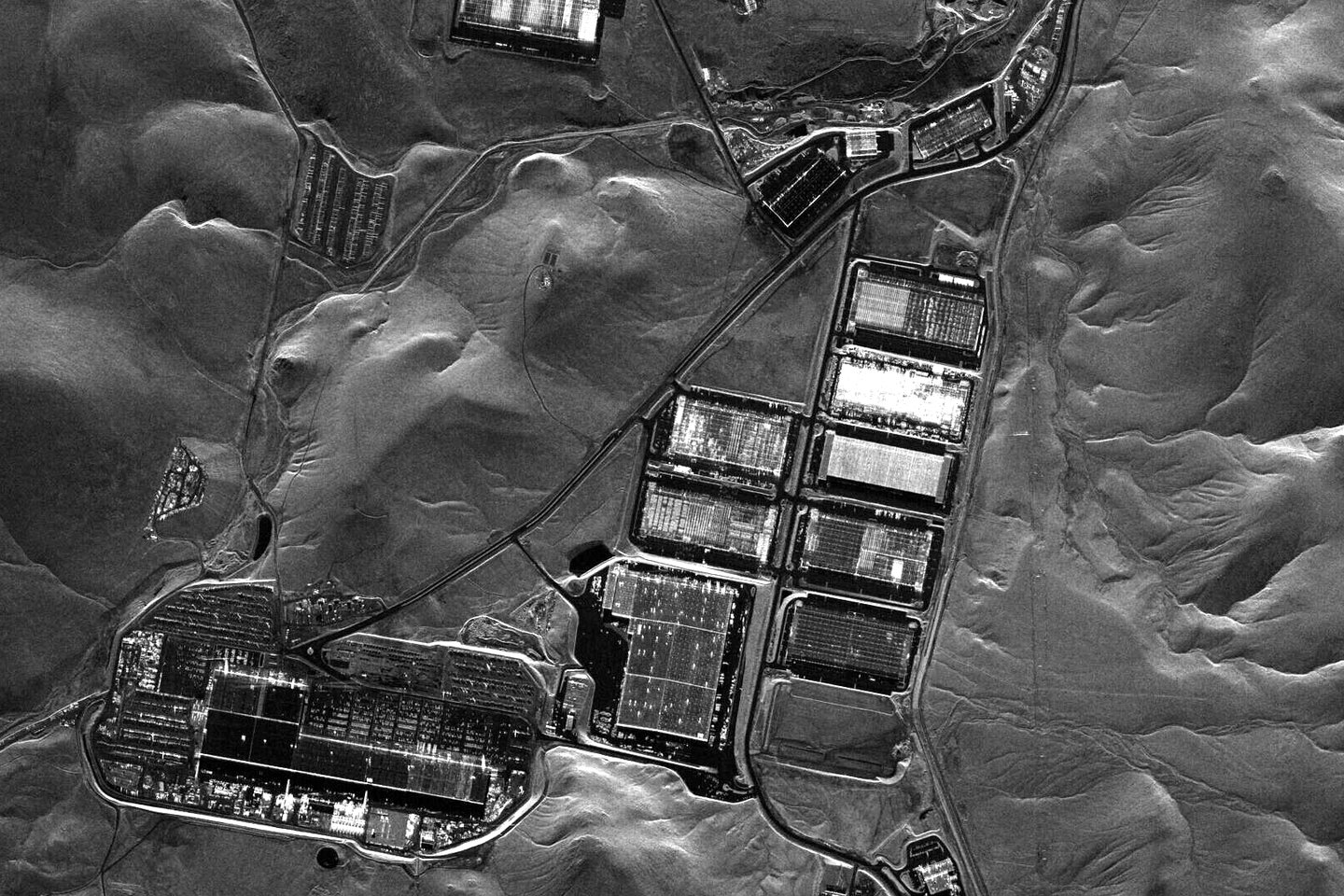
Tesla makes the stampings, battery packs, drive axles, high-voltage distribution, cooling modules and seats in-house. Standard Range, Long Range and European-specification trucks share one assembly line.
Priestley and Lars Moravy, Tesla’s vice president of vehicle engineering, ran the stage.
Elon Musk did not attend; he sent a recorded video calling the truck “a breakthrough product for heavy shipping.”
Tesla’s first truck came off the high-volume line in April, according to the Tesla Owners Silicon Valley account of the program. Electrek called the rollout “a ceremonial event rather than the start of manufacturing” in an August 24 report, about two weeks before diesel crossed its old record.
Nine Years From Unveiling to a Volume Line
Tesla unveiled the Semi in November 2017 and promised production in 2019.
That date slipped to 2021, then 2022, then 2023.
The first hand-built trucks reached PepsiCo’s Modesto and Sacramento sites on December 1, 2022.
In January 2023 Tesla announced a $3.6 billion expansion of Gigafactory Nevada covering two buildings: this Semi plant and a 100-gigawatt-hour 4680 cell factory. The 3,000 new jobs it promised then covered both. Priestley now attributes more than 3,000 jobs to the Semi ramp alone.

NHTSA lists two Semi recalls, both from 2023. Campaign 23V-205, filed in March, covered 35 trucks built between November 30, 2022 and February 28, 2023 for a Bendix parking brake valve module that could keep the parking brakes from setting or releasing. Campaign 23V-422, filed in June, covered 36 trucks whose door-open warning failed federal standard FMVSS 206, and Tesla fixed it with an over-the-air update.
The Truck on the Line
Tesla published final specifications for two trims in February 2026, as reported by Electrek.
| Specification | Standard Range | Long Range |
|---|---|---|
| Range at 82,000 lb gross combination weight | 325 miles | 500 miles |
| Rated consumption | 1.7 kWh per mile | 1.7 kWh per mile |
| Drive power | 800 kW, three rear motors | 800 kW, three rear motors |
| Curb weight | Under 20,000 lb | 23,000 lb |
| Peak charging | MCS; 60% in 30 minutes | 1.2 MW; 60% in 30 minutes |
| Price | Not published | $290,000 customer quote (Electrek) |
The Long Range figure of 500 miles is Tesla’s rating at a full 82,000 lb. With lighter loads it can exceed 600 miles, Drive Tesla Canada reported from the event. DHL reported 388 miles on one charge at 75,000 lb in its own testing, averaging 1.72 kWh per mile.

When Tesla first took reservations in 2017 it quoted $150,000 and $180,000. Electrek reported a $290,000 quote for the Long Range in February, before destination and taxes, and FreightWaves wrote in June that Tesla “has not published firm, final pricing.”

Diesel Crossed $6.50 in Three Weeks
EIA’s weekly series put diesel at $5.599 for the week of August 31. It reached $5.967 on September 7, $6.285 on September 14, and $6.529 on September 21, a climb of 93 cents in three weeks.
The previous high was $5.810, set June 20, 2022.
California averaged $8.246, also a record for that series. The Midwest rose 43 cents in a single week, to $6.680.
FreightWaves tied the run to an outage at ExxonMobil’s 264,000-barrel-a-day Joliet refinery, Houthi damage to Saudi Arabia’s East-West pipeline, disruption in the Strait of Hormuz, and thin crude inventories. The CME ultra-low-sulfur diesel contract settled at $5.262 a gallon, its highest since the contract began trading in 1978.

A nominal record. EIA’s page does not call $6.529 a record; that is a reading of the series maximum. Adjusted with the Bureau of Labor Statistics’ consumer price index for August 2026, the June 2022 peak equals about $6.57 today and the July 2008 peak about $7.26. AAA’s national average had eased to $6.4531 by September 28, after peaking at $6.5276 on September 22.
What Record Diesel Does to the Cost per Mile
The table sets fuel cost per mile for a 6.9-mpg diesel tractor, the national average cited by the North American Council for Freight Efficiency, against a Semi at Tesla’s rated 1.7 kWh per mile on EIA’s July 2026 average commercial electricity price in each area.
| Area | Diesel, week of Sept. 21 | Diesel cost per mile | Commercial power | Semi cost per mile | Gap per 100,000 miles |
|---|---|---|---|---|---|
| U.S. average | $6.529 | $0.946 | 14.53 cents/kWh | $0.247 | $69,900 |
| California | $8.246 | $1.195 | 30.56 cents/kWh | $0.520 | $67,600 |
| Nevada (West Coast less California diesel) | $6.791 | $0.984 | 9.72 cents/kWh | $0.165 | $81,900 |
| Texas (Gulf Coast diesel) | $6.177 | $0.895 | 8.47 cents/kWh | $0.144 | $75,100 |

At 2025’s average diesel price of $3.66 and July 2025 commercial power at 14.05 cents, the same arithmetic gives a gap of about $29,200 per 100,000 miles.
September’s diesel more than doubled it.
NACFE’s study fleets averaged 7.77 mpg in 2023. At that figure the U.S. gap falls to about $59,300 per 100,000 miles.

What the electricity figures leave out. Commercial averages do not include demand charges, which can dominate a depot’s power bill at megawatt charging rates, or losses between the grid and the battery. Tesla has not published per-kWh pricing for its Megacharger network, and the first public site, opened March 8 at 4265 E. Guasti Road in Ontario, California, is limited to 750 kW against the truck’s 1.2 MW rating.
The American Transportation Research Institute put total 2025 trucking cost at a record $2.336 per mile, of which fuel was $0.48.
California Pays Twice for Power
California’s commercial electricity averaged 30.56 cents per kWh in July, more than three times Nevada’s 9.72 cents. Its $8.246 diesel keeps the Semi ahead there, but diesel costs 2.3 times as much per mile as the Semi’s electricity in California, against 6.0 times on Nevada rates.
Tesla accounted for 965 of 1,067 applications to the state’s HVIP voucher program, according to FreightWaves. HVIP lists a $120,000 voucher for a Class 8 Semi Long Range and $150,000 for drayage use. The newer California Clean Fuel Reward pays up to $120,000 for the heaviest trucks, first come, first served.
No Mandate Left Doing the Work
The EPA finalized its Phase 3 greenhouse-gas standards for heavy trucks in March 2024 and repealed them in February 2026, along with the 2009 endangerment finding underneath them.
California withdrew its federal waiver request for Advanced Clean Fleets in January 2025, and its Air Resources Board voted in September 2025 to repeal the rule’s private-fleet, high-priority and drayage sections. The Air Resources Board now lists only its state and local government fleet requirements, effective September 10, 2026. Congress voted in 2025 to void the federal waiver for California’s Advanced Clean Trucks rule.

Who Else Builds a Class 8 Electric Tractor
| Truck | Battery | Rated range | Peak charging |
|---|---|---|---|
| Tesla Semi Long Range | 822 kWh (CARB filing) | 500 miles at 82,000 lb | 1.2 MW |
| Freightliner eCascadia | 291 or 438 kWh | Up to 230 miles | 270 kW (dual port) |
| Volvo VNR Electric | 565 kWh total, 452 kWh usable | Up to 275 miles | 250 kW |
| Windrose R700 | 436 or 730 kWh | 200 to 450 miles | Not confirmed |
Nikola, once the loudest rival, filed for Chapter 11 on February 19, 2025, and now exists as a liquidating trust; Lucid bought its Coolidge, Arizona plant. Windrose, a Chinese startup, plans U.S. assembly in Rincon, Georgia and Tacoma, Washington by the end of 2026.

A coalition order announced September 22 through the ZET SCALE program, whose members include PepsiCo and Microsoft, covers 2,500 battery-electric Class 8 trucks, with Tesla as the primary supplier and Kenworth, Volvo and RIDE as secondary ones. Catalyst Mobility, which runs the program, says the order nearly doubles the existing U.S. fleet of electric Class 8 trucks.
Diesel’s Peak and the Plant’s Timing
Tesla’s rollout date was public by August 24, when EIA’s latest weekly diesel figure was $5.454, and it landed the week the national average reached $6.529. At that price a Semi on average commercial power spends about $0.70 a mile less on energy than a 6.9-mpg diesel, roughly $69,900 over 100,000 miles, against about $29,200 at last year’s prices. Demand charges, charger pricing Tesla has not disclosed and a quoted $290,000 sticker sit on the other side of that ledger, and no federal or California mandate is left to settle it for the buyer.
Frequently Asked Questions
When did the Tesla Semi factory open?
Tesla held its Semi rollout event at the Nevada plant on the evening of Thursday, September 24, 2026, and handed trucks to fleets including PepsiCo, DHL and US Foods. Trucks had already been coming off the volume line since the spring, so the event marked a ceremony rather than the first day of production.
Where is the Tesla Semi factory?
In Storey County, Nevada, at the Tahoe-Reno Industrial Center beside Gigafactory Nevada, with a Sparks mailing address. It is separate from the Tesla building permitted at 3010 Airway Drive in Reno.
How many Semis can the Nevada plant build?
Dan Priestley, who leads Tesla’s Semi program, gave a capacity of 50,000 trucks a year, roughly 1,000 a week, and said the ramp would bring more than 3,000 jobs to Nevada.
How much does a Tesla Semi cost?
Tesla has not published an official price. Electrek reported a customer quote of $290,000 for the 500-mile Long Range truck in February 2026, before destination fees and taxes. California’s HVIP program lists a $120,000 voucher for the Long Range, or $150,000 for drayage use.
What is the Tesla Semi’s range?
Tesla rates the Standard Range at 325 miles and the Long Range at 500 miles, both at 82,000 lb gross combination weight. DHL reported 388 miles on one charge at 75,000 lb in its own testing.
Is diesel at a record high?
In nominal terms, yes. EIA’s weekly U.S. average reached $6.529 a gallon for the week of September 21, 2026, above the $5.810 of June 2022. Adjusted for inflation, the 2022 and 2008 peaks were higher, at about $6.57 and $7.26 in August 2026 dollars.
How much cheaper is it to run a Tesla Semi than a diesel truck?
On fuel alone, at the September 21 diesel price and July 2026 average commercial electricity, a TWD calculation puts the Semi at about $0.25 a mile against $0.95 for a 6.9-mpg diesel, a gap of about $69,900 per 100,000 miles. Demand charges, charger pricing and the truck’s sticker price are not in that figure.
Is the Tesla Semi cheaper to run in California?
Its advantage is smaller there. California diesel averaged $8.246, but commercial power averaged 30.56 cents per kWh, so the Semi’s fuel cost per mile is about $0.52 against $0.17 on Nevada rates.
Has the Tesla Semi been recalled?
NHTSA lists two recalls, both from 2023. Campaign 23V-205 covered 35 trucks for a Bendix parking brake valve module that could keep the parking brakes from setting or releasing, and campaign 23V-422 covered 36 trucks for a door-open warning that failed FMVSS 206, fixed over the air.
Do fleets have to buy electric trucks?
Not under current rules. The EPA repealed its Phase 3 heavy-truck greenhouse-gas standards in February 2026, and California’s Advanced Clean Fleets rule now covers only state and local government fleets, with private-fleet requirements repealed.

Michael Kahn
Michael Kahn is the writer, photographer, and publisher behind The Weekly Driver. He cares about how cars drive and what they're like to own. He covers automobile industry news, car shows and events, and new car reviews. The reviews come from behind the wheel: day trips that favor back routes, treating a good meal as half the reason to go. He directs and produces the visual media, matching each car to a setting and mood that fit it. When he's not reviewing new cars, Michael races paddleboards, camels, and ostriches, along with the occasional exotic car on the racetrack, and has driven in every state and country visited.
https://theweeklydriver.com