

His brakes failed. The MG TD would not slow, Ken Miles kept going anyway, and officials threw him out of his own American racing debut. That was 1952, on the road course through Del Monte Forest, in front of the crowd he had crossed an ocean to race for.
He came back in 1953 with a car he built himself and won the under-1500 cc class by what was reported as the largest margin anyone had seen.
Both of the specials that followed, R1 and R2, return to Pebble Beach this August for the 75th Concours d’Elegance. They come back as part of two classes honoring the road races the show was built alongside, and they come back to the exact ground where one of them broke.
Key Takeaways
- MG R1 and MG R2, both built and raced by Ken Miles, appear together at the 75th Pebble Beach Concours d’Elegance on Sunday, August 16, 2026.
- R2 is nicknamed “The Flying Shingle” for its unusually low, flat body, designed by Robert Cumberford.
- Miles was disqualified on his 1952 US debut at Pebble Beach after brake failure on his MG TD.
- R1 recorded 12 victories before a blown engine ended its career at Pebble Beach in 1954, where it had started.
- R2 won the 1955 Pebble Beach Cup for modified cars under 1500 cc and placed third overall in the main race.
- 22 road racing cars return across two special classes on the 18th fairway, split between near-original factory racers and modified specials.
- Miles later developed the Ford GT40 and was denied the win at the 1966 24 Hours of Le Mans by a contested team finish.
From Wolseley Motors to a California MG Distributor
Miles was born in England in 1918 and apprenticed at Wolseley Motors, learning the trade from the inside of a factory rather than the outside of a showroom. He served in the Second World War. Afterward he moved to California and took work with an MG distributor.
American road racing was barely organized at that point. Courses were public roads closed for a weekend, grids mixed showroom sports cars with homebuilt specials, and the sport ran on enthusiasm and improvisation.
Miles brought a mechanic’s understanding to a scene that mostly ran on money and nerve.
R1 Was a Steel Tube Frame and 1,230 Pounds
After the 1952 disqualification, Miles built his first special. R1 carried a narrow, low-slung body on a steel-tubed frame and weighed under 1,230 pounds.
Light cars win small-displacement classes. That is the whole equation, and Miles solved it by refusing to carry anything he did not need.
R1 won its class at Pebble Beach in 1953 by a margin contemporaries described as the largest they had recorded. It went on to take 12 victories total.
Its career ended where it began. In 1954, at Pebble Beach, the engine let go.

R2 Got a Space Frame and a Nickname
Miles built something faster rather than repairing what he had.
R2 used a lightweight space-frame chassis fabricated from one-inch steel tubing, paired with a heavily modified 1466 cc MG TF engine. Robert Cumberford designed the streamlined envelope body, finished in British racing green.
Sitting so low and so flat, the car picked up a name from the people watching it: “The Flying Shingle.”
| Specification | MG R2 “The Flying Shingle” |
|---|---|
| Chassis | Space frame, one-inch steel tubing |
| Engine | Modified 1466 cc MG TF |
| Body | Streamlined envelope, designed by Robert Cumberford |
| Color | British racing green |
| 1955 Pebble Beach Cup | Winner, modified under 1500 cc |
| 1955 main race | Third overall |
Third overall matters more than the class win. Miles put a 1466 cc homebuilt into the top three against cars with no displacement limit at all.

The Grid He Was Beating
Pebble Beach in the 1950s drew a field that reads now like a roll call of what American motorsport was about to become. Miles raced against Phil Hill, who would become the first American Formula 1 World Champion. Against Richie Ginther, a future grand prix winner. Against Carroll Shelby.
None of them were famous yet. They were fast drivers on a forest road course in California, and the reputations arrived later.

Ford, the GT40, and 1966
A dozen years after the Flying Shingle, Miles and Shelby were working the same problem from the same side: how to beat Ferrari at Le Mans with an American car.
Miles became one of Ford’s most accomplished development drivers. Turning the GT40 from a fast, fragile experiment into a car that could survive 24 hours took the kind of mechanical patience he had been applying to his own specials since 1953.
At the 1966 24 Hours of Le Mans, Ford ordered a staged 1-2-3 photo finish. Miles slowed. The scoring gave the win to the sister car on a technicality of distance covered from the grid, and Miles lost the race and the Triple Crown that would have come with it.
He died two months later testing at Riverside.
On the 1966 finish: Ford’s decision to orchestrate a dead-heat photo remains the most argued-over team call in endurance racing. The rules counted the distance each car had traveled from its starting position on the grid, and Miles had started ahead. Slowing to form the photo cost him the outright win.
What Returns to the 18th Fairway
Pairing R1 and R2 puts Miles’s two answers to the same question side by side. One is a stripped tube-frame car that won by being lighter than anything near it. The other is a streamlined space-frame car that beat machinery with three times the displacement.
They join 20 other Pebble Beach Road Racing greats across two classes on the 18th fairway. One class covers near-original factory racers. The other covers heavily modified specials, which is where Miles’s cars belong.
The Concours was founded in tandem with those road races in 1950. Racing moved to Laguna Seca in 1957 when the forest course proved too dangerous, and the show has spent most of the seven decades since honoring coachwork rather than competition.
For its 75th, it is honoring the reason it exists.
What Happened on August 16
Seventy-four years after officials removed him from the results, the judges gave Ken Miles’s car a trophy.
The Flying Shingle took the Dean Batchelor Trophy, shown by Bill Hart of Carnation, Washington.
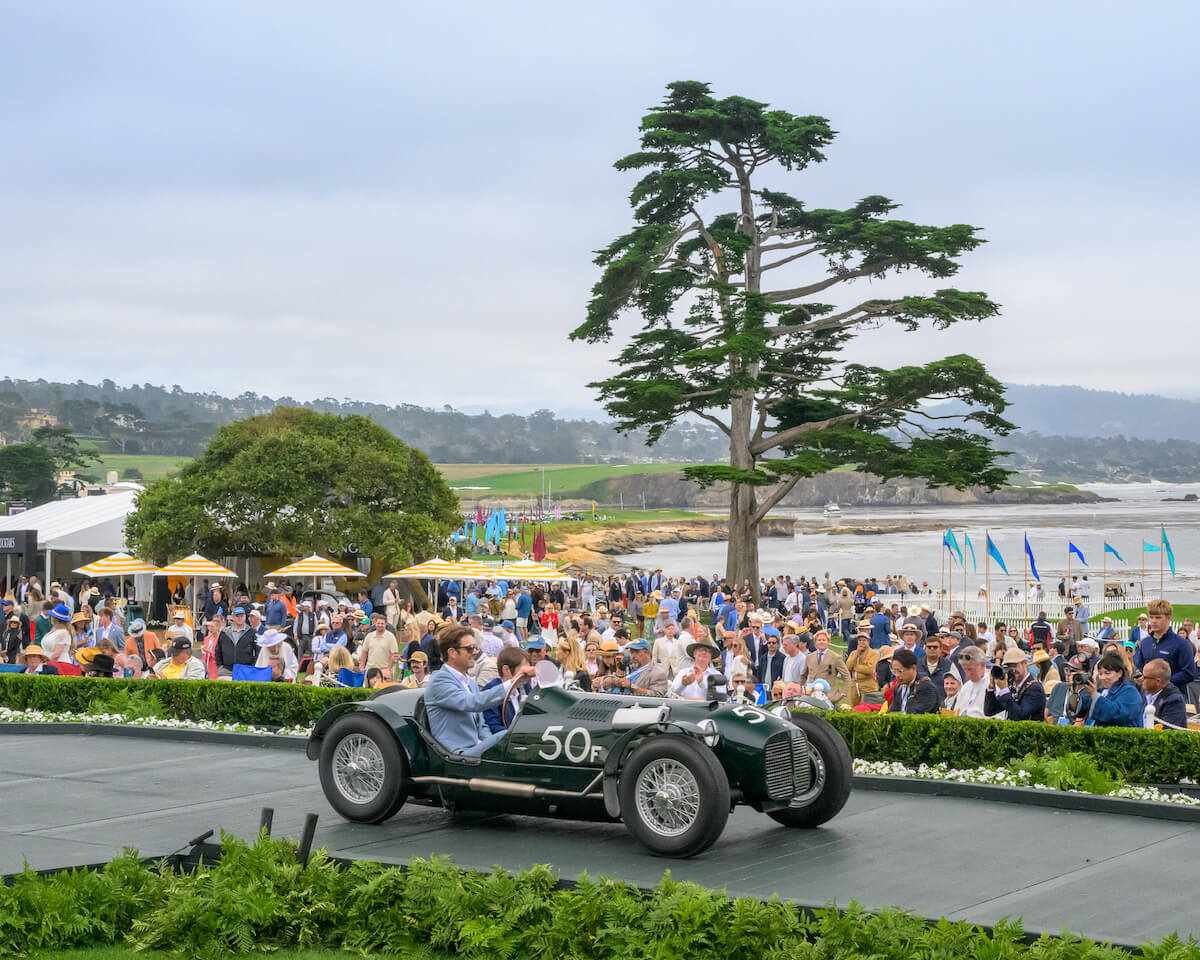
R1 finished second in the Pebble Beach Road Race Special class, shown by the Hart family. The class went to a 1950 HWM-Chevrolet known as the “Stovebolt Special,” entered by Simon and Pearl Taylor of London.
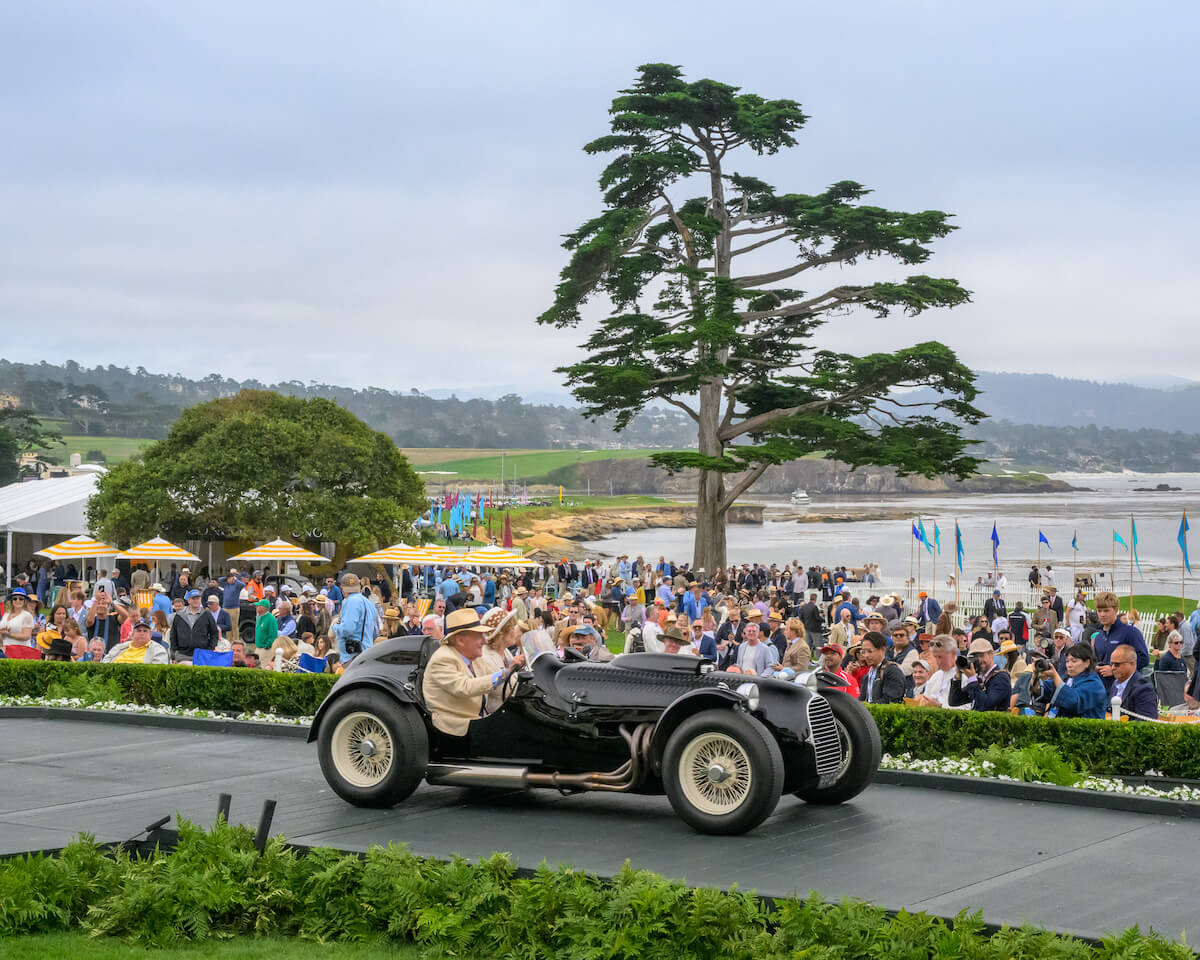
Both of the cars Miles built were recognized on the same lawn, on the same afternoon, on the ground where his American career started with a disqualification.
Frequently Asked Questions
Who was Ken Miles?
A British-born racing driver, engineer, and car builder who moved to California after the Second World War and became a central figure in American road racing. He built the MG specials R1 and R2, then developed the Ford GT40 into a Le Mans winner as one of Ford’s leading development drivers.
Why is the MG R2 called “The Flying Shingle”?
Because of how it looked. The streamlined envelope body, designed by Robert Cumberford, sat unusually low and flat, and the nickname stuck.
What happened at Ken Miles’s first American race?
He was disqualified. Competing at Pebble Beach in 1952, brake failure meant his MG TD could not be slowed, and officials removed him from the results.
What engine did the MG R2 use?
A heavily modified 1466 cc MG TF engine, mounted in a space frame built from one-inch steel tubing.
How successful was the MG R1?
It recorded 12 victories. Its first came at Pebble Beach in 1953, when it won the under-1500 cc class by what was reported as the largest margin seen at the event. Its career ended at Pebble Beach in 1954 with a blown engine.
How did the R2 do at Pebble Beach in 1955?
It won the Pebble Beach Cup for modified cars under 1500 cc and finished third overall in the main race, competing against cars with far larger engines.
Who else raced at Pebble Beach when Miles did?
Phil Hill, who became the first American Formula 1 World Champion, Richie Ginther, a future grand prix winner, and Carroll Shelby, who later partnered with Miles on Ford’s Le Mans program.
What happened to Ken Miles at Le Mans in 1966?
Ford orchestrated a 1-2-3 photo finish and Miles slowed to comply. Because scoring counted distance traveled from each car’s grid position, and Miles had started ahead of the sister car, the win was awarded to the other Ford. He died two months later during testing at Riverside.
Where can I see R1 and R2 in 2026?
Both appear at the 75th Pebble Beach Concours d’Elegance on Sunday, August 16, 2026, on the 18th fairway of Pebble Beach Golf Links, as part of the Pebble Beach Road Racing classes.
How did the Ken Miles cars do at the 2026 Concours?
The MG R2 “Flying Shingle” won the Dean Batchelor Trophy, shown by Bill Hart of Carnation, Washington. The MG R1 placed second in the Pebble Beach Road Race Special class, shown by the Hart family.
How many road racing cars are returning?
Twenty-two in total, across two special classes. One class covers cars that raced in close-to-original factory form, the other covers heavily modified specials.
Were the Pebble Beach Road Races held on a track?
No. They ran on public roads through Del Monte Forest from 1950. The course was fast and tree-lined, and racing moved to the purpose-built Laguna Seca circuit in 1957.
Two Cars, One Argument
Ken Miles arrived at Pebble Beach in 1952 with brakes that did not work and left disqualified. He returned with a car he had built in a shop, weighing under 1,230 pounds, and beat everything in his class by a margin people were still describing decades later. Then he built a faster one and put it third overall against unlimited machinery.
The work that made the GT40 survive 24 hours started here, on a forest road in California, with a 1466 cc engine and a body so flat it got named after roofing material. On August 16 both cars were back on the 18th fairway, and both left with something. The Flying Shingle took the Dean Batchelor Trophy. R1 took second in class.

Michael Kahn
Michael Kahn is the writer, photographer, and publisher behind The Weekly Driver. He cares about how cars drive and what they're like to own. He covers automobile industry news, car shows and events, and new car reviews. The reviews come from behind the wheel: day trips that favor back routes, treating a good meal as half the reason to go. He directs and produces the visual media, matching each car to a setting and mood that fit it. When he's not reviewing new cars, Michael races paddleboards, camels, and ostriches, along with the occasional exotic car on the racetrack, and has driven in every state and country visited.
https://theweeklydriver.com