
Imagine driving along a three-lane highway when two vehicles on opposite sides begin moving toward the center lane. Neither driver realizes the other is changing lanes until their vehicles collide.
Both drivers might insist they checked their mirrors, used their turn signals, and believed the lane was clear. So who is responsible?
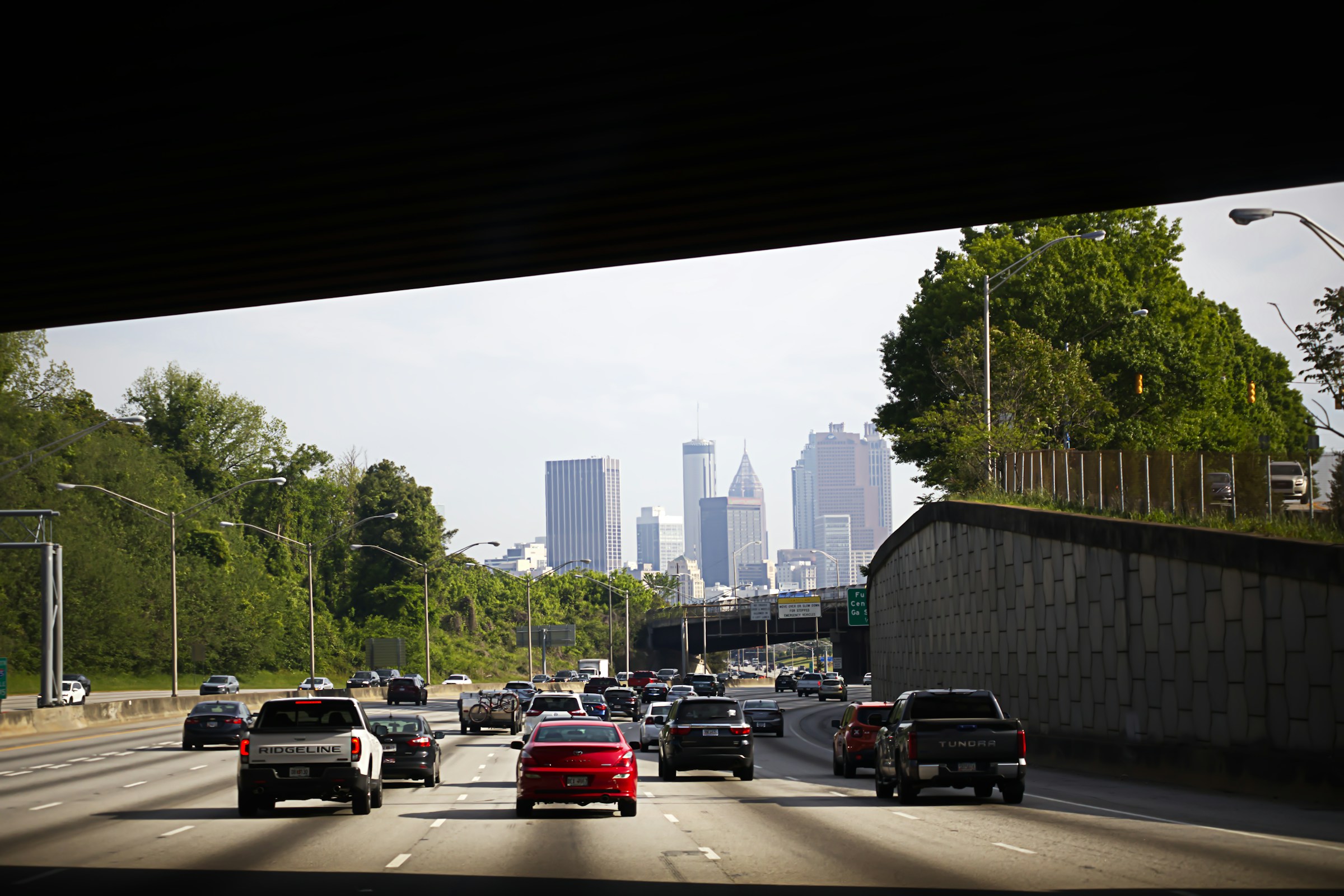
When two cars try to merge into the same lane, fault depends on whether each driver took reasonable precautions before changing lanes. Neither driver automatically has the right of way simply because they signaled first or started moving earlier.
The answer depends on the vehicles’ positions, the drivers’ actions, road conditions, and available evidence. In South Carolina, both drivers can share responsibility if their actions contributed to the collision.
Understanding how these accidents happen can help drivers avoid dangerous situations and recognize what matters when determining fault.
Why Do Simultaneous Lane-Change Accidents Happen?
Simultaneous lane-change accidents occur when two vehicles attempt to enter the same lane at nearly the same time.
This situation is particularly dangerous on multilane highways, where drivers must monitor traffic beside and behind their vehicles.
Consider a driver traveling in the left lane who wants to move toward an upcoming exit. At the same moment, another driver in the right lane moves toward the center to pass slower traffic.
Both vehicles approach the same space, creating a collision risk.
Several factors can contribute:
- Drivers failing to check blind spots before moving
- Vehicles traveling at different speeds
- Inadequate space between surrounding vehicles
- Drivers focusing on exits instead of the intended lane
- Poor visibility caused by rain, darkness, or roadway conditions
A turn signal communicates a driver’s intention, but it does not confirm that the intended lane is clear.
Drivers should check their mirrors and blind spots, assess surrounding traffic, and wait until there is enough room to complete the movement safely.
Who Has the Right of Way When Both Cars Change Lanes?
There is no automatic rule giving one driver priority simply because they entered the lane first or activated their turn signal earlier.
When two drivers move toward the same lane, each has a responsibility to determine whether the movement can be completed safely.
For example, one driver might begin changing lanes while another vehicle is already moving into the intended space.
If the second driver fails to notice that movement and continues merging, their actions could contribute to the collision.
However, the first driver might also bear responsibility if they moved without checking for approaching traffic.
Determining fault requires examining the entire sequence rather than relying on a single detail.
For drivers injured in a South Carolina collision, consulting a Myrtle Beach car accident lawyer can help clarify how traffic laws, driver behavior, and accident evidence affect potential liability.
The important question is whether each driver exercised reasonable care under the circumstances.
What Does South Carolina Law Say About Unsafe Lane Changes?
South Carolina has specific traffic laws governing lane changes and vehicle movements.
Under South Carolina Code Section 56-5-1900(a), a driver traveling on a roadway with marked lanes must remain within a single lane as nearly as practicable. Before changing lanes, the driver must determine that the movement can be completed safely.
Section 56-5-2150(A) also prohibits moving right or left on a roadway unless the movement can be made with reasonable safety and an appropriate signal is given.
Section 56-5-2150(B) requires a continuous signal during at least the last 100 feet traveled before turning. That specific distance requirement should not be treated as an automatic rule for every lateral lane movement.
These provisions establish two important responsibilities: drivers must communicate their intended movements when required and avoid changing lanes when doing so would be unsafe.
A driver who activates a turn signal but moves into an occupied lane has not necessarily satisfied the duty to change lanes safely.
Likewise, failing to provide an appropriate signal can be relevant when evaluating whether a driver’s conduct contributed to a collision.
A traffic violation can support a negligence claim, but liability also requires a legally sufficient connection between the conduct and the resulting injury.
What If Both Drivers Failed to Check Their Blind Spots?
Blind spots are areas around a vehicle that cannot be seen clearly through mirrors alone.
Their size varies depending on vehicle design, mirror adjustment, and surrounding traffic.
When two cars move toward the same lane, each driver might overlook the other vehicle.
For example, a driver in the left lane could check the center lane but fail to notice a car approaching from the right. Meanwhile, the driver on the right might make the same mistake.
If both drivers failed to maintain an adequate lookout, responsibility could be shared.
Investigators would examine whether either driver had a reasonable opportunity to see the other vehicle and avoid the collision.
Vehicle size also matters. SUVs, trucks, and commercial vehicles have different visibility limitations.
Blind-spot monitoring systems can provide warnings, but they do not replace careful observation.
Can Dashcam Footage Help Determine Which Driver Was Responsible?
Dashcam footage can provide useful information when drivers disagree about how a collision happened.
A recording might show vehicle positions, lane markings, traffic movement, and the timing of a lane change.
For example, footage from a vehicle traveling behind the two cars could show whether one driver entered the center lane before the other began moving.
That information can help reconstruct the sequence of events.
However, dashcam footage has limitations.
A forward-facing camera might not capture vehicles approaching from the side. The recording angle can also make distances and speeds difficult to judge.
Footage should therefore be considered alongside other evidence rather than treated as a complete explanation of the accident.
Preserving the original recording is important because some dashcams automatically overwrite older files.
How Do Vehicle Damage and Road Markings Help Establish Fault?
The location and pattern of vehicle damage can provide clues about how a lane-change collision occurred.
For example, damage to the front corner of one vehicle and the rear side of another could help investigators evaluate their relative positions.
Side-to-side damage might suggest that both vehicles were moving laterally when contact occurred.
However, damage patterns do not automatically establish which driver was negligent.
Vehicle movement after impact, steering reactions, and the angle of contact can complicate the analysis.
Road markings can also provide useful information.
Solid lane lines, designated turn lanes, and signs restricting lane changes can affect whether a particular movement was permitted.
Photographs of the roadway and surrounding traffic controls can help establish the conditions at the collision location.
What If One Driver Was Speeding or Failed to Signal?
Fault does not depend exclusively on the lane change itself.
Other driving behavior can contribute to the collision.
A driver traveling significantly faster than surrounding traffic might approach the intended lane before another motorist can reasonably react.
Similarly, a driver who changes lanes without signaling can make their intended movement harder for others to anticipate.
Investigators might consider whether either driver:
- Was traveling too fast for traffic conditions
- Failed to signal appropriately
- Changed lanes abruptly
- Was distracted while driving
- Failed to maintain a proper lookout
These details matter because an accident can result from several contributing actions.
A driver who followed one traffic rule could still be negligent in another respect.
How Does Shared Fault Affect a South Carolina Car Accident Claim?
South Carolina follows a modified comparative negligence system.
Under the rule established in Nelson v. Concrete Supply Co., an injured person can generally recover damages if their negligence is not greater than the negligence of the defendant or the combined negligence of multiple defendants.
Compensation is reduced according to the injured person’s percentage of fault.
Suppose a lane-change collision results in $40,000 in recoverable damages.
If the injured driver is found 25% responsible, their recovery would be reduced by $10,000, leaving $30,000.
If the injured driver’s negligence exceeds 50%, recovery is generally barred under South Carolina’s comparative negligence rule.
These examples illustrate why determining the actions of both drivers matters.
An insurance company’s initial fault assessment does not necessarily settle every legal question. Disputed cases can require further evidence and, in some circumstances, a court determination.
How Can Drivers Reduce the Risk of a Simultaneous Lane-Change Collision?
Preventing these crashes requires awareness of traffic beyond the lane immediately beside the vehicle.
Before changing lanes, drivers should identify a safe opening, check their mirrors and blind spots, signal appropriately, and continue monitoring surrounding vehicles.
If another vehicle begins moving toward the same space, the safer response is generally to avoid forcing the lane change.
Maintaining a consistent speed and allowing adequate space can give drivers more time to respond.
Extra caution is useful near highway exits, where several vehicles might change lanes within a short distance.
In Myrtle Beach and other busy South Carolina driving areas, unfamiliar routes and changing traffic patterns can add to the challenge.
Drivers should prioritize a safe movement over reaching an exit or passing another vehicle.
Understanding Fault After a Same-Lane Merge Accident
When two vehicles attempt to enter the same lane, neither driver automatically receives priority.
Same lane merge accident fault depends on the drivers’ actions, applicable traffic laws, and evidence showing how the collision occurred.
Turn signals, blind-spot checks, vehicle positions, and roadway conditions can all influence the analysis.
If a collision causes injuries, accurate accident documentation and appropriate medical care are important. When responsibility remains disputed, reviewing the evidence under South Carolina law can help clarify the available options.

Matthew Wilde
Matthew Wilde is an automotive journalist with experience contributing to leading publications. He focuses on delivering clear, well-researched analysis of automotive industry news and vehicles. Growing up surrounded by a variety of cars, Matthew developed a strong foundation in automotive technology and design. His work emphasizes accuracy and depth, aimed at informing both enthusiasts and industry professionals with straightforward, precise reporting.
https://theweeklydriver.com/