
You’d think 900 horsepower would settle any argument about performance. Apparently, nobody told Brabus. Its latest creations raise a much more entertaining question: when money is practically no object, would you rather have the faster car or the crazier one?
Brabus has been let loose on two of Germany’s most outrageous performance machines, and the results are wonderfully ridiculous. One is a Porsche 911 Turbo S with enough power to embarrass almost anything on the road. The other is a Mercedes G-Class turned into a pickup truck with an engine that belongs in a supercar. Both are expensive, both are absurdly fast, and choosing between them is a lot more interesting than comparing horsepower figures. Especially when the Mercedes has more power, but the Porsche leaves it behind.
The Porsche Was Already Exceptionally Fast
The latest Porsche 911 Turbo S hardly needed more power. Its factory hybrid powertrain produces 701 horsepower and 590 lb-ft of torque, enough to launch the coupe from 0 to 60 mph in 2.4 seconds. Porsche also recorded a Nürburgring Nordschleife lap of 7:03.92, approximately 14 seconds quicker than its predecessor.
Brabus decided there was room for improvement anyway.
The Brabus 800 conversion takes output to 789 horsepower and 664 lb-ft of torque. That’s an additional 88 horsepower from a car already capable of reaching 200 mph.
The modifications go beyond the engine. Carbon-fiber aerodynamic components give the Porsche a more aggressive appearance, while revised exhaust hardware adds some extra character. Buyers can also specify custom leather upholstery and interior detailing.
Yet the basic proposition remains unchanged. You’re getting a Porsche 911 Turbo S, only with considerably more personality and a Brabus badge. Its 200-mph maximum speed remains intact, and the extra horsepower does little to improve acceleration figures that were already extraordinary.
The P 900 Is More Than a Modified G-Class
Mercedes-AMG’s G 63 is already an unlikely performance vehicle. It’s a large, heavy luxury SUV with the basic appearance of something designed to conquer mountains rather than racetracks.
Brabus looked at that and apparently decided it needed a pickup bed.
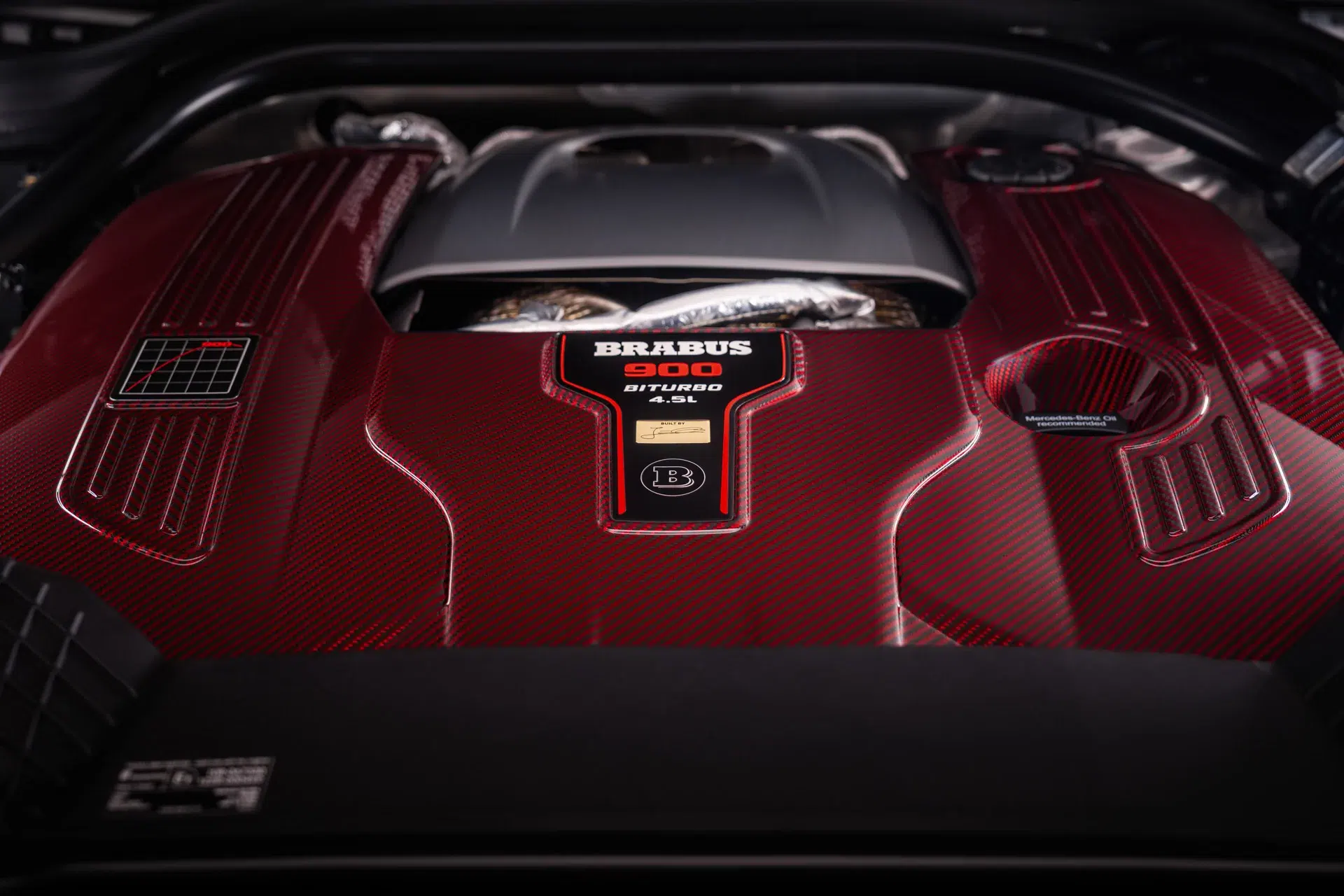
The P 900 Rocket Edition takes the G 63 through a much more extensive conversion than the Porsche receives. Its original 4.0-liter twin-turbo V8 grows to 4.5 liters, producing 888 horsepower and 922 lb-ft of torque.
That’s a substantial increase over the standard G 63’s 577 horsepower, although the real spectacle is what Brabus has done to the body.
The rear section becomes an open pickup bed, while the widebody treatment gives the vehicle an imposing stance. It rides on enormous 24-inch forged wheels, with rear tires measuring 345/25 ZR24. The cabin receives custom leather upholstery and carefully finished trim, preserving the luxury expected from a vehicle in this price bracket.
Production is limited to ten examples worldwide, making the pickup conversion considerably more exclusive than an ordinary tuning package.
Despite its remarkable output, the P 900 reaches 62 mph in 3.7 seconds and has an electronically limited top speed of 149 mph.
Those numbers would be impressive in almost any pickup. Put them beside the Porsche, however, and the difference becomes obvious. The Mercedes has the bigger engine output, but it’s carrying considerably more vehicle around with it.
Horsepower Doesn’t Tell the Whole Story
Comparing the two Brabus models on horsepower alone misses most of the story. Price, performance, engineering and exclusivity all contribute to their appeal. It’s the same principle behind any meaningful comparison, whether you’re evaluating luxury cars or betting sites, per Covers. The important distinction is what each option delivers beyond its headline numbers.
The Porsche’s advantage becomes obvious the moment acceleration enters the discussion. Its low body and sports-car engineering allow it to put its power to work with extraordinary efficiency.
The Mercedes has an entirely different job. Its extra horsepower helps move a substantial luxury pickup, while its unusual bodywork gives it an appeal that a stopwatch cannot measure.
The Price of Owning Something Different

The standard 2026 Porsche 911 Turbo S Coupe starts at $270,300 in the United States, while the Cabriolet starts at $284,300. Those are extraordinary prices before Brabus gets involved.
Mercedes-AMG’s G 63 starts at $198,750, making the original SUV considerably cheaper than the Porsche.
The completed vehicles tell a different story.
A P 900 Rocket Edition was advertised at €711,718 before German VAT, approximately $800,000 using the exchange rate reported at the time. That puts the Mercedes conversion into a price category occupied by some seriously exotic machinery.
Still, the P 900’s enormous premium makes sense when you examine the work involved. Brabus has created a different body configuration, developed a substantially modified engine and committed to producing only ten examples.
Ten Examples Make a Different Statement
The Porsche wins the acceleration contest, and nobody buying a Brabus 800 is going to complain about having nearly 800 horsepower beneath their right foot.
The P 900 offers something else entirely. Its appeal comes from owning a machine that Brabus has built in extraordinarily small numbers, with a body configuration that makes even an ordinary G 63 look restrained.
Both vehicles demonstrate what happens when a specialist gets carried away with an already expensive car. But the most interesting number on the P 900’s specification sheet might simply be ten.

Matthew Wilde
Matthew Wilde is an automotive journalist with experience contributing to leading publications. He focuses on delivering clear, well-researched analysis of automotive industry news and vehicles. Growing up surrounded by a variety of cars, Matthew developed a strong foundation in automotive technology and design. His work emphasizes accuracy and depth, aimed at informing both enthusiasts and industry professionals with straightforward, precise reporting.
https://theweeklydriver.com/