
On December 16, 2025, a four-seat electric aircraft lifted off autonomously at Wisk Aero’s test facility in Hollister, California. The Generation 6 aircraft hovered, maneuvered through stabilized flight sequences, and returned to the ground. No pilot aboard. No remote control from the ground beyond supervisory monitoring.

This marks Wisk’s first flight of the aircraft they plan to certify for commercial passenger service by 2030. The company, wholly owned by Boeing, positions the Generation 6 as the first-ever candidate for FAA-certified autonomous commercial passenger flight in the United States.
First flights represent critical early milestones in aircraft development while simultaneously representing the easiest phase of a process stretching years and costing hundreds of millions of dollars. Wisk completed the straightforward portion. The challenging work ahead includes certification, regulatory approval for autonomous operations, infrastructure development, and convincing passengers to board pilotless aircraft operating through urban airspace.
What Wisk Built

The Generation 6 aircraft measures smaller than most cars yet aims to replace them for specific urban transportation needs. Configured for four passenger seats with a maximum payload of 900 pounds, the aircraft achieves 90-mile range at 138 mph cruise speed while operating between 2,500 and 4,000 feet altitude.
The propulsion system uses 12 electric motors driving 12 propellers: six tilt-capable units forward of the wing for horizontal flight, six fixed vertical-lift units aft of the wing for takeoff and landing. Battery recharge takes approximately 15 minutes. A single high-wing design provides lift efficiency superior to multicopter configurations that rely purely on rotor thrust.
Wisk emphasizes redundancy. The aircraft incorporates backup systems across all subsystems, targeting less than one-in-a-billion chance of catastrophic failure. No single component failure grounds the aircraft or prevents safe landing. That redundancy adds weight, complexity, and cost, but autonomous operations demand it.
The cabin accommodates diverse mobility needs with panoramic wraparound windows, WiFi, charging ports, and luggage space. Fixed skid landing gear reduces mechanical complexity compared to retractable systems.
Specifications are preliminary. Production aircraft typically evolve during certification testing as engineers address issues uncovered during thousands of flight hours under varied conditions.
The Autonomous Challenge
Wisk isn’t just certifying an electric vertical takeoff and landing (eVTOL) aircraft. They’re certifying an autonomous eVTOL, combining two emerging aviation categories that individually challenge existing FAA regulatory frameworks.
The FAA has never certified a commercial autonomous passenger aircraft. The regulatory structure evolved over decades around piloted aircraft, with human judgment serving as the ultimate safety backstop. Autonomous systems eliminate that backstop, requiring software and sensors to handle every conceivable scenario, failure mode, and edge case.
Current FAA software certification frameworks struggle with machine learning systems that are nondeterministic by design. Traditional aircraft software follows predictable pathways. Machine learning models make probabilistic decisions based on training data. Certifying probabilistic decision-making in safety-critical applications requires new regulatory approaches the FAA is still developing.
The eVTOL category itself remains regulatory territory under construction. Over four years after serious eVTOL development began, the FAA made limited progress determining which certification paths apply. Powered-lift aircraft category exists in regulations, but the FAA never established corresponding airworthiness standards or operational rules.
Wisk targets 2030 for certification. That timeline allows five years to navigate regulatory frameworks still being written, accumulate the flight test hours the FAA requires, and demonstrate system reliability across thousands of autonomous operations.
Wisk enters a field crowded with competitors pursuing similar air taxi visions, most already behind schedule.
Joby Aviation, the industry leader backed by Toyota, completed approximately 70 percent of Stage 4 FAA certification requirements as of Q3 2025. Joby initially targeted 2024 for certification and 2025 for passenger service. Current projections push commercial operations to mid-to-late 2027 or later. Even the most advanced eVTOL program faces years of additional work.
Archer Aviation, with backing from United Airlines and Stellantis, remains only 15 percent through certification despite targeting 2025 for commercial launch. The timeline already slipped multiple years.
Lilium, the German eVTOL developer that raised over $1 billion, declared bankruptcy in October 2024 after running out of funding before reaching certification. The company employed nearly 1,000 people and held firm orders from multiple customers. It still couldn’t bridge the financial gap between prototype and certified aircraft.
The pattern repeats across the sector: impressive engineering, ambitious timelines, massive capital requirements, and consistent delays. Industry analysts estimate the final two certification phases alone cost $1.5 billion to $2 billion per aircraft program.
Wisk benefits from Boeing’s backing. Boeing brings a century of aircraft certification experience, manufacturing scale, and regulatory relationships. Boeing also brings its own recent struggles with certification processes, regulatory scrutiny following the 737 MAX crisis, and financial pressures that led to massive workforce reductions.
Boeing’s involvement provides advantages but doesn’t guarantee success. Aviation history contains numerous examples of well-funded, expertly-supported programs that failed to reach commercial viability.
Wisk targets Houston, Los Angeles, and Miami as launch markets. These cities theoretically offer the combination of density, congestion, and wealth to support air taxi services.
The business model requires infrastructure that doesn’t exist. Vertiports for takeoff and landing. Charging stations. Maintenance facilities. Air traffic management systems for hundreds of autonomous aircraft operating in dense urban airspace. Ground-based supervisors monitoring multiple vehicles simultaneously.
Each vertiport costs millions to build and requires regulatory approval, community acceptance, and prime real estate in expensive urban centers. The initial network needs sufficient density to provide useful service, but building that density before proving demand creates enormous upfront capital requirements.
Pricing remains speculative. Air taxi companies project fares competitive with premium rideshare services to attract volume. Those fares must cover aircraft acquisition costs in the millions, charging infrastructure, insurance for autonomous passenger aircraft, maintenance by specialized technicians, and vertiport operations.
The total addressable market depends on factors outside Wisk’s control: regulatory approval for autonomous operations, public acceptance of pilotless aircraft, insurance industry willingness to underwrite autonomous passenger aviation, and urban airspace capacity as multiple operators launch services.
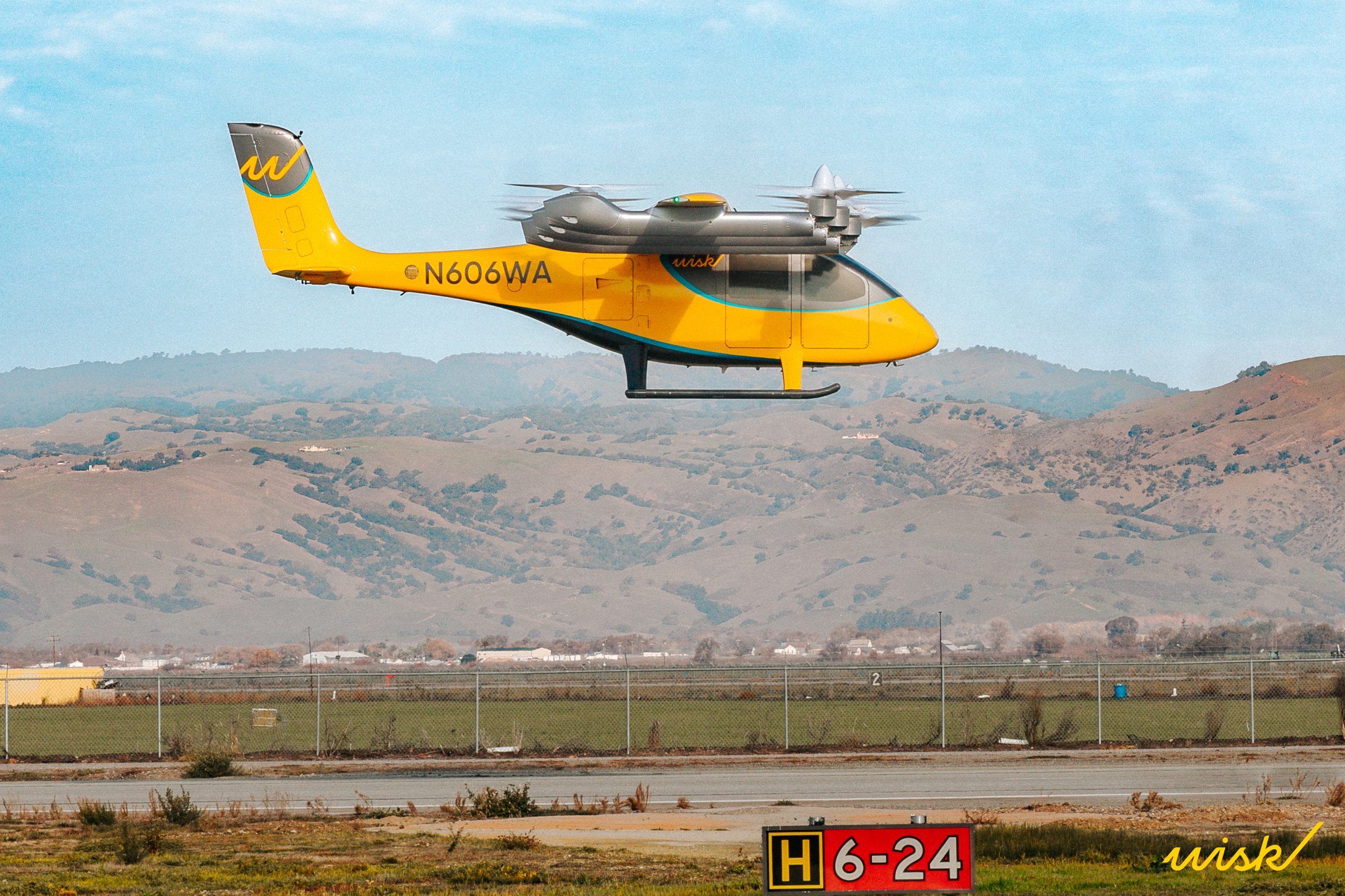
The Generation 6 first flight proves the aircraft can execute basic autonomous operations in controlled conditions. That’s necessary but insufficient for commercial certification.
Certification requires demonstrating reliable performance across thousands of flights in varied conditions: wind, rain, turbulence, emergency scenarios, system failures, communication interruptions. The aircraft must prove it can safely handle situations engineers didn’t specifically program for.
The autonomous system must demonstrate reliability orders of magnitude beyond current autonomous vehicle technology. Self-driving cars operating on the ground at 35 mph struggle with complex urban environments despite massive investment by companies with deeper resources than Wisk. Self-flying aircraft operating at 138 mph in three-dimensional airspace face exponentially more complex challenges.
Wisk’s 2030 timeline gives them five years. Joby, using a piloted aircraft which simplifies certification, needs at least two more years despite 70 percent certification completion. Wisk’s fully autonomous approach adds complexity that could extend timelines further.
Even after achieving certification, commercial viability depends on factors extending well beyond engineering capabilities: passenger willingness to accept autonomous aircraft, regulatory approval for operations over densely populated urban areas, insurance industry confidence in the technology’s safety record, and infrastructure development by municipalities still grappling with electric scooter regulations.
Wisk achieved its stated objective: autonomous takeoff, hover, and landing of a four-passenger eVTOL aircraft. The engineering demonstrates impressive technical capability, while Boeing’s backing provides both credibility and substantial resources.
First flights serve as press release milestones rather than commercial readiness indicators. The decade-long journey from prototype to certified passenger aircraft has defeated better-funded competitors pursuing similar technology, establishing a sobering historical precedent.
The 2030 timeline assumes regulatory frameworks will exist, certification proceeds without major setbacks, funding continues through billions in additional development costs, and infrastructure emerges to support operations. Each assumption carries substantial risk.
Air taxis represent compelling vision benefits: bypassing ground traffic congestion, dramatically reducing trip times, and delivering electric propulsion without emissions. Engineering challenges appear solvable given sufficient time and capital investment. Regulatory challenges remain uncertain as frameworks continue developing. Business case challenges may ultimately prove insurmountable regardless of engineering breakthroughs.
For consumers evaluating transportation options through 2030, air taxis remain firmly in “wait and see” territory. The technology demonstrates genuine capability, though timelines remain aggressively optimistic and barriers to commercial deployment substantial enough to question near-term viability.
Wisk’s Generation 6 flew. Whether it ever carries paying passengers depends on variables far more complex than autonomous flight software.
About Wisk Aero: Founded as a joint venture between Boeing and Kitty Hawk in 2019, Wisk became a wholly owned Boeing subsidiary. The company operates test facilities in Hollister, California and aims to launch air taxi services in Houston, Los Angeles, and Miami following FAA certification.
Article Last Updated: March 26, 2026.
- About the Author
- Latest Posts

Michael Kahn is the publisher of The Weekly Driver, serving as writer, photographer, and content creator. With a keen eye for storytelling and a passion for adventure, he specializes in uncovering the stories and experiences of automobile enthusiasts. Michael’s work is inspired by his love for off-the-beaten-path road trips, global exploration, and the pursuit of exceptional culinary experiences, all captured through the lens of a world traveler and automotive enthusiast.