
A flooring contractor with 30 years in the trade calls the ProMaster “by far the best vehicle I’ve had for work.” A mobile mechanic who has run every type of van over four decades says nothing matches it for cargo access. A plumber at 6’3″ walks the center aisle without ducking. These aren’t marketing claims. They come from owners who load these vans heavy, six days a week.
The ProMaster’s advantage is structural: front-wheel drive eliminates the driveshaft tunnel, so the cargo floor is flat from wall to wall. The 21-inch load floor sits seven inches lower than the Ford Transit‘s. The 75-inch interior width fits standard pallet racking. These dimensions shape every upfit decision, from shelf depth to partition placement.
This guide covers what the van gives you stock, what to order from the factory, and what the aftermarket fills in. Every dimension is verified against RAM‘s specifications. If you’re setting up a ProMaster for plumbing, electrical, delivery, or general contracting, the information here will keep you from ordering the wrong shelving.
Key Takeaways
- 75-inch maximum cargo width fits standard pallet racking and side-by-side shelving; 56 inches between wheel wells accommodates most commercial shelving units
- The 21-inch load floor height is seven inches lower than the Ford Transit, reducing lifting effort on every load
- Factory options worth ordering: wood cargo floor ($495), upper and lower wall paneling ($590), and Class IV receiver hitch ($495)
- Tie-down rings are floor-mounted and wall-mounted, spaced for ratchet straps on standard cargo
- The flat, level cargo floor (FWD, no driveshaft tunnel) simplifies every upfit installation compared to RWD competitors
- Major aftermarket upfit brands (Adrian Steel, Ranger Design, Weather Guard) all make ProMaster-specific shelving and partitions
- Complete dimensions for all ProMaster configurations included below
What you get from the factory
The ProMaster arrives with more usable cargo infrastructure than most buyers expect. The basics are solid.
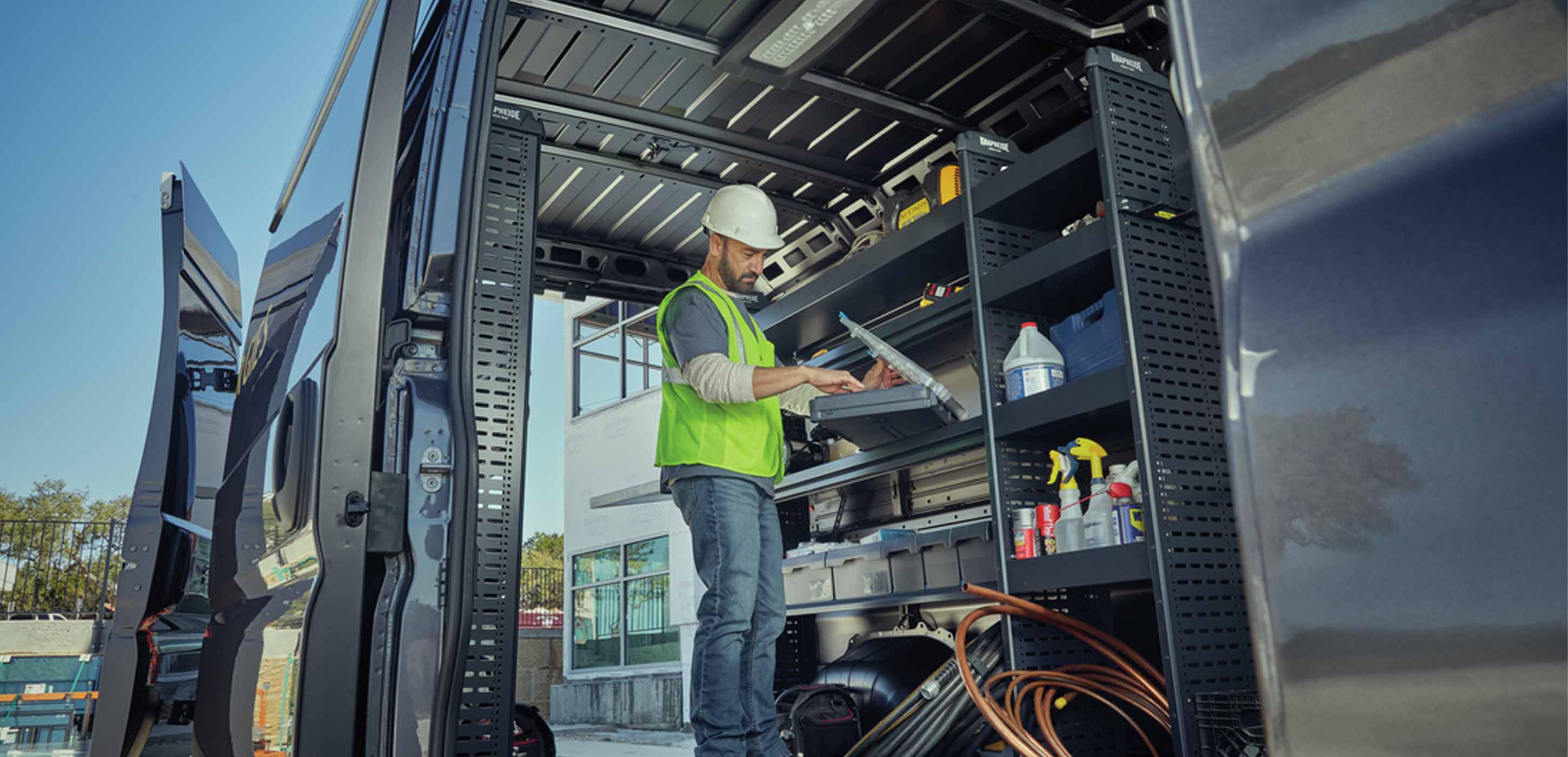
Tie-down rings mount at floor level and along the lower walls. They’re stamped steel, rated for ratchet straps, and spaced at intervals that work for standard-width cargo without requiring custom anchor points. Contractors report heavy toolboxes and loose materials stay locked in place over rough roads and at highway speeds.
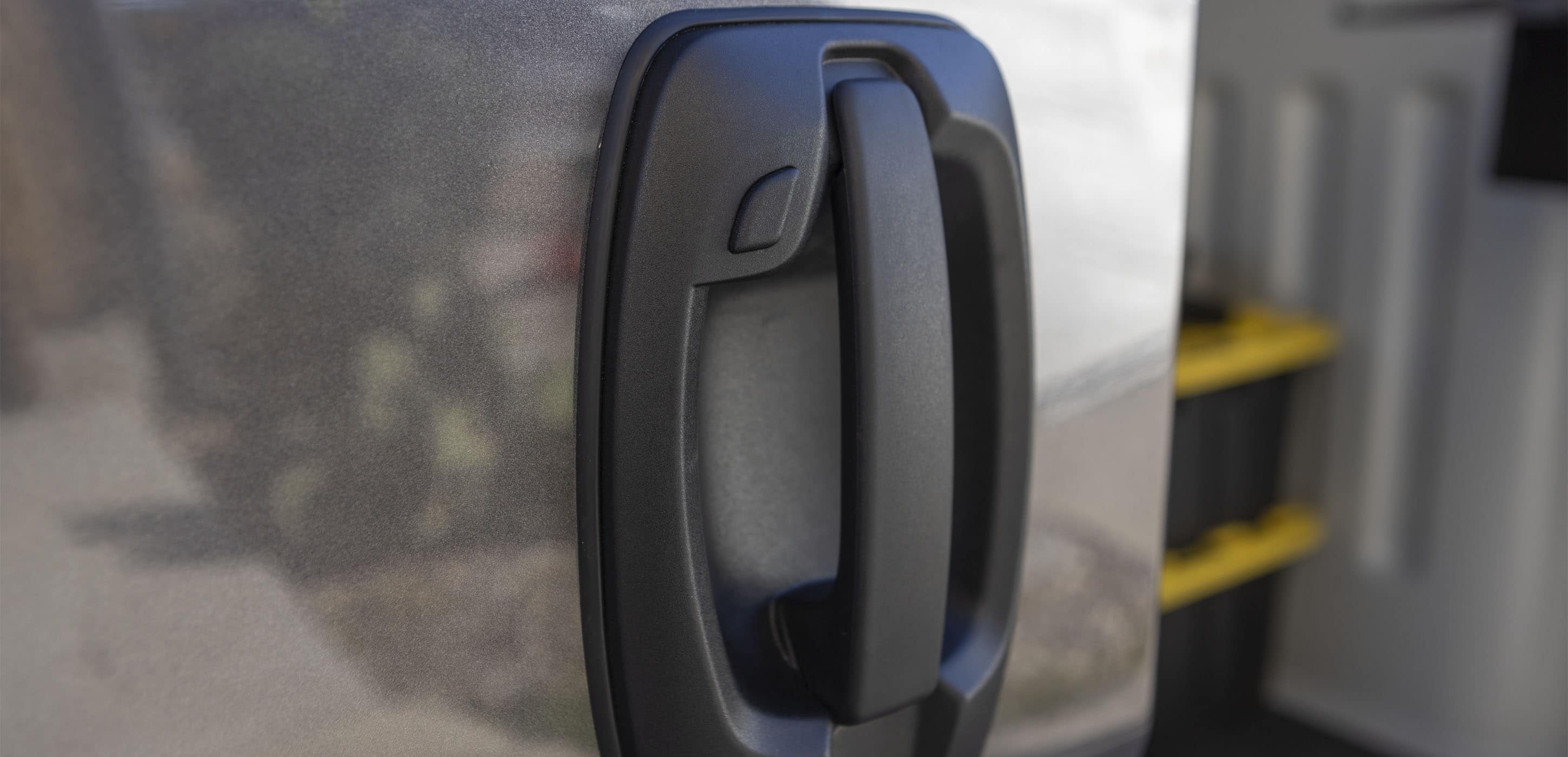
Rear doors open to 260 degrees, folding flat against the body sides. This matters. Partially-open doors restrict loading width and catch wind. At full swing, you have the entire 60-inch rear opening unobstructed. The sliding side door opens 49 inches, enough to pass shelving units and long materials through without using the rear.
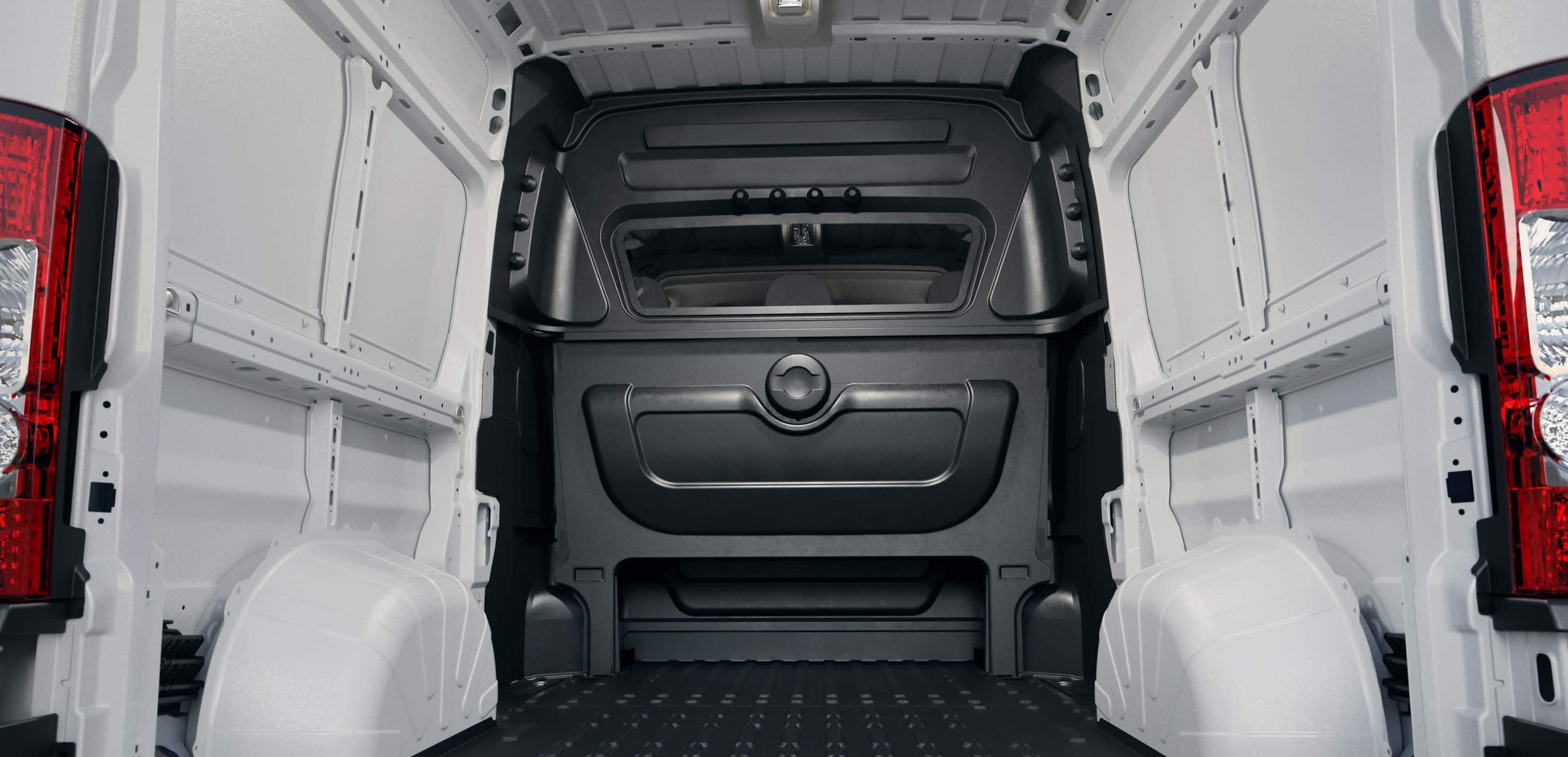
The cargo floor is completely flat. No driveshaft tunnel, no raised sections, no ledges to work around. This is the front-wheel-drive advantage, and it matters for every upfit. Shelving sits level. Drawer units don’t need shimming. Partition walls mount flush from side to side.
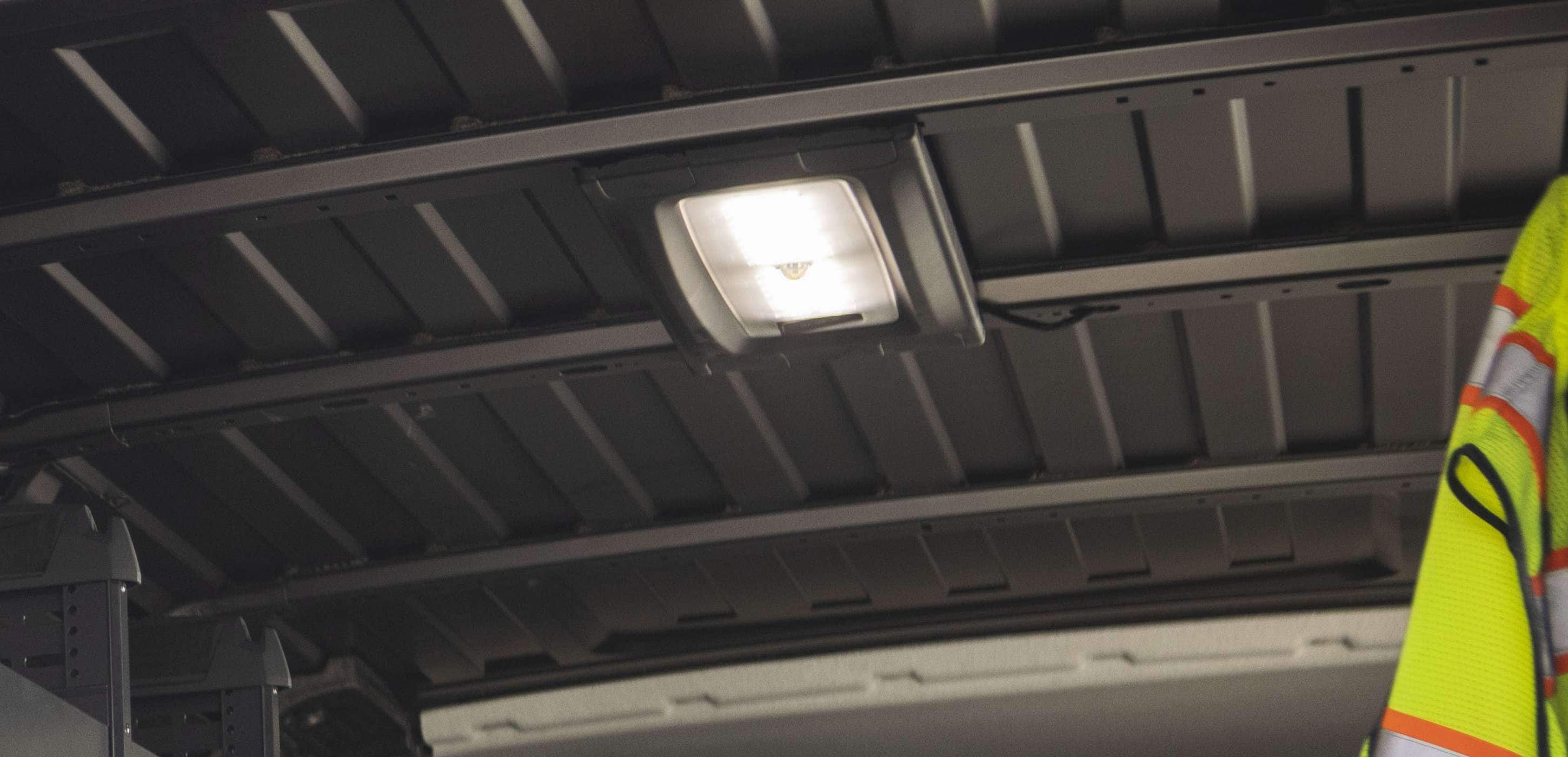
Interior lighting is minimal in base trim. A couple of dome lights in the cargo area. Enough to find a dropped bolt, not enough to work by. If you’re doing any after-dark loading, plan on aftermarket LED lighting from the start.
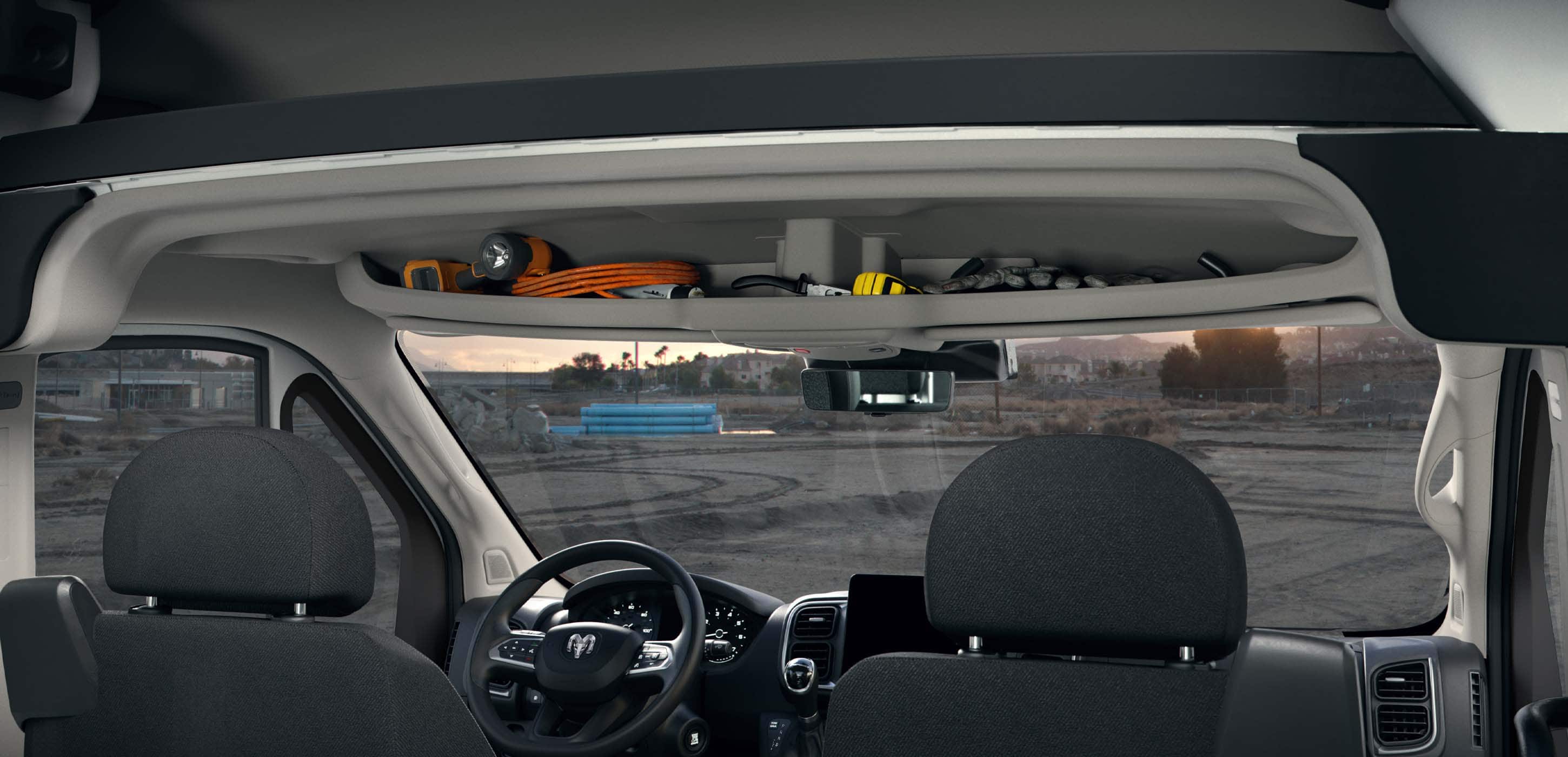
Fleet-ready options include dealer-activated speed limiters at 65, 70, or 77 mph for operators managing insurance costs or driver behavior. A cargo partition with optional sliding window isolates the cab from the cargo area for climate control and security. The partition’s pass-through window lets drivers check cargo without leaving the cab.
Factory upfit options worth ordering
Three factory options are worth the money. Order them when you buy the van. Aftermarket equivalents cost more and often aren’t as well integrated.
Wood cargo floor ($495). Treated plywood bolted to the factory floor. The grain has traction that raw sheet metal doesn’t. Tools and boxes stay put around corners. It also protects the metal floor from scratches and dents that hurt resale. At $495 from the factory, this is cheaper than having a floor installed aftermarket, and it’s done right.
Upper and lower side-wall paneling ($590). Composite panels covering the bare metal walls. They absorb minor impacts from shifting cargo, reduce condensation buildup on cold mornings, and provide a mounting surface for aftermarket shelving brackets. Without paneling, you’re drilling directly into body panels or using adhesive mounts.
Class IV receiver hitch ($495). Factory-installed, properly rated at up to 7,130 pounds towing capacity. Aftermarket hitches run $300-500 for the hitch alone, plus $200-400 for installation. The factory option is plug-and-play with the van’s wiring harness.
Upfitter’s Prep Package. Two auxiliary switches and a Vehicle System Interface Module (VSIM) give upfitters electronic access to the van’s systems. The VSIM lets aftermarket equipment integrate with the ProMaster’s electrical architecture, from custom lighting triggers to body-controller signals for specialized equipment. If your upfitter needs electronic integration beyond simple switched power, order this package. It’s available on all three body styles: Cargo Van, Window Van, and Cutaway.
Order these before delivery
Factory upfit options are cheapest when ordered with the van. Adding the wood floor, wall paneling, and receiver hitch after purchase typically costs 40-60% more through a dealership service department. The total for all three from the factory: $1,580.
Complete dimensions reference
Every upfit decision starts with measurements. Here’s every number you’ll need, organized by configuration. The 159-inch wheelbase High Roof is the most common work van configuration, but the ProMaster comes in three roof heights and three wheelbases.
| Dimension | 118″ WB | 136″ WB | 159″ WB |
|---|---|---|---|
| Overall Length | ~195 in. | ~230 in. | ~253 in. |
| Interior Cargo Length | ~106 in. | ~128 in. | ~155 in. |
| Max Interior Width | 75 in. | 75 in. | 75 in. |
| Between Wheel Wells | 56 in. | 56 in. | 56 in. |
| Interior Height (Standard Roof) | ~65 in. | ~65 in. | ~65 in. |
| Interior Height (High Roof) | ~76 in. | ~76 in. | ~76 in. |
| Interior Height (Super High Roof) | N/A | N/A | ~86 in. |
| Load Floor Height | 21 in. | 21 in. | 21 in. |
| Rear Door Opening Width | 60 in. | 60 in. | 60 in. |
| Rear Door Opening Height | ~56 / ~67 in. | ~56 / ~67 in. | ~56 / ~67 in. |
| Sliding Door Opening | 49 in. | 49 in. | 49 in. |
| Cargo Volume (High Roof) | ~262 cu ft | ~374 cu ft | ~463 cu ft |
| Cargo Volume (Extended HR) | N/A | N/A | ~524 cu ft |
| Max Payload | Up to 4,680 lbs | Up to 4,680 lbs | Up to 4,750 lbs |
| Turning Diameter | 36 ft | 36 ft | 36 ft |
Two numbers matter most for shelving: the 56-inch measurement between wheel wells (your usable floor width for anything that runs front-to-back) and the 75-inch maximum width (wall-to-wall at upper shelf height, above the wheel wells).
Aftermarket shelving and racking
The three brands dominating ProMaster upfits are Adrian Steel, Ranger Design, and Weather Guard. All three manufacture shelving, partitions, and drawer units templated to the ProMaster’s interior dimensions. Generic van shelving can work, but purpose-built units bolt to the factory mounting points and maximize the available space.
Shelving units
A typical single-side shelving package for the ProMaster runs $1,200-2,500 depending on material (steel vs. aluminum), number of shelves, and whether it includes bin dividers. Dual-side setups range from $2,000-4,500. Aluminum shelving weighs roughly 40% less than steel, which matters when your payload capacity determines how much material you can carry alongside your tools.
Mount shelving on the passenger side first. This keeps the driver-side sliding door clear for curbside loading and gives you aisle width to walk between the shelving and the opposite wall. The 75-inch interior width accommodates a 14-16 inch deep shelf unit on one side with 59-61 inches of remaining aisle and floor space.
Ladder racks
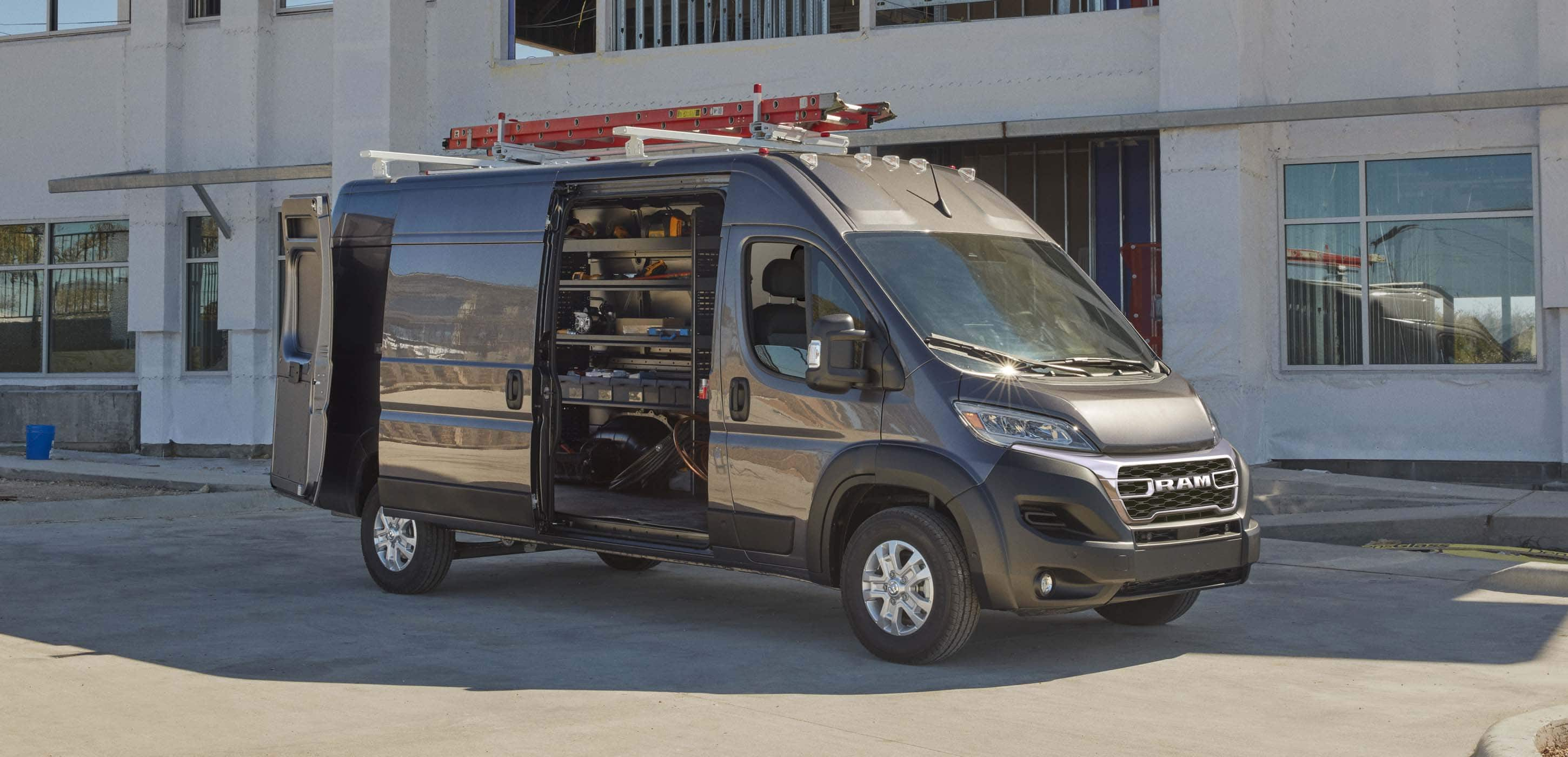
Roof-mounted ladder racks start around $800 for basic two-bar systems and reach $2,500+ for drop-down models that lower to the side of the van for easier loading. The ProMaster’s High Roof sits roughly 108 inches off the ground, so a drop-down rack eliminates the need for a step stool or climbing the rear bumper.
Kargo Master, Adrian Steel, and Vanderwerken all make ProMaster-specific racks. Match the rack’s weight rating to your typical load. Most two-bar systems handle 500-600 pounds distributed. Three-bar systems support more but add weight and wind resistance.
Partitions (bulkheads)
A partition between the cab and cargo area runs $400-1,000 depending on material and whether it includes a window or pass-through opening. Steel partitions give the best cargo protection. Composite partitions weigh less. Either type helps with climate control by isolating the cargo area from the cabin’s HVAC system.
Measure before ordering. The ProMaster’s cab-to-cargo opening is wider than the Transit’s or Sprinter’s, and generic “full-size van” partitions may not fit.
Lighting
Aftermarket LED strip lighting is the single cheapest upgrade with the most impact. A $150-300 kit from companies like Truck-Lite or ECCO puts out enough light to work by after dark. Mount strips along the ceiling rails and above the rear doors. Wire them to a switch near the sliding door so you can light the cargo area before stepping inside.
Trade-specific setups
The right setup depends on what you carry. Here are four configurations that work, based on conversations with ProMaster owners and upfit shops in the Sacramento area.
Plumber
Passenger-side shelving with pipe tubes mounted vertically behind the partition. Floor-level drawer unit on the driver side for fittings and connectors. A pipe rack running the ceiling length handles 10-foot sections. Leave the center aisle clear for a water heater or toilet on delivery days. Budget: $3,000-5,000 for the full setup.
Electrician
Dual-side shelving with bin dividers for wire nuts, connectors, and breakers. Wire spool rack mounted on the rear doors or the partition. The ProMaster’s 75-inch width fits two 14-inch shelving units with a comfortable 47-inch aisle between them. Mount a small vise or workbench surface at the rear for on-site panel prep. Budget: $2,500-4,000.
Delivery / courier
Open floor plan with minimal fixed shelving. Adjustable shelving on one side for sorted packages. The rest stays open for oversized items. A partition with a pass-through window lets the driver check the cargo area without walking around. The 21-inch load floor height pays for itself in reduced loading time across 50-100 stops per day. Budget: $1,500-2,500.
General contractor
Ladder rack on the roof. One side of shelving for power tools and hardware. Opposite wall left open for sheet goods, trim, and lumber standing on edge. The 56-inch between-wheel-well width accepts 4×8 sheets at an angle. Floor-level tie-down rings secure materials in transit. Keep a folding workbench that stows flat against the partition. Budget: $2,500-4,500.
Accessories and add-ons
Beyond shelving, a few other accessories are worth the money.
Mopar accessories include molded cargo mats, door sill guards, rear bumper protectors, and splash guards. The cargo mat ($150-200) protects the factory floor or wood floor from heavy tool bags. Door sill guards ($80-120) prevent the painted sills from chipping when you drag equipment across them daily.
The Class IV receiver hitch ($495 factory) does more than tow trailers. It accepts hitch-mounted cargo carriers ($150-300) for overflow equipment, hitch-mounted vises for field work, and bike racks for personal use after hours. The 7,130-pound towing rating handles enclosed tool trailers and small equipment trailers without straining the V6.
Auxiliary power is the upgrade most owners wish they’d done sooner. A secondary battery with an inverter ($500-1,500 installed) powers tool chargers, work lights, and laptops without running the engine. The SLT Plus Package has a 220-amp alternator that keeps both batteries charged during driving.

Read the full review: For driving impressions, technology details, and our verdict on the 2025 RAM ProMaster 2500, see our complete week-long review. Comparing the ProMaster to the Ford Transit and Mercedes Sprinter? We cover that in our three-way cargo van comparison.
The Bottom Line
The ProMaster’s flat floor and 75-inch width make it the easiest full-size van to upfit. Order the wood floor, wall paneling, and receiver hitch from the factory. Buy ProMaster-specific shelving from Adrian Steel, Ranger Design, or Weather Guard. Add LED lighting. The rest depends on your trade and what you carry. Start simple and add storage as your workflow tells you what’s missing.
Frequently Asked Questions
What shelving fits the RAM ProMaster?
Adrian Steel, Ranger Design, and Weather Guard all manufacture shelving sized and drilled for the ProMaster’s interior dimensions. These bolt to factory mounting points and maximize the 75-inch width and 56-inch between-wheel-well clearance. Single-side packages run $1,200-2,500. Dual-side setups cost $2,000-4,500 depending on material and configuration.
How wide is the RAM ProMaster cargo area?
The ProMaster has a maximum interior width of 75 inches wall to wall, the widest in its class. Between the wheel wells measures 56 inches. The 75-inch width accommodates standard pallets and side-by-side shelving configurations. This width is consistent across all wheelbases and roof heights.
What are the best RAM ProMaster accessories for work?
The three factory accessories worth ordering are the wood cargo floor ($495), wall paneling ($590), and Class IV receiver hitch ($495). For aftermarket, priorities should be LED interior lighting ($150-300), a partition/bulkhead ($400-1,000), and trade-specific shelving from a ProMaster-compatible manufacturer. A secondary battery with inverter ($500-1,500) powers tools without running the engine.
How much does it cost to upfit a RAM ProMaster?
A basic work setup (single-side shelving, partition, and lighting) runs $2,000-3,500 in parts. Full trade-specific builds with dual shelving, drawer units, ladder racks, and electrical run $5,000-10,000. Factory upfit options (floor, paneling, hitch) add $1,580 at time of purchase. Professional installation adds $500-1,500 depending on complexity.
Does the ProMaster have a flat cargo floor?
Yes. The ProMaster is the only full-size cargo van with front-wheel drive, which eliminates the driveshaft tunnel found in rear-wheel-drive competitors like the Ford Transit and Mercedes Sprinter. The cargo floor is completely flat from the partition to the rear doors and wall to wall, which makes shelving and drawer installation easier.
What ladder rack works with the RAM ProMaster?
Kargo Master, Adrian Steel, and Vanderwerken make ProMaster-specific ladder racks. Basic two-bar roof racks start around $800. Drop-down models that lower to the side of the van for easier loading cost $1,500-2,500. The ProMaster High Roof sits roughly 108 inches off the ground, so drop-down racks are worth the investment for daily use.
How much can the RAM ProMaster carry?
The ProMaster 2500 with the 159-inch wheelbase carries up to 4,750 pounds of payload. The 136-inch wheelbase handles up to 4,680 pounds. These numbers include everything in the van: driver, passengers, upfit equipment, and cargo. Subtract the weight of installed shelving, racks, and partitions from the payload rating to determine your actual cargo capacity.
Can you install shelving yourself in a ProMaster?
Yes, with basic tools and mechanical ability. ProMaster-specific shelving from Adrian Steel or Ranger Design includes mounting hardware designed for the factory anchor points. Installation takes 4-8 hours for a single-side setup. Professional installation runs $500-1,000 and includes alignment verification and load testing. DIY is feasible but measure twice.
What is the best cargo van for work?
It depends on your priorities. The RAM ProMaster has the widest cargo floor (75 inches), lowest load height (21 inches), and easiest upfit thanks to its flat floor. The Ford Transit has more powertrain options and available AWD. The Mercedes Sprinter leads in diesel efficiency and long-term durability. For upfit simplicity and maximum interior width, the ProMaster is hard to beat. See our full comparison.
Does the ProMaster need wall paneling for shelving?
Wall paneling isn’t required for shelving installation, but it helps. Paneling gives you a mounting surface for brackets, protects the body panels from scratches and dents, and cuts condensation on cold mornings. At $590 from the factory, it’s cheaper than aftermarket wall protection and easier to install shelving against.
Sources:
- 2025 RAM ProMaster (Official)
- Mopar Accessories
- Stellantis Fleet & Business Solutions – 2025 ProMaster Buyer’s Guide
Article Last Updated: March 27, 2026.
- About the Author
- Latest Posts

Michael Kahn is the publisher of The Weekly Driver, serving as writer, photographer, and content creator. With a keen eye for storytelling and a passion for adventure, he specializes in uncovering the stories and experiences of automobile enthusiasts. Michael’s work is inspired by his love for off-the-beaten-path road trips, global exploration, and the pursuit of exceptional culinary experiences, all captured through the lens of a world traveler and automotive enthusiast.